
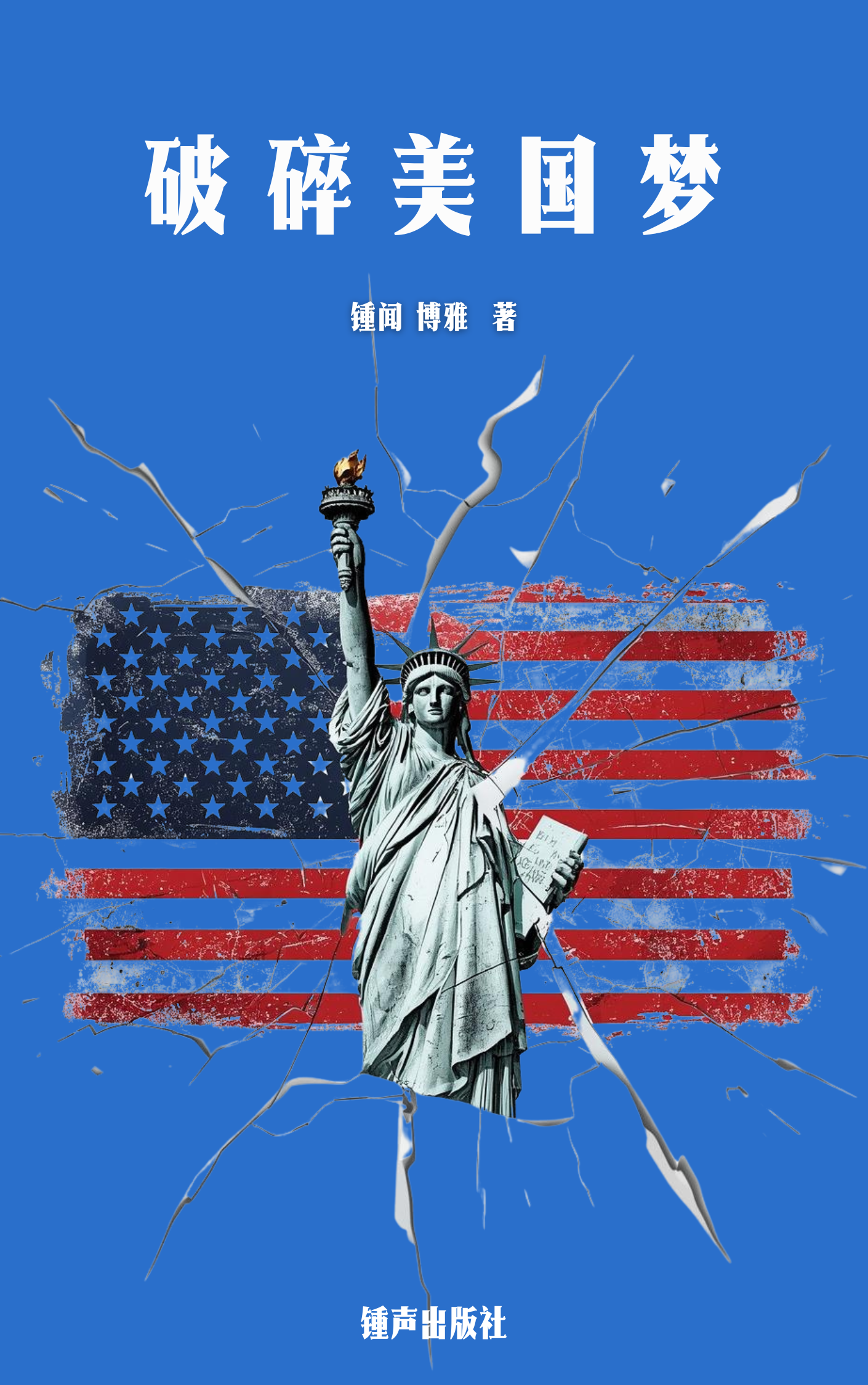
The COLLAPSE OF THE AMERICAN DREAM
Afterword: Part Two – Comparing Trump’s Collusion with Putin and Roosevelt’s Collusion with Stalin; Trump Pushed India Toward China and Russia, Just as Roosevelt Drew the Flames of War Toward America
I. Mirrors of History: Roosevelt’s Collusion with Stalin vs. Trump’s Collusion with Putin (Theme One)
Roosevelt’s wartime alliance with Stalin was born of pragmatism—the need to defeat the absolute evil of Nazism. Trump’s political and diplomatic affinity for Russian President Putin during his era has been criticized as a manifestation of ideological disintegration and the prioritization of personal power. Although the contexts and motivations of the two are vastly different, they present troubling historical mirrors in terms of their damage to liberal values and the undermining of institutional trust.
A. The Degeneration of Pragmatism: From National Survival to Personal Political Gain
1. Roosevelt: The Pinnacle of Pragmatism and the Boundaries of Morality
Roosevelt’s cooperation with Stalin was a matter of national survival, involving the fate of tens of millions. His motivation was clear: first eliminate the military threat of Nazi Germany.
Clear Goal: Ensuring the Soviet Union would tie down Nazi forces on the Eastern Front, relieving pressure on the West. This was based on cold military calculation, albeit morally flawed (sacrificing Eastern Europe).
Measurable Cost: The cost was the freedom of Eastern Europe and the weakening of America’s moral authority. Roosevelt deemed this a necessary sacrifice to defeat Nazism.
2. Trump: The Collapse of Pragmatism and the Primacy of Personal Power
Trump’s interactions with Putin represent the “degeneration” of pragmatism, with the core motivation shifting from national survival to personal political gain.
Vague and Personal Goals: Trump’s affinity for Putin is difficult to explain through traditional geopolitical interests (such as strengthening NATO or countering China). Critics argue it may stem from admiration for personal loyalty, contempt for liberal democratic institutions, or even tacit approval of Russian interference in U.S. elections.
Internal Institutional Destruction: Roosevelt’s compromises were with external tyranny; Trump’s actions represent open contempt for and destruction of internal institutions (such as the intelligence community and the Department of Justice), serving only his personal political narrative. His praise for Putin directly undermined the credibility of the U.S. intelligence community and damaged the constitutional system of checks and balances.
B. Differing Attitudes Toward “Tyranny”: From Expediency to Ideological Resonance
The attitudes of the two presidents toward authoritarianism reflect the health of American liberalism in two different eras.
1. Roosevelt’s “Necessary Evil”
Roosevelt’s attitude toward Stalin, though morally weak, still regarded it as a “Faustian bargain” rather than an ideal model of governance. His ultimate goal remained the establishment of a post-war multilateral system led by liberal democracies.
Conflict of Values: Roosevelt’s tolerance of Stalin’s tyranny was a violation of his core democratic beliefs. He did not publicly praise the Gulag or the Great Purge.
2. Trump’s “Ideological Resonance”
Trump’s praise for Putin and other authoritarian leaders (such as Turkey’s Erdoğan) appears to carry ideological resonance.
Admiration for Strongman Politics: Trump publicly praised Putin’s “strong leadership” and “iron-fisted control over domestic dissent.” This praise is a direct negation of the constitutional democratic system of checks and balances.
Distrust of Media and Judiciary: Trump’s attitude toward Putin’s control of media and the judiciary reflected his own deep dissatisfaction with the free American media (“Fake News”) and the independent judiciary (“Deep State”). This suggests his political philosophy developed a deep affinity with Putin’s crony capitalist and authoritarian model—a fundamental departure from the core principles of the American Dream.
C. The Ultimate Undermining of National Trust: From External Compromise to Internal Collapse
Both presidents’ actions profoundly affected the American public’s trust in government, but in different ways.
I. Comparative Dimensions and Focus of the Relationships
Dimension Roosevelt-Stalin Trump-Putin
Context Extreme threat of external absolute tyranny (Nazi Germany) Internal institutional challenger resonating with strongman politics
Goal Geopolitical and military national survival Personal political and ideological alignment
Focus Winning World War II (national security) Political survival
II. Modes of Trust Destruction: From Secret Compromise to Open Contempt
The ways in which these two relationships damaged America’s political trust system are fundamentally different:
1. Differences in Mode
Roosevelt’s Compromise: Although based on strategic necessity, Roosevelt’s cooperation with Stalin and certain secret compromises regarding Soviet actions triggered widespread moral guilt and backlash after the war.
Trump’s Affinity: Trump’s affinity for Putin was conducted openly. It was not secret compromise, but open institutional contempt for U.S. intelligence agencies, diplomatic traditions, and partisan boundaries.
2. Consequences for Public Perception
Roosevelt-Stalin: These were wartime secrets that, after the war, triggered McCarthyite backlash, leading the public to develop long-term, profound distrust of the morality and judgment of liberal elites. The public questioned: did elites sacrifice moral principles for expediency?
Trump-Putin: This relationship was openly embraced, directly leading to public questioning of the president’s personal loyalty. This affinity was not secret but normalized political performance, accelerating both left and right’s total negation of the system and deepening the cultural civil war (as discussed in Chapter 82).
III. Summary: The Ultimate Impact on Political Trust
Roosevelt’s compromise triggered questioning of the moral character of elites—suspicion that elites sacrificed principles behind the scenes for the “greater good.” Trump’s affinity for Putin, by contrast, made this suspicion open and normalized.
Ultimately, this normalization of institutional contempt led to the complete collapse of political trust—the public’s general trust in all core institutions of government, media, and judiciary, as described in Chapter 82: The Collapse of Trust.
II. Geopolitical Miscalculation: Trump Pushed India Toward China and Russia (Theme Two)
We will compare Roosevelt’s geopolitical errors during World War II with the tactical miscalculations of the Trump era in the Indo-Pacific strategy, arguing how American isolationism and contempt for allies lead to structural strategic retreat.
A. Roosevelt: The Structural Negligence That Drew the Flames of War Toward America
Roosevelt “drawing the flames of war toward America” does not mean he actively started the war, but that his diplomatic and military decisions structurally failed to prevent the war’s expansion, and even accelerated America’s entry into the conflict.
1. The “Pragmatic” Miscalculation Before the Pacific War
Before Pearl Harbor, the Roosevelt administration adopted a gradual, hesitant pragmatism in responding to Japanese aggression.
Underestimating Japanese Rationality: The Roosevelt administration believed that by imposing oil embargoes and economic sanctions, it could force resource-poor Japan to “rationally” return to the negotiating table without full-scale war. This was a miscalculation of the logic of militaristic totalitarianism, much like his miscalculation of Stalin.
Blurred Boundaries of “Non-Involvement”: Although the U.S. had not formally declared war, through the Lend-Lease Act and aid to China and the Philippines, it was already deeply involved in the Asian and European theaters. This “semi-involved” state neither deterred Japanese expansion nor provided absolute motivation for attack, ultimately drawing the flames of war passively and catastrophically to American soil at Pearl Harbor.
Strategic Negligence: Prioritizing the European theater, Roosevelt exhibited structural negligence regarding Pacific defense (such as inadequate preparedness at Pearl Harbor).
2. Consequence: Buying Uncertain Peace at Great Sacrifice
Roosevelt’s hesitation and pragmatism ultimately forced America to achieve final peace at the cost of enormous military and human sacrifice. This was a “reactive” rather than “proactive” strategy.
B. Trump: The Strategic Negligence That Pushed India Toward China and Russia
The Trump administration’s “America First” policy adopted unilateralism and protectionism toward allies in geopolitics, manifesting in the Indo-Pacific strategy as strategic negligence and offense toward India.
1. Unilateralist Pressure on “Indo-Pacific” Partners
India is a core key to America’s strategy to counter China’s growing maritime hegemony in the Indo-Pacific. Yet the Trump administration’s behavior weakened the foundations of the U.S.-India relationship.
Protectionist Pressure: The Trump administration imposed tariff pressure on India in trade and terminated India’s Generalized System of Preferences (GSP) status. This “transactional diplomacy” treated India as a trade rival rather than a strategic partner, conflicting with India’s desire for a long-term, mutually trusting strategic alliance.
Open Contempt for Allies: Trump publicly criticized India’s actions on climate change and trade deficits, wounding Indian national pride. From India’s perspective, America’s “Indo-Pacific Strategy” seemed more like using India to serve unilateral U.S. goals rather than building genuine partnership.
2. India’s Strengthened Strategic Autonomy and Rebalancing Toward China and Russia
Trump’s unilateralism prompted India to strengthen its traditional “strategic autonomy” and begin rebalancing toward the China-Russia axis in Eurasia.
Necessity of Russia: India has long relied on Russia for military equipment and technology. When the U.S. applied pressure on trade and politics, India more firmly maintained its defense relationship with Russia to ensure national security.
China’s Economic Gravity: Despite border conflicts with China, U.S. protectionism and trade uncertainty compelled India’s economy to maintain some degree of connectivity with China in trade and supply chains. Trump’s unilateral actions failed to provide the economic alternatives India needed.
Consequences of Pushing India Toward China and Russia: India, America’s most geopolitically needed partner, showed greater tolerance and willingness to cooperate with the China-Russia axis (such as in BRICS or SCO activities) due to American arrogance and pragmatism. This created a fatal flaw in America’s strategy to isolate China.
C. Structural Similarities in History: Personal Politics at the Expense of Common Interests
Roosevelt’s miscalculation of Japan and Trump’s offense toward India both structurally reflect the sacrifice of “common interests” in American politics:
Roosevelt’s Sacrifice: Sacrificed early deterrence of Japanese militarism for short-term non-belligerence.
Trump’s Sacrifice: Sacrificed long-term geopolitical strategic goals (building an unshakable Indo-Pacific alliance) for short-term trade surpluses and domestic political support (“America First”).
Both reflect the American political system’s tendency, in times of crisis, to be dominated by singular, self-serving considerations (whether wartime military calculation or peacetime domestic populism), failing to uphold universal, long-term strategic principles.
III. Structural Summary: The Inertia of the Broken American Dream and the Future
Our analysis aims to establish a historical continuum, demonstrating that the fragmentation of the American Dream is a structural inertia from early moral compromise to late-stage ideological collapse.
A. Three Dimensions of Historical Inertia
1. Moral Inertia: Pragmatism’s Corrosion of Moral Principles
Both presidents demonstrated extreme pragmatism in their foreign policy decisions, selectively ignoring the principles of liberal democracy long espoused by America:
Roosevelt Era (1940s): Roosevelt chose to compromise with the brutal dictator Stalin. Although the goal was military victory in World War II, the cost was the freedom and sovereignty of Eastern European nations.
Trump Era (2017-2020, 2025-?): Trump openly displayed affinity for Putin, seeking personal political gain and anti-Establishment support. He not only sacrificed liberal democratic principles but also undermined the credibility of domestic intelligence agencies.
Structural Inertia (Core Assertion): This inertia of pragmatism overriding moral principles led to a crisis of trust in American political elites. When the public realizes leaders can arbitrarily sacrifice principles to achieve goals, faith in the moral foundation of the entire system collapses.
2. Economic Inertia: Short-Term Interests Overdrawing Long-Term Health
Two generations of leaders chose short-term oriented economic policies, ultimately sacrificing long-term, robust economic structures:
Roosevelt Era (around 1940): During World War II, the government permanently allocated massive resources to defense, leading to the lock-in of the Military-Industrial Complex’s power. This structural inertia squeezed resources for civilian and social welfare, creating long-term resource allocation imbalances.
Trump Era (2017…): Trump pursued extreme “America First” protectionism. To gain support from domestic populist voters, he sacrificed the stability of the global free trade system and alienated allies.
Structural Inertia (Core Assertion): This inertia of prioritizing short-term interests over long-term structural health led to economic inequality and global economic chaos. Whether resources are locked up by a massive military sector or by protectionist barriers, effective resource flow and distribution are obstructed.
3. Geopolitical Inertia: Unilateralism’s Self-Negation of Global Standing
Both presidents’ actions revealed unilateralism and contempt for or miscalculation of international strategic partners, accelerating the decline of America’s global strategic standing:
Roosevelt Era: America misjudged Japanese militarism geopolitically, failing to take effective proactive deterrence, ultimately resulting in the flames of war being passively drawn to American soil (Pearl Harbor).
Trump Era: Trump chose to apply unilateral pressure on key strategic partners like India, failing to effectively solidify bilateral relations, indirectly prompting India to seek balance with China and Russia, weakening America’s strategic influence in the Indo-Pacific.
Structural Inertia (Core Assertion): This inertia of unilateralism and contempt for allies leads to the accelerating decline of America’s global strategic standing. Lack of respect for allies and investment in multilateral cooperation forces America to bear costs alone when facing global challenges, creating geopolitical vacuums.
B. The Final Judgment on the Broken American Dream
From Roosevelt to Trump, the core liberal principles of American politics have undergone sustained, systematic erosion—morally, economically, and diplomatically. Roosevelt’s compromise was the “original sin of pragmatism,” while Trump’s actions represent the “late-stage symptoms of ideological collapse.”
The End of Morality: The pragmatism toward external tyranny in the Roosevelt era ultimately evolved into open contempt for internal democratic institutions in the Trump era.
The End of Strategy: The strategic miscalculations of the Roosevelt era led America to be passively drawn into war; the strategic shortsightedness of the Trump era led America to actively abandon its global leadership, ceding dominance of the global order to China and Russia.
Final Assertion: The American Dream did not shatter overnight but slowly disintegrated over decades of structural and moral compromise. Roosevelt’s pragmatism began this process, and Trump’s populism brought it to an irreversible endpoint. America’s next chapter will unfold in a world vacuum—one lacking moral and strategic foundations—that America itself helped create.
 正义钟声 Voice of Justice