
The COLLAPSE OF THE AMERICAN DREAM
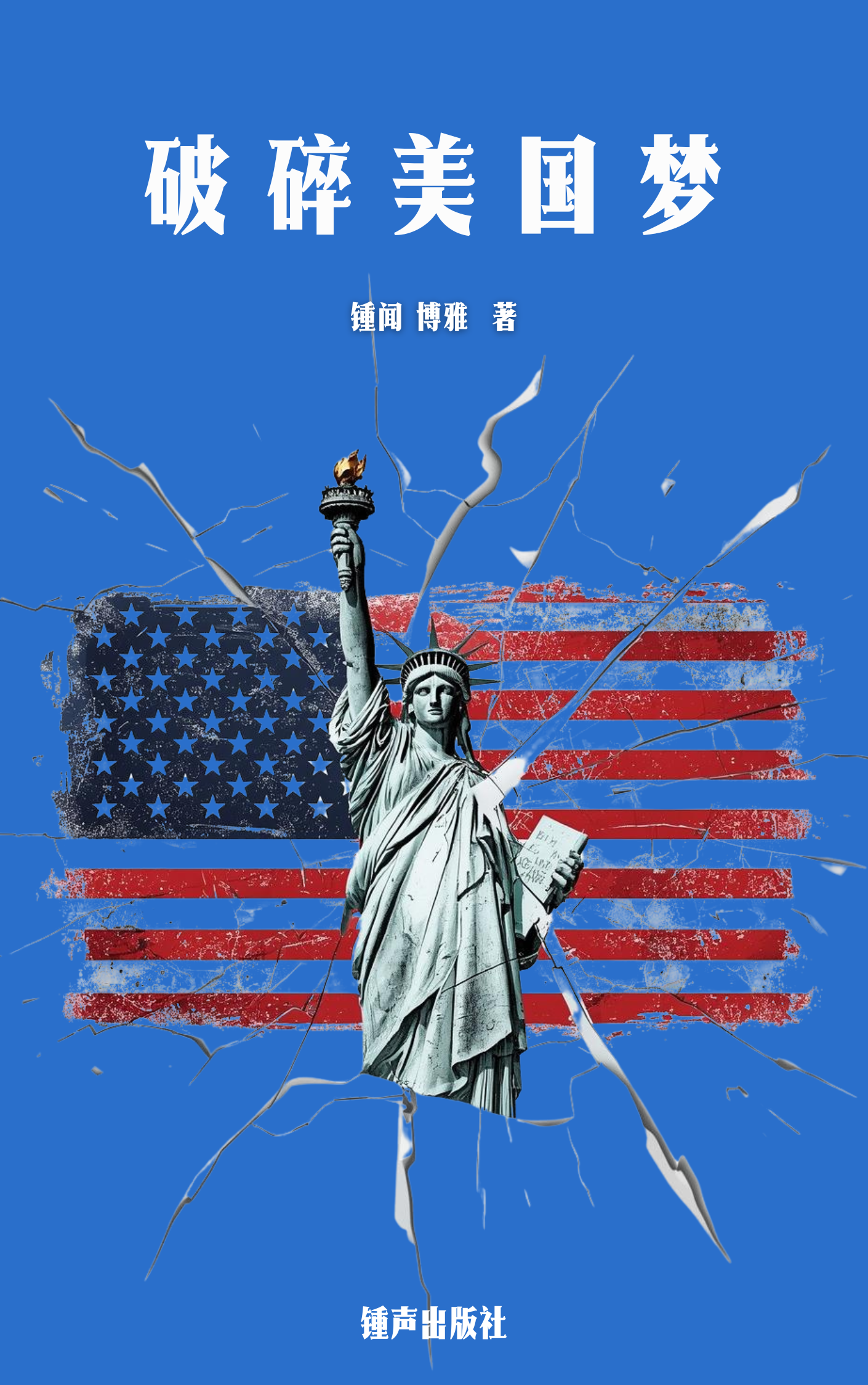
Afterword: Part One — The American Dream Began to Shatter with Roosevelt’s Collusion with Stalin
The Ghost of History and the Shattered Dream: The entire book The Broken American Dream has analyzed the structural collapse faced by American society in the 21st century, including economic crisis, institutional paralysis, and cultural civil war. However, any profound collapse has its historical roots. This Afterword will propose a bold and highly controversial assertion: the structural fragmentation of the American Dream did not begin with the financial collapse or culture wars of the late 20th century, but had its first seeds planted during the 1940s, with President Franklin D. Roosevelt’s wartime alliance with Soviet leader Joseph Stalin and the subsequent series of geopolitical compromises (exemplified by the Yalta Conference).
This is a tragic story of moral compromise, ideological blindness, and geopolitical miscalculation. To defeat the immediate, absolute evil of fascism (Nazi Germany), Roosevelt chose to cooperate with the equally absolute, but longer-term, evil of communism. This pragmatic acquiescence to tyranny not only sacrificed the freedom of tens of millions in Eastern Europe and hundreds of millions in China, but also carved a deep moral fissure into the core values of American liberalism, ultimately leading to the long-term structural, economic, and spiritual disintegration of the American Dream.
I. The Sacrifice of Morality: Roosevelt’s Acquiescence to Tyranny and the Internal Injury to the American Spirit
Roosevelt’s collusion with Stalin may have been born of military necessity, but it went too far, cultivating the Soviet Union into a superpower giant suckled on American resources. The subsequent weaning and the Cold War ultimately burst the bubble of the Soviet Union—a state that should never have existed. In this transaction, the moral cost paid by America was enormous, and it had a long-term toxic effect on the core of liberalism.
A. The Triumph of Pragmatism and the Retreat of Morality
During World War II, Roosevelt’s decision-making logic was based on absolute pragmatism: first defeat Nazi Germany, as it was the “immediate threat.” To this end, he chose to temporarily regard the communist tyranny of the Soviet Union as a “necessary ally,” rather than recognizing that “the Soviet Union and Nazi Germany were essentially the same, or even more brutal and evil, totalitarian systems.”
1. Ignored Atrocities and the Myth of “Uncle Joe”
Roosevelt and his administration actively and deliberately overlooked the bloodthirsty nature of Stalin’s regime.
The Marginalization of Human Rights: At major events like the Yalta Conference, despite the fate of allies such as China, Poland, and the Baltic states hanging in the balance, Roosevelt raised virtually no substantial objection to or pressure regarding Stalin’s horrific atrocities such as the Gulag and the Great Purge.
Propaganda Beautification: The U.S. government and pro-government media participated in the propaganda glorification of the Soviet Union, portraying Stalin as “Uncle Joe”—a steadfast, patriotic ally with even “democratic potential”—and similarly portraying Stalin’s leadership of the Chinese Communist Party. This official narrative distorted the American public’s understanding of communist atrocities, laying the groundwork for the “Red Scare” of the early Cold War and the subsequent crisis of trust.
2. The Shadow of Yalta: The Moral Abandonment of Eastern Europe
The Yalta Conference (1945) was the highest symbol of Roosevelt’s moral compromise. At this conference, Roosevelt effectively acquiesced to Soviet control over Eastern Europe and the division of China, sacrificing the self-determination and freedom of China, Poland, Hungary, Czechoslovakia, and other nations.
The “Limited” Nature of Freedom: The Roosevelt administration treated freedom and democracy as commodities that were expendable and geographically bounded. This act of handing over the fate of hundreds of millions of people to evil for geopolitical considerations created a fundamental moral schism with the universal principles of human rights and self-determination espoused by America.
Long-Term Impact: This pragmatic acquiescence to atrocities left America with a moral “original sin” after the war. When America proclaimed itself the “leader of the free world” during the Cold War, the sacrifices of Eastern Europe became an ineradicable shadow, weakening the moral legitimacy of America’s claims.
B. The Self-Corrosion of Liberalism’s Core Values
Roosevelt’s compromise caused internal corrosion to the core values of American liberalism:
Declining Vigilance Against State Power: To address the Great Depression and World War II, the Roosevelt administration greatly expanded the power of the federal government. However, close cooperation with the communist totalitarian regime ideologically blunted Americans’ natural vigilance against the unchecked expansion of state power. This laid the groundwork for the later Deep State and the expansion of executive power.
Miscalculation by Intellectuals and Elites: The liberal elites of the Roosevelt era severely misjudged the dangers of communist ideology, viewing it as “another form of progress.” This weakness toward or sympathy for totalitarianism led to the later radicalization of anti-communism (McCarthyism) and a crisis of social trust (Chapter 82).
II. Structural Failures: Internal Contradictions of the Economic System and Concentration of Power
The direct consequence of Roosevelt’s collaboration with Stalin was the onset of the Cold War, which forced America’s economic and political structures into a state of permanent war—a state that ultimately led to the structural failure of the American Dream.
A. The Birth of the Military-Industrial Complex and the Distortion of the Economy
Roosevelt’s wartime mobilization laid the foundation for the post-war Military-Industrial Complex.
1. The Lock-In of a Permanent War Economy
The long-term confrontation with the Soviet Union transformed America’s economic structure from “wartime mobilization” into a “permanent war economy.”
Allocation of Resources: Massive national resources were continuously channeled into defense, the arms race, and intelligence systems. This directly squeezed non-defense public spending on infrastructure, education, and social welfare, laying the groundwork for the later decay of infrastructure (Chapter 61) and gaps in the social safety net.
State Dependence of the Private Sector: The defense sector formed a symbiotic relationship with private enterprises. Defense contracts became the lifeblood for many industries and regions (such as California and Texas). This dependence distorted economic efficiency in favor of political and security considerations, moving it away from the ideal of free markets.
2. The Binding of Technological Elites to State Power
The demands of wartime and post-war Cold War bound technological elites tightly to state power.
The Role of Universities: Universities were no longer merely academic centers; they became primary contractors for defense research, intelligence training, and technology development. This relationship blurred the boundaries between academic freedom and national security interests, laying the foundation for later institutional capture (Chapter 109) and the politicization of knowledge.
The Atom Bomb and Big Government: The birth of nuclear weapons and the ongoing arms race made technological monopoly and high-level state secrecy imperative. This provided absolute justification for the unchecked expansion of the power of intelligence agencies (CIA, NSA), further weakening the principle of separation of powers and checks and balances.
B. Long-Term Pressures on National Debt and Financial Structure
Roosevelt’s handling of the war and post-war reconstruction placed long-term, systematic pressure on America’s financial structure.
Skyrocketing National Debt: During World War II, America’s national debt soared. Although it eased somewhat after the war, the ongoing Cold War forced the U.S. government to maintain high defense budgets, making debt burdens the norm. This laid the long-term foundation for future fiscal chaos and financial crises.
Abuse of the Dollar as Global Reserve Currency: The establishment of the Bretton Woods system elevated the dollar to the status of global reserve currency. Roosevelt-era decision-makers, in the context of confronting Stalin, excessively leveraged the dollar’s international status to finance the Cold War and its military expenditures. This led to the subsequent abuse of “dollar hegemony,” ultimately planting time bombs for financial instability and American industrial hollowing out in the era of globalization (Chapter 61).
III. The Alienation of Ideology: Liberalism’s Self-Doubt and Cultural Fragmentation
Roosevelt’s compromise with Stalin triggered a prolonged “self-doubt” at the ideological level, which ultimately evolved into the polarized ideologies that led to the cultural civil war.
A. The Internal Division of Liberalism and the Birth of the Left
The “pragmatic” acquiescence to Stalin’s tyranny created deep divisions within America’s left and liberal circles.
1. The Disillusionment of Idealism and the Breeding Ground for Radicalization
Disillusionment: A generation of intellectuals and political activists became disillusioned with Roosevelt-style moderate, pragmatic liberalism. They saw that even the “leader of the free world” would sacrifice the freedom of tens of millions for power politics.
Nourishment of Radicalism: This disillusionment nurtured more radical, critical leftist thought. They began to believe that the American system itself was corrupt and imperialist, and that its resistance to communism was merely to maintain capitalist hegemony. This provided early ideological motivation for the later anti-war movement, the New Left, and critical identity politics (Chapter 106).
2. The Right’s Backlash: The Seeds of the Red Scare
Roosevelt-era weakness and compromise toward communism greatly stimulated anti-communist sentiment among the American right.
The Narrative of Betrayal: The right interpreted Roosevelt’s and his successors’ policies as a “betrayal of American values,” believing that “communist infiltration” was the root cause of institutional corruption (Part Five).
The Foundation of McCarthyism: Roosevelt’s pragmatic compromise provided the emotional and historical foundation for the “Red Scare” and McCarthyism of the early Cold War. This extreme anti-communist sentiment later evolved into a systematic hostility toward all liberal and progressive thought, becoming an early prototype of the contemporary right-wing engine (Chapter 102).
B. The Ideologization of Knowledge and Education
Roosevelt’s collaboration with Stalin injected ideological confrontation into America’s educational and academic systems.
Academics Taking Sides: University academia was forced to choose sides between the free world and the communist world. This led to the emergence within academia of conservative thought “defending the West” and radical thought “criticizing imperialism,” making it difficult for knowledge itself to remain neutral.
A Precursor to the Fragmentation of Shared Truth (Chapter 116): The propaganda apparatus of the Roosevelt era distorted facts to glorify the Soviet Union, and after the war, it shifted to anti-communist propaganda. This continuous manipulation of official “truth” weakened public trust in mainstream information sources, laying the historical seeds of distrust for the later mirror confrontation of media ecosystems (Chapter 113).
IV. The Roosevelt Legacy and the Shattered Dream
The historical event of Roosevelt’s collusion with Stalin may seem distant, but it was the historical, moral, and structural starting point for the series of structural problems described in The Broken American Dream.
Roosevelt’s tragedy lay in this: while defeating one tyranny (Nazism), he, at the cost of moral compromise and structural distortion, aided the expansion of another tyranny (the Soviet Union), and in the process, damaged the moral and structural foundations upon which American democracy relied.
The fragmentation of the American Dream began precisely with this wrong choice between freedom and pragmatism, between morality and survival!
Roosevelt’s choice left American liberalism in the post-war era with a legacy of guilt, structural distortion, and ideological division. This moral fissure widened over time, eventually evolving into the irreparable cultural civil war and structural collapse we witness in the 21st century.
The rebirth of the American Dream (Chapter 117) must begin by confronting and reckoning with the moral and structural historical legacy left by the Roosevelt era.
V. Expanded Depth Argument: Liberalism’s Cognitive Bias Toward Totalitarianism
A. Roosevelt’s “Cognitive Framework” and His Misjudgment of Stalin
In handling relations with Stalin, Roosevelt’s cognitive framework was severely distorted by multiple factors, leading him to maintain a naive fantasy about the nature of communist tyranny.
1. The Tunnel Vision of a Wartime Single Goal
Roosevelt’s primary goal was the unconditional defeat of Nazi Germany. This created a “tunnel vision” focused on a single objective.
He “De-Ideologized” Stalin: Roosevelt tended to view Stalin as a traditional national leader rather than an ideologically fanatical General Secretary. He believed that as long as the Soviet Union’s reasonable security needs (such as a buffer zone in Eastern Europe) were met, Stalin would adhere to traditional principles of national interest like Western nations—a fundamental misunderstanding of the political logic of totalitarianism.
Ignorance of “Leninism”: Roosevelt and many of his advisers failed to fully understand the core tenets of Leninism and Stalinism—global expansion, the absolutization of class struggle, and fundamental hostility to and systematic elimination of liberal democracy. They mistakenly believed that Soviet tyranny was a continuation of Tsarist Russian traditions, rather than a new, more systematic, and aggressive political cult.
2. The “Compassion Fatigue” of Domestic Liberal Elites
In the 1930s, many American liberal elites and intellectuals were disillusioned with the crisis of capitalism (the Great Depression) and held a certain romanticized sympathy for the Soviet Union’s “social experiment.”
Critique of Capitalism: Many liberals believed that, compared to fascism, the Soviet Union’s state-planned economy at least represented a “rational” or “progressive” attempt to counter unchecked capitalism. This self-critical suspicion led them to doubt, downplay, or even deny reports of Stalin’s atrocities (such as the Holodomor, the Gulag).
“Relativization” of Tyranny: They tended to relativize Stalin’s atrocities by comparing them to Western colonialism and racial discrimination, thereby blurring the unique evil of totalitarian regimes’ systematic extermination of individual human freedom. This “moral relativization” later evolved into the progressive left’s radical critique of the American system, ultimately giving birth to the left-wing engine (Chapter 106).
3. Roosevelt’s Individualism and Diplomatic Self-Confidence
Roosevelt possessed immense personal confidence and diplomatic skill.
Belief He Could “Handle” Stalin: Roosevelt believed that with his personal charisma and negotiating skills, he could “tame” Stalin and bring him into post-war multilateral cooperation frameworks (such as the United Nations). This overconfidence led him to make irreversible concessions prematurely at Yalta and elsewhere, underestimating Stalin’s absolute desire for post-war geopolitical control.
Dismissal of Allies’ Warnings: Roosevelt frequently dismissed (and even publicly mocked) British Prime Minister Churchill’s more sober and forceful warnings about Soviet intentions. He viewed Churchill’s geopolitical realism as outdated imperialist remnants, missing opportunities to take more principled stances when dividing spheres of influence after the war.
B. The Long-Term Consequences of Moral Compromise: The Demoralization of Politics
Roosevelt’s collaboration with Stalin ultimately led to the “moral disarmament” of American politics, which was the spiritual foundation for the shattering of the American Dream.
1. The Separation of Morality and Power
Roosevelt’s pragmatic diplomacy established a potentially dangerous principle in American political culture: to achieve a “higher goal,” one could tolerate or acquiesce in great moral evil.
Realpolitik Prioritized: This principle elevated the status of power politics in American foreign and domestic policy, while reducing the status of human rights and principles.
Public Confusion: The American public was left in deep moral confusion after the war: if America could collaborate with Stalin to defeat Nazism, what was the true meaning of “freedom”? This confusion deprived America’s core values of an absolute moral foundation.
2. The Moral Hypocrisy of the Cold War and the Crisis of Trust
When the Cold War erupted and America was forced to become the “leader of the free world,” the moral compromises of the Roosevelt era became America’s “Achilles’ heel.”
The Unspeakable Truth: America could not honestly explain to the world (especially to nations in Asia and Africa fighting for independence) why it turned a blind eye to communist atrocities during World War II, only to suddenly declare communism the “absolute enemy” after the war. This moral equivocation was viewed by the Soviet Union and Third World nations as hypocrisy.
Domestic Political Backlash: This moral hypocrisy also directly led to domestic political radicalization. The right (such as the McCarthyists) exploited the “ambiguity” in the Roosevelt and Truman administrations’ attitudes toward communism to attack the entire liberal system as “infiltrated,” greatly damaging bipartisan political trust.
VI. Expanded Depth Argument: The Military-Industrial Complex and the Alienation of Institutions
A. The Permanent War Economy: From Wartime Mobilization to Structural Lock-In
Roosevelt’s wartime economic mobilization laid the foundation for the permanent distortion of America’s post-war economic structure.
1. The Militarization of Keynesianism
Roosevelt’s New Deal reached its peak during World War II. But after the war, the role of “Big Government” did not shrink with the coming of peace; it was permanently fixed by the needs of the Cold War.
Military Keynesianism: Large-scale, sustained military spending replaced public works and social welfare spending as the primary means of maintaining economic prosperity and full employment. This “Military Keynesianism” created a structural dependence of the American economy on sustained war and conflict.
Long-Term Misallocation of Resources: This dependence caused a long-term misallocation of resources. Scientists, engineers, capital, and manufacturing capacity were preferentially directed toward weapons, the space race, and intelligence technology, while areas such as civilian infrastructure, healthcare, and public education remained chronically underfunded. This directly led to the decay of contemporary American infrastructure (Chapter 61) and the loss of social capital.
2. The Technology-Military-Academic Triangle
The tripartite cooperation model among government, academia, and industry established during the Roosevelt era with the Manhattan Project was fully replicated during the Cold War.
The Nationalization of Universities: Universities received large amounts of funding from the Department of Defense, the National Science Foundation, and others, increasingly orienting their research toward national security agendas. The boundaries of academic freedom and basic research were blurred. This binding of knowledge to power made academia appear to the right as part of the “Deep State” (Chapter 109), exacerbating the growth of anti-intellectualism.
Elite Consensus: This technology-military complex created a powerful, cross-party elite consensus: sustained military spending was “necessary and beneficial.” This consensus made fiscal discipline and checks and balances ineffective when faced with defense budgets.
B. The Expansion of Federal Power and the Alienation of Institutions
Roosevelt’s confrontation with Stalin pushed the state into an “extraordinary state” mode of operation, profoundly altering the nature of the American constitutional system.
1. The Expansion of the Intelligence and Surveillance Apparatus
The demands of the Cold War caused the power of national security agencies to expand unprecedentedly, directly challenging the constitutional guarantees of individual liberty and privacy.
Unchecked Expansion of Executive Power: Intelligence agencies such as the CIA and NSA saw their powers in covert operations and domestic surveillance expand continuously, lacking effective congressional oversight. This gave the “Deep State” a real foundation as a conspiracy theory (though often exaggerated).
The President’s “National Security” Power: The Cold War granted the president the power to take unilateral action in the name of national security. This power continued after the war, allowing executive power (Chapter 105) to largely escape the constraints of Congress and the judiciary.
2. Federal Penetration of Local Governments
During the Roosevelt era, federal power began to deeply penetrate local and state police, education, and civil affairs systems.
National Security and Local Law Enforcement: Agencies such as the FBI conducted widespread surveillance and intervention of local politicians, unions, and universities in the name of anti-communism. This model alienated law enforcement agencies from neutral executors of the law into ideological monitors.
Federal Cultural Hegemony: Through funding allocations and policy requirements (such as the enforcement of civil rights legislation), the federal government imposed top-down cultural and social standards on states. Although many interventions were just, they triggered a sustained, institutional backlash from the right against “federal tyranny” and “cultural elite control,” becoming a historical precursor to the confrontation between red and blue states (Chapter 114).
VII. Expanded Depth Argument: The Seeds of Division and the Historical Prelude to the Cultural Civil War
A. The Polarization of Ideology: From Anti-Communism to Anti-Liberalism
Roosevelt’s compromise with Stalin ultimately led to the polarization of the American political spectrum, laying the ideological foundation for the contemporary cultural civil war.
1. The Right: From Principled Anti-Communism to Anti-System
Right-wing anti-communism reached its peak during the Roosevelt era and gradually shifted from principled opposition to communism to suspicion and hostility toward the liberal system itself.
The Narrative of “System Betrayal”: One of the core beliefs of right-wing populism is that “the system has been infiltrated and betrayed by liberal elites.” This narrative originated precisely from Roosevelt’s weakness and compromise toward Stalin. Conservatives believed that liberals were ideologically unreliable, even colluding with communists.
Radicalized Language: In the anti-communist struggle, the right learned to use extreme, inflammatory language to attack opponents, “dehumanizing” political foes. This linguistic pattern transferred directly to the culture wars after the Cold War, labeling the left as “cultural communists.”
2. The Left: From Anti-Fascism to Anti-American Imperialism
Roosevelt’s power politics and moral compromises in defeating Nazism led some left-leaning elites to profoundly question America’s own moral legitimacy.
Critique of “Imperialism”: The left argued that America’s Cold War alliances with reactionary authoritarian regimes (such as South Korea, South Vietnam, Latin American military dictatorships) were merely to maintain capitalist global hegemony. This critical perspective led them to view the “American Dream” as an ideological tool for “global oppression.”
Roots of Identity Politics: This radical critique of the American system shifted the left’s focus from class struggle to identity politics. They believed the American system was fundamentally corrupt, racist, and patriarchal, requiring complete historical reckoning (Chapter 106) rather than moderate reform. This provided the deep ideological soil for the birth of the left-wing engine.
B. The Disintegration of Community: The Origins of Two Nations
The polarized ideologies spawned by Roosevelt’s compromise with Stalin formed two mutually hostile “cultural groups” within American society under the shadow of the Cold War.
1. Confrontation and Segregation in Knowledge and Culture
Opposition in Academia: During the Cold War, academia split over the survival of “Western civilization” into conservatives “defending tradition” and radicals “criticizing tradition.” This division deprived the knowledge system itself of neutrality.
Polarization of Media: In Cold War propaganda, media were forced to take sides, either as “patriotic” mainstream media or as “anti-system” fringe media. This ideologization of journalism provided the operational model for the later mirror confrontation of media ecosystems (Chapter 113).
2. Loss of Civic Trust and the Potential for Civil War
The deepest legacy of the Roosevelt-era compromises was a sustained distrust of “official truth.”
Corrosion of the Foundation of Trust: The public witnessed government hypocrisy and information manipulation in handling tyranny. This experience left American citizens with deep-seated suspicion of government, media, and elite institutions.
Potential for Civil War: When citizens no longer trust common institutions, common elites, or common facts, political confrontation inevitably transforms into a zero-sum war for survival (Chapter 111). The outbreak of the cultural civil war was the ultimate result of this decades-long corrosion of trust.
VIII. Conclusion: The Reckoning with History and the Necessity of Rebirth
Roosevelt’s collusion with Stalin was a watershed moment when the American Dream descended from idealism into power politics. This compromise led to America’s moral sacrifice, structural distortion, and ideological division.
Moral Level: Roosevelt’s pragmatism left an indelible stain on the soul of liberalism.
Structural Level: The permanent war economy and the birth of the Military-Industrial Complex permanently locked America’s economic and political resources, leading to the exacerbation of structural inequality.
Ideological Level: Compromise with tyranny spawned extreme distrust of the system from both the left and the right, becoming the historical prelude to the contemporary cultural civil war.
The Necessity of Reckoning: To achieve the rebirth envisioned in The Broken American Dream, American society must fundamentally reckon with this history.
The Return of Morality: The moral boundary between liberalism and totalitarianism must be reestablished, rejecting any form of pragmatic compromise and reaffirming universal principles of human rights and self-determination.
The Liberation of Institutions: The structural lock-in of the economy and technology by the Military-Industrial Complex must be broken, redirecting resources toward people’s livelihoods and infrastructure.
The Reconstruction of Reason: The historical lessons of information manipulation and ideological cognitive bias from the Roosevelt era must be acknowledged and learned to rebuild the foundation of shared truth.
Only when Americans bravely confront the moral and structural legacy of the Roosevelt era can they truly understand the depth and complexity of the “broken American Dream” and find the starting point for building a new, more honest, and more resilient American Dream.
 正义钟声 Voice of Justice