
The COLLAPSE OF THE AMERICAN DREAM
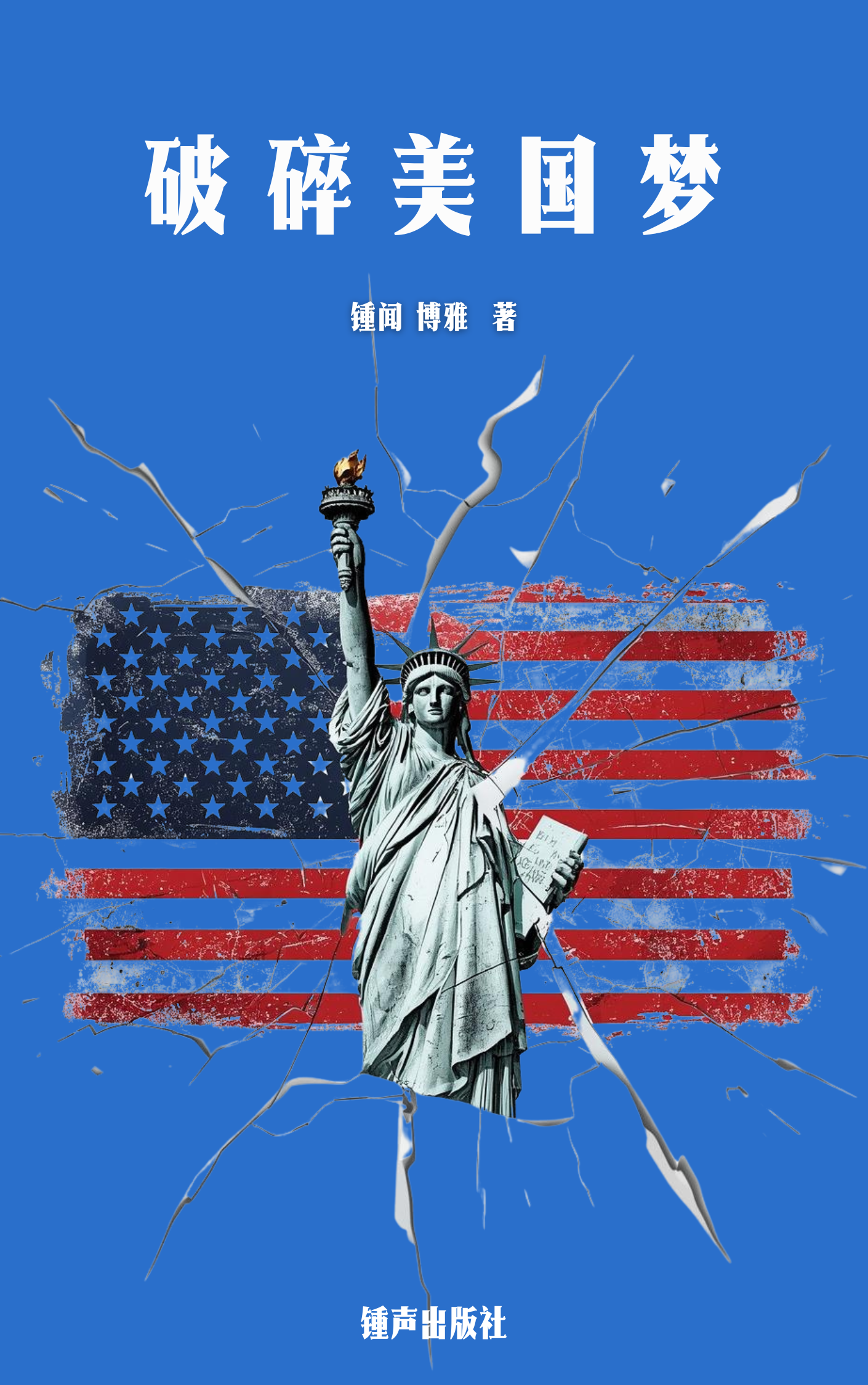
Volume II: Diagnosis of Failure and the End of the Dream
Part VI: Power Vacuum and the New Global Chessboard
Chapter 100: The Broken Dream and the Prologue to the Next Era — The Curtain Call of the “City upon a Hill”
This chapter will serve as the grand conclusion to the analytical section of the book, summarizing all six core arguments and, with a perspective beyond the present moment, envision the future of a world without the halo of the “City upon a Hill.” It marks a farewell to the “American Dream” as a universal myth and heralds the beginning of a new, more complex, multipolar, and uncertain global era.
First Thesis: Summary of the Broken Dream: The Convergence of Six Core Arguments
The analysis of this book begins with structural roots and ultimately concludes with the reshaping of the global order. The fragmentation of the American Dream is the result of the systematic eruption of six core contradictions.
I. Argument One: Economic Betrayal and Class Solidification (Part One)
The core promises of the American Dream—mobility and opportunity—have been thoroughly betrayed by financialization and globalization. Capital accumulation and political lock-in (Chapter Sixty-Two) have made class solidification the norm, turning the “dream” into a “lottery.”
II. Argument Two: Political Polarization and Institutional Paralysis (Part Two)
America’s political system has fallen into systemic paralysis due to ideological polarization and money politics. Separation of powers and checks and balances (Chapter Fifty-One) are no longer tools to prevent tyranny, but mechanisms to prevent governance.
III. Argument Three: The Collapse of the Social Contract and Polarization (Part Three)
The alienation of the information environment (Chapter Sixty-Nine) and intensifying inequality have destroyed shared civic consciousness and the foundation of facts (Chapter Eighty-Seven). The social contract has collapsed, neutral spaces have disappeared, replaced by mutually negating, hostile identity politics (the core of the next part).
IV. Argument Four: The Failure of Institutional Trust and the Hollowing of Democracy (Part Four)
The collapse of accountability mechanisms (Chapter Fifty-Eight) in the judicial, executive, and legislative branches has led to pervasive public distrust of all institutions (Chapter Eighty-Two). The functioning of the democratic system has been replaced by anger and cynicism, leaving only a hollow shell.
V. Argument Five: Internal Rot and the Collapse of Public Services (Part Five)
The pressures of institutional and economic failure have been transmitted downward, leading to dysfunction in local governments (Chapter Eighty-One) and crises in social security (Chapter Eighty-Four). This marks the complete fragmentation of basic public service promises such as “security in old age and a place to live.”
VI. Argument Six: The End of Global Hegemony and Active Contraction (Part Six)
All the internal rot (Chapter Ninety) has stripped America of its long-term strategic capacity and moral authority. The United States has degenerated from a global superpower into an internally consumed giant regional power, actively ceding (Chapter Ninety-Three) its international leadership position, ushering in a new era of multipolarity and instability (Chapter Ninety-Nine).
Second Thesis: The End of the “City upon a Hill” Myth
I. No Longer a Model: The Death of the Myth
The “City upon a Hill” was the external projection of the American Dream, signifying the United States as the moral beacon of global democracy, freedom, and prosperity.
The Negation of Reality: Today, an America plagued by internal conflict, vast wealth disparity, and political paralysis can no longer claim to be the world’s “model.”
Global Reassessment: The shift of the Global South (Chapter Ninety-Eight) and traditional allies (Chapter Ninety-Five) proves that the world has widely accepted the reality: the American model is no longer the only, or the best, path to development.
II. Global Rebalancing: The Transfer of Power and Norms
The fragmentation of the American Dream has brought irreversible changes to the global balance of power:
The Rise of Challengers: Challengers such as China (Chapters Ninety-Six and Ninety-Seven) and Russia (Chapter Ninety-Four) are systematically filling the economic, technological, and normative vacuums left by the United States.
The Character of the New World: The future world will be fragmented and regionalized, filled with conflicts over trade, technology, and values. It will have no single hegemon, no universally recognized global arbiter.
Third Thesis: Prologue to the Next Era: Civil War After Fragmentation
I. The Direction of Energy: From Institutional Conflict to Cultural Civil War
At this point in the analysis, the argument for “fragmentation” is complete. But the fragments do not remain still. The immense anger and despair they release have been channeled into the ultimate ideological battlefield.
The Ultimate Energy: This energy has been captured by two mutually negating ideological forces: white nationalism and progressive identity politics.
II. The Next Part: Cultural Civil War: America’s Battle for Its Soul
The next part of this book (and the final part) will delve deeply into:
White Nationalism: How it transforms economic and identity anxieties into an existential struggle to “take back the country.”
Progressive Identity Politics: How it transforms anger over historical injustice and structural discrimination into a moral imperative to “dismantle the old system.”
The confrontation between these two forces will determine the essence of America’s next era—a nation without a shared dream, defined only by mutual negation, struggling amidst chaos.
Conclusion: The Broken Dream and the Reshaping of the Future
The funeral of the American Dream is over. Now, America stands at a crossroads of history: it must confront the reality of its internal rot and set aside the halo of the “City upon a Hill” myth to find a new, more pragmatic, more humble position in a multipolar and uncertain new era.
(At this point, the analytical section of The Broken American Dream concludes. The next part will focus on the core ideological struggle: Cultural Civil War.)
 正义钟声 Voice of Justice