
The COLLAPSE OF THE AMERICAN DREAM
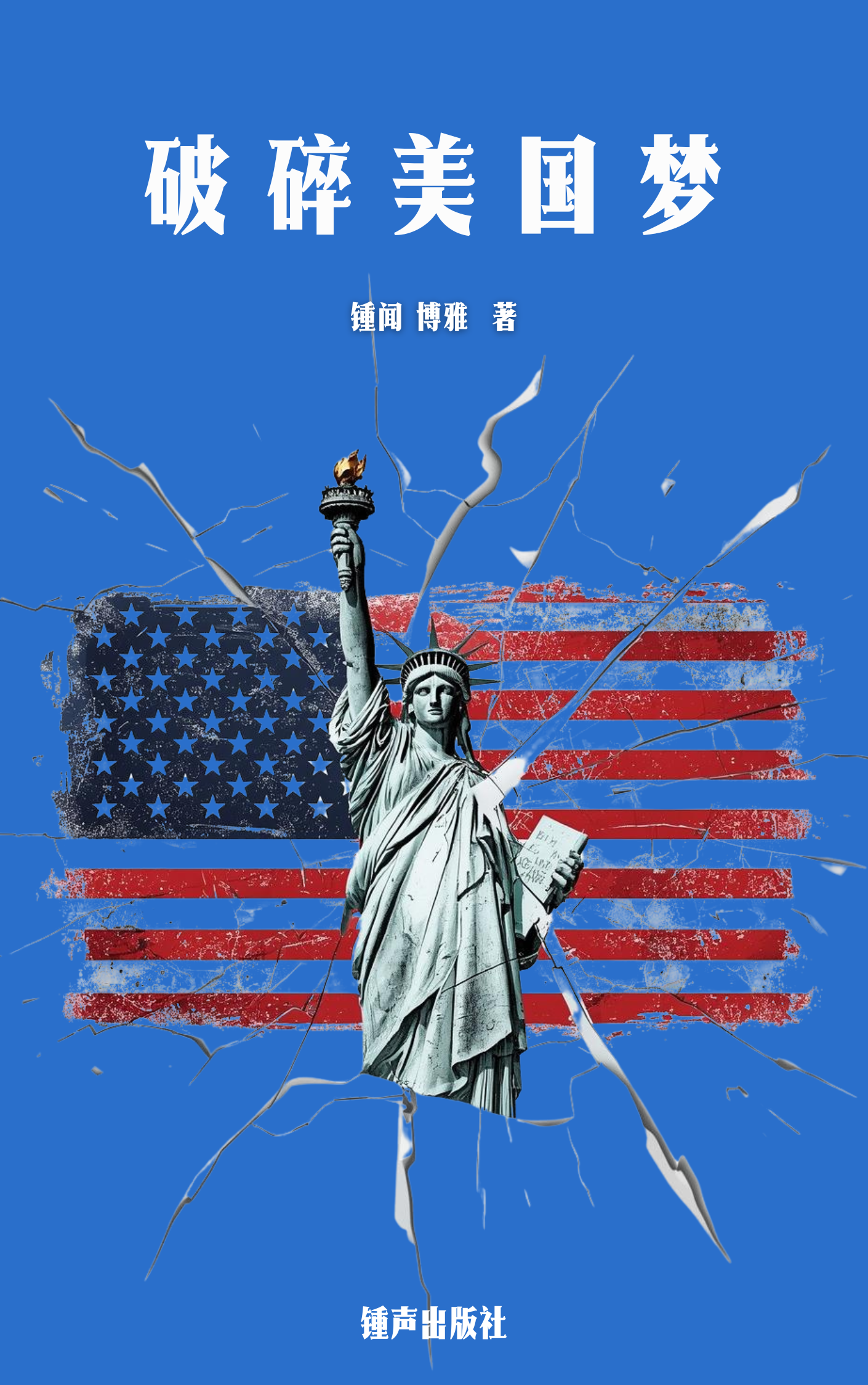
Volume II: Diagnosis of Failure and the End of the Dream
Part IV: The System’s “Resistance” — A Diagnosis of Democracy’s Disease
Chapter 59: The Corrosion of Time: No Institution Can Escape Its Fate — The Inevitable Decay Under Historical Destiny
This chapter will adopt a grand narrative perspective, providing a summary from the angles of historiography and political philosophy. We will argue that the current institutional failure and “resistance” (the core thesis of Part Four) in the United States are not mere political accidents or individual errors, but a historical destiny from which all political systems established by humans find it difficult to escape—”the corrosion of time.” This will emphasize that America’s decline is inevitable rather than accidental, thereby preparing for the summary in the next chapter.
First Thesis: The Iron Law of History: The Life Cycle of Political Systems
I. The Fatalism of Classical Theory: The Cycle of Rise and Fall
Since ancient Greece, political philosophy has recognized that all political systems have a life cycle: from birth (revolution or founding) to maturity (stability and prosperity), then to decline (rigidity and corruption), and ultimately to collapse or transformation.
Aristotle’s Theory of Change: His political theory emphasized that forms of government continuously degenerate from their ideal forms (monarchy, aristocracy, polity) into their corrupted forms (tyranny, oligarchy, democracy/mob rule).
Historical Confirmation: Whether the Roman Republic, the dynastic cycles of China, or the Republic of Venice, the internal mechanisms of their decline are strikingly similar: institutions originally designed to limit power eventually become tools for consolidating vested interests (Chapter Fifty-Six).
II. The Corrosion of Time: The Decay of Normative Spirit
“The corrosion of time” refers to the inevitable process by which, as time passes, the “spirit of the law” is replaced by the “letter of the law,” ultimately causing institutions to decay from within:
First Generation (Founders): Filled with idealism, respecting norms, valuing the public good (Chapter Fifty-One).
Second/Third Generations (Heirs): Begin to treat norms as habits rather than principles that must be upheld.
Final Stage (Erosion Period): Actors systematically begin to view norms as obstacles to self-interest, seeking loopholes (Chapter Fifty-Two), transforming institutions from bridges serving the public good into tools for pursuing self-interest.
Second Thesis: America’s Destiny: The Inevitable Transition from “Exceptional” to “Ordinary”
III. The Collapse of American Exceptionalism: Unavoidable Inertia
The American founders believed that through the ingenious design of separation of powers and checks and balances, they had created an “eternal” system capable of transcending human weakness (The Federalist Papers). However, the analysis in this book proves that the American system ultimately failed to escape the historical destiny of corrosion by time.
From Checks and Balances to Gridlock (Part Two): The design of checks and balances was intended to limit tyranny, but with intensifying polarization (Chapter Seven) and partisan loyalty (Chapter Thirty-Six), it was corroded into “institutional lock-in” and “systemic paralysis.”
From Anti-Corruption to Corruption (Chapter Fifty-Four): The Constitution aimed to limit the influence of self-interest on politics, but the systematic development of campaign finance corroded it into “legalized bribery.”
From Oversight to Cover-Up (Chapter Fifty-Eight): Accountability mechanisms were designed to oversee the guardians, but were corroded into the “self-protection of power.”
The Trump phenomenon (Part Three) and the decline it accelerated are not failures of American institutional design, but the inevitable fulfillment of history’s iron law—any institution, faced with time, will develop “resistance” driven by internal self-interest and toward decay.
IV. The Accelerating Effect of Modern Factors: Technology and Globalization
Although decline is an inevitable destiny, modern factors of technology and globalization (Chapter Fifty-Three) have greatly accelerated the corrosion process of American institutions (Chapter Forty-Eight).
Digital Acceleration: Driven by the self-interest of social media and algorithms (clicks), the “shared foundation of facts” painstakingly built by traditional media over decades was destroyed in just a few years (Chapter Fifty-Seven).
Globalization Acceleration: The mobility of capital (Chapter Fifty-Five) has enabled the wealthy and corporations to evade responsibility globally, rendering the “punishability” of institutions (Chapter Fifty-Eight) completely ineffective in the economic sphere.
Third Thesis: The Revelation of Destiny: The Urgency of Reconstitution
V. Acknowledging Inevitability: Breaking Free from the Illusion of “Accidentalism”
The grand perspective of Chapter Fifty-Nine compels us to break free from the illusion of attributing problems to “accidental factors” (such as a particular leader, a particular scandal).
The Essence of the Problem: America’s crisis is “endogenous and structural”—a manifestation of historical inevitability in a specific era.
The Urgency of Reconstitution: Only by acknowledging this historical inevitability can we understand the futility of patching the old system (Chapter Forty-Nine) and accept the necessity of structural reconstitution.
VI. History’s Ultimate Test: Transformation or Collapse
Historical destiny does not mean that nothing can be done. Rather, it poses the ultimate test for institutions:
Whether a system possesses genuine resilience lies not in its ability to avoid problems, but in its ability to achieve “systematic, creative transformation” through internal mechanisms once problems erupt, thereby avoiding ultimate collapse.
This is the fundamental choice facing the United States on the “brink of fragmentation” (Chapter Fifty).
VII. Chapter Conclusion: The Ultimate Diagnosis of Part Four
Chapter Fifty-Nine draws a concluding summary for Part Four, “The System’s ‘Resistance’”:
Ultimate Diagnosis: The failure of American institutions is the historical destiny of systematic corrosion of normative spirit by human self-interest. This corrosion manifests as the inertia of loophole exploitation, legal obsolescence, legalized bribery, evasion of responsibility, and failure of accountability.
Transition to the Next Stage: Since institutional failure has become inevitable and irreversible, public anger and social energy will inevitably shift toward deeper “cultural and identity” wars.
 正义钟声 Voice of Justice