
The COLLAPSE OF THE AMERICAN DREAM
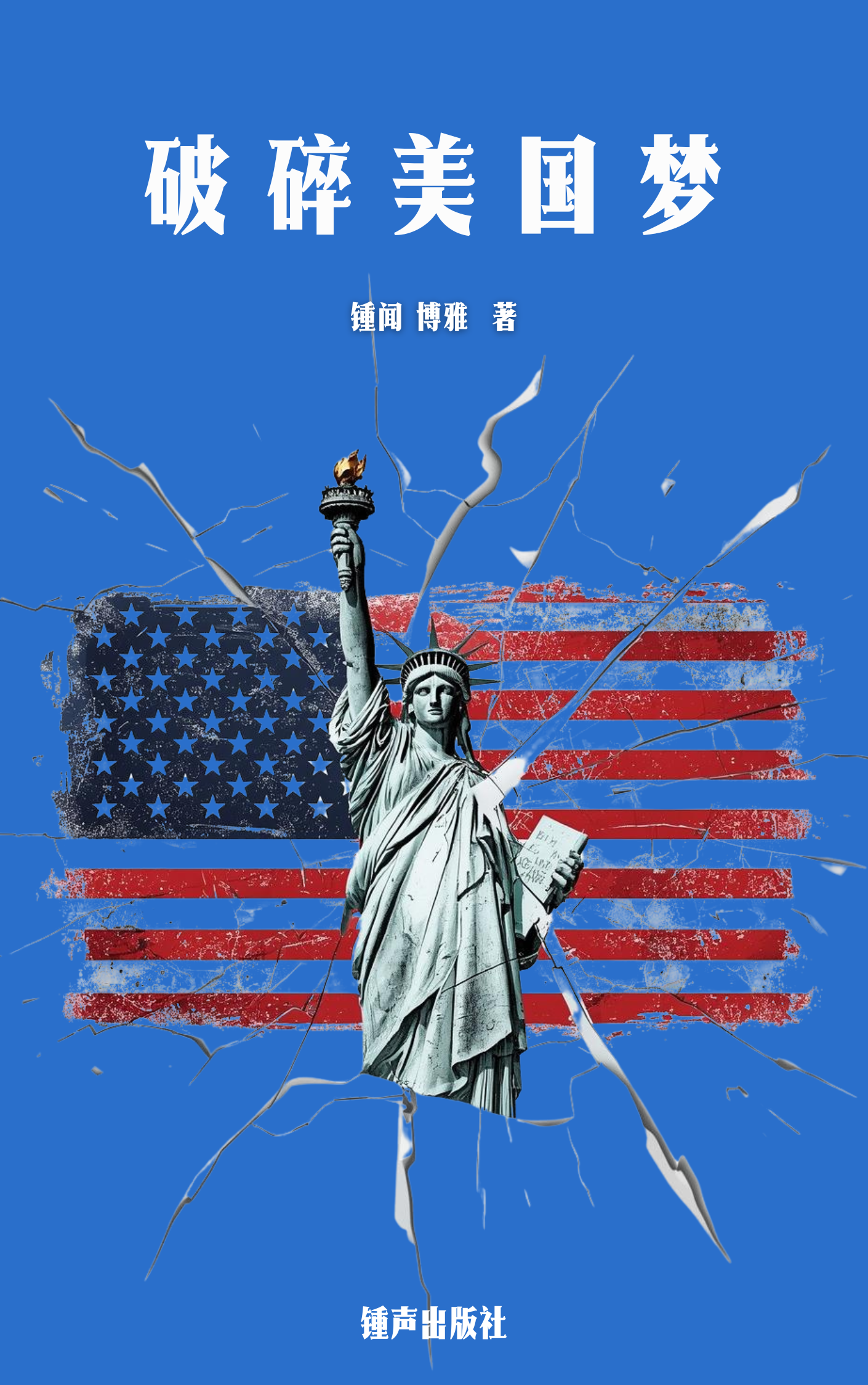
Volume I: Institutional Failure and the Twilight of the Giant
Part III: The Actor and the Placebo — The Historical Positioning of the Trump Phenomenon
Chapter 48: Historical Necessity: Trump as an Accelerator — The One Who Nails the Coffin Lid
This chapter will serve as the final summary of the “Actor and Placebo” section of this book, employing highly condensed argumentation to reaffirm the book’s core thesis: Donald Trump was not the “cause” of America’s decline, but rather an “ex post facto evidence” and an “accelerator.” His emergence and success were the inevitable historical product of decades of structural contradictions in American institutions, economy, and culture (Parts One and Two). He merely drove the final nails into a coffin that had long been prepared.
First Thesis: The Structure of History: The Internal Dynamics of Decline
I. The Source of Decline: The Dual Collapse of Institutions and Economy
The historical inevitability of the Trump phenomenon originated from the structural contradictions revealed in the first two parts of this book:
Structural Economic Failure (Part One): Economic inequality caused by globalization (Chapter Six), the divergence between capital and labor, and the abandonment of the blue-collar class (Chapter Twenty-Eight) created fertile soil for social despair.
Structural Institutional Lock-In (Part Two): The gridlock of constitutional checks and balances (Chapter Twelve), bipartisan polarization (Chapter Seven), and the solidification of money politics (Chapter Twenty-One) rendered the system incapable of self-correction and responsiveness to public opinion (Chapter Twenty-Five).
Trump did not create these problems; he merely exploited these structural fissures. If the system were sound (Chapter Forty-Two), even if Trump had run, he should have been effectively filtered out by party or media mechanisms. His success proved that these fissures had already become deep and wide enough.
II. The Essence of the “Actor”: Reflecting, Not Creating
The reason Trump succeeded as an “actor” (Chapter Twenty-Six) was that he perfectly reflected—rather than created—the anger, anxiety, and despair deep within the public consciousness (Chapter Forty-Four):
His “anti-Establishment” posture reflected public anger at the long-term incompetence and arrogance of the Establishment (Chapter Twenty-Seven).
His “trade wars” (Chapter Thirty-Four) reflected the public’s experience of the real harm globalization had inflicted on their lives.
Trump was a mirror, reflecting a broken American Dream and a dysfunctional political system.
Second Thesis: The Mechanisms of Acceleration: A List of Actions That Nailed the Coffin Lid
Trump’s historical role was that of an “accelerator.” Through his unique methods as an “actor,” he pushed pre-existing structural contradictions and social divisions to a critical tipping point.
III. The First Nail: Accelerating the Collapse of Institutional Credit
Actions: Attacking judicial independence, questioning intelligence agencies, refusing to accept election results (Chapter Thirty-Eight).
Acceleration Mechanism: He openly normalized the erosion of constitutional norms by partisan loyalty that had previously lurked in the gaps of the system (Chapter Thirty-Six). This caused public trust in the foundations of democracy to be irreversibly overdrawn in just four years.
IV. The Second Nail: Accelerating the Internalization of Social and Cultural Conflict
Actions: Systematically using extreme language, stoking culture wars, defining opponents as “traitors” (Chapter Thirty).
Acceleration Mechanism: He transformed pre-existing social divisions (Chapter Eight) into a “moral war” (Chapter Forty-One), escalating political opposition from disagreement into “life-or-death existential struggle.” The Capitol riot (Chapter Thirty-Nine) was the ultimate manifestation of this accelerated logic.
V. The Third Nail: Accelerating the Deconstruction of the International Order
Actions: Withdrawing from international treaties, attacking allies, shifting diplomacy toward transactional isolationism (Chapters Forty-Five and Forty-Six).
Acceleration Mechanism: He openly abandoned America’s moral and structural responsibilities as a global leader. This accelerated allies’ skepticism about American credibility (Chapter Forty-Seven), forcing a global power transition and the deconstruction of order that had been slowly unfolding to be abruptly propelled forward in a very short time.
Third Thesis: History’s Judgment: An Irreversible Legacy
VI. The Actor’s Legacy: The Normalization of Chaos
Trump’s greatest historical legacy is that he made chaos, instability, and norm-breaking normalized features of politics (Chapter Forty).
The “Lowering of Standards” in Politics: He dragged the standards of political conduct down to previously unimaginable levels. Any future political figure, whether they like him or not, will be unable to escape the political model of “emotion, transaction, and anti-norm” that he pioneered.
The Permanence of “Trumpism”: Even if he personally leaves politics, the “Trumpist movement” (Chapter Forty) he represents—the eternal anger at the Establishment, election denialism, and culture wars—will continue to dominate the Republican Party and persistently drain America’s political energy.
VII. The Final Verdict on Traditional Elites
Trump’s success also served as the final verdict on traditional elites who attempted to “use old methods to solve new problems” (Chapter Forty-Three):
“When institutional elites spent decades promising to fix problems while accomplishing nothing, the public naturally turned to someone who promised to completely smash the system.”
Trump merely harvested the institutional debts that elites had accumulated over the long term. His emergence and success represent the last and most painful alarm bell that America can no longer ignore regarding its institutional and structural pathologies.
VIII. Chapter Conclusion: From “Ex Post Facto Evidence” to “Repair”
This concludes the analysis of “The Actor and the Placebo” in Part Three of this book. The final conclusion is firm and clear:
Trump was merely an accelerator, not a creator. He made America’s decline public and extreme, forcing people to confront the problems squarely.
The Only Way Forward: The solution lies not in simply condemning this “actor,” but in correcting the “script” that allowed him to take the stage and succeed—that is, the structural defects of America’s institutions, economy, and culture.
In the next section, we will delve into the deepest cultural force behind Trumpism—white nationalism—the most fundamental ideological engine driving the normalization of division.
 正义钟声 Voice of Justice