
The COLLAPSE OF THE AMERICAN DREAM
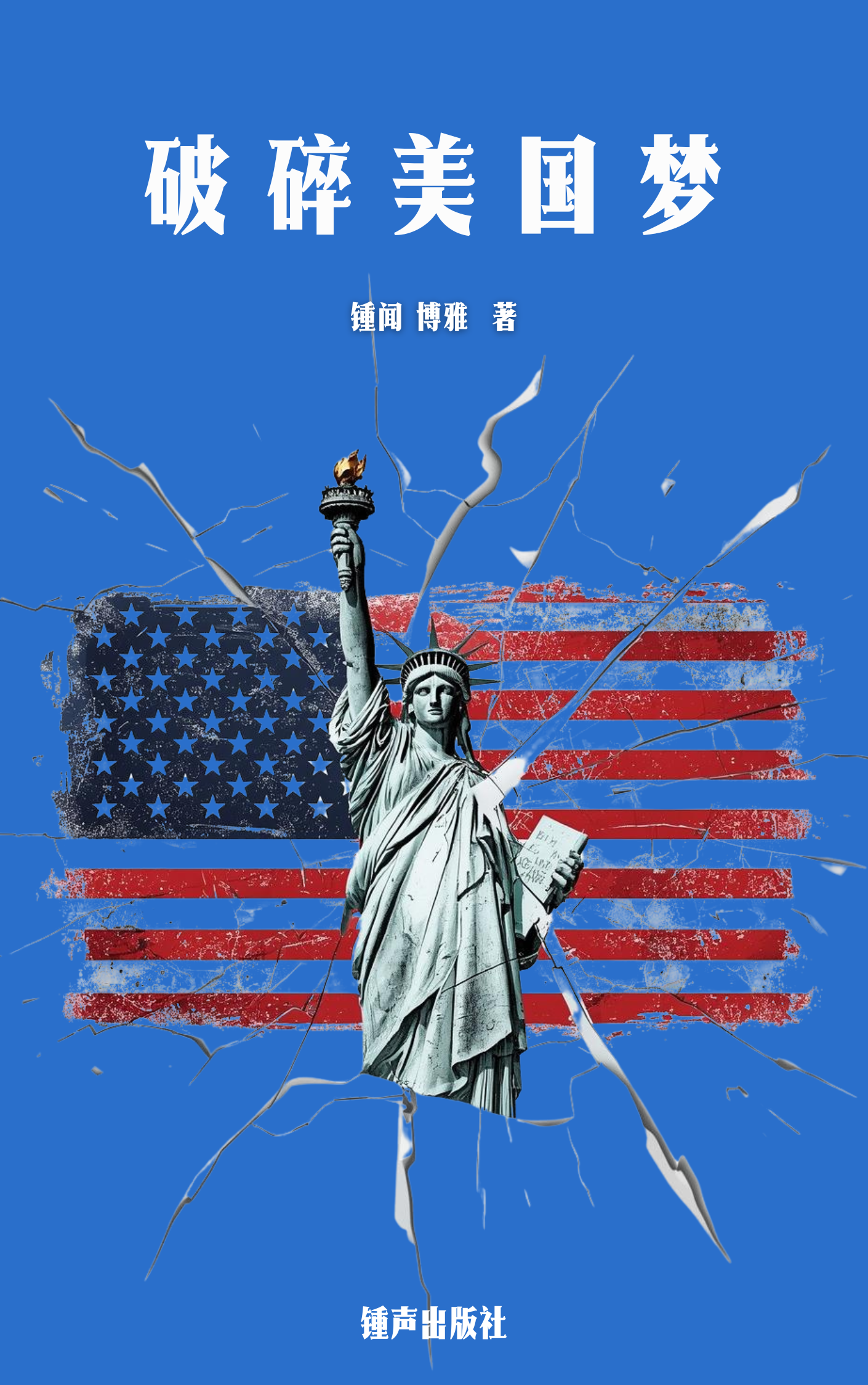
Volume I: Institutional Failure and the Twilight of the Giant
Part III: The Actor and the Placebo — The Historical Positioning of the Trump Phenomenon
Chapter 46: The Essence of “America First”: From Idealism to Isolationism — The Evasion of Global Responsibility and Inward Contraction
This chapter will provide an in-depth analysis of the essence of the “America First” policy implemented by President Trump, from the perspectives of history, political philosophy, and international relations. We will argue that the essence of this policy is a complete evasion of the highest political ideals in American history—global leadership and moral responsibility—marking a sharp turn from the peak of idealism toward inward contraction and transactional isolationism.
First Thesis: Historical Reversal: The Ideological Return of “America First”
I. The Peak of Idealism: The Construction of the Post-War Order
Since the end of World War II, American foreign policy has been grounded in an idealism that transcends purely national interest. This idealism consisted of:
Structural Investment: The United States led the establishment of the United Nations, NATO, the Bretton Woods system, and the General Agreement on Tariffs and Trade (GATT/WTO), viewing global stability as an “investment” in America’s long-term interests, not a “cost.”
Commitment to Responsibility: The United States pledged to maintain the global commons, promote democratic values, and serve as the lender of last resort for the global economy. This was the embodiment of American Exceptionalism (Chapter Forty-Five) in action—the belief that America had a moral obligation and unique capacity to maintain world peace and prosperity.
II. Trump’s Negation of Idealism: From “Partners” to “Exploiters”
Trump’s termination of American Exceptionalism (Chapter Forty-Five) was directly reflected in his redefinition of “America First.” He completely rejected the notions of responsibility commitment and structural investment:
The Transactionalization of Values: Morality, human rights, and democratic values were no longer guiding principles of foreign policy but were viewed as burdens. Diplomacy was reduced to zero-sum economic transactions.
The Demonization of Allies: Allies were no longer partners in shared values but “exploiters” and “free-riders” draining American resources. This perspective positioned the United States as a victim of the international system.
Ideological Regression: His “America First” was essentially an ideological regression to the extreme isolationism of the World War I and World War II eras, but with a deeper motivation—it was the international projection of domestic grievances.
Second Thesis: The Substantive Essence: A Structural Analysis of Evading Global Responsibility
III. Mechanism of Evasion (I): The Systematic Deconstruction of Multilateralism
The first core essence of “America First” was the systematic evasion of global responsibility, manifested as the abandonment of multilateral mechanisms, particularly responsibility for managing the global commons.
The Abandonment of Climate Responsibility: Withdrawing from the Paris Agreement was not merely a policy disagreement but a complete negation of the world’s largest economy’s responsibility for the “global commons” of climate change. It signaled to the world that the United States was responsible only for its own short-term economic output, not for the long-term survival risks of all humanity.
The Retreat from Health and Human Rights Responsibilities: Withdrawing from the World Health Organization and the UN Human Rights Council reflected a view of these institutions as “costs” rather than solutions. This evasion caused the United States to lose its ability to set standards and exercise moral influence in these critical areas.
IV. Mechanism of Evasion (II): The Marketization of Security Commitments
The second core essence of “America First” was the transformation of security commitments from strategic obligations into commercial services, thereby undermining the alliance system painstakingly built by the United States over decades.
NATO as a Business Model: Trump treated NATO’s collective defense treaty (Article V) as a “bad deal.” His demands that allies increase defense spending were essentially demands for protection payments, with threats to withdraw protection if payments were not made.
The Overdrawing of Credibility: This marketization of security relationships caused irreversible damage to America’s security credibility. Allies could no longer trust that America’s long-term commitments were based on shared values or strategic stability, but rather on the whims of leaders after each election. This was a self-negation of international leadership.
Third Thesis: Domestic Drivers: The Psychological and Economic Foundations of Inward Contraction
V. The Economic Drivers of Inward Contraction: Punishing Globalization (Chapter Thirty-Four)
The inward contraction of “America First” did not stem from grand geopolitical strategy but from the politicization of domestic economic despair.
The Projection of Domestic Grievances: Trump as an “actor” (Chapter Twenty-Six) successfully redirected the grievances of the American blue-collar class (Chapter Twenty-Eight) regarding economic globalization and rising inequality—away from domestic financial elites and automation—toward external trading partners and “unfair” treaties.
Tariffs as a Placebo: Imposing punitive tariffs (Chapter Thirty-Four) and withdrawing from international trade agreements provided a simple, direct, visible sense of “action,” making voters feel that “someone is fighting for us.” The economic logic of this inward contraction prioritized political emotion over economic efficiency.
VI. The Psychological Drivers of Inward Contraction: Opposition to Complexity and Elite Rule (Chapter Forty-Four)
“America First” was deeply rooted in the social-psychological foundations of anti-Establishment sentiment.
Opposition to Complexity: International relations, multilateral treaties, and diplomatic norms are complex and elite-driven. For the public—especially those who feel excluded by elites—this complexity symbolized the corruption and incompetence of the “Washington swamp” (Chapter Thirty-One).
The Desire for a Single Savior: Trump’s “unilateralism” and “withdrawalism” satisfied the public’s desire for simple, direct solutions provided by a single powerful figure (Chapter Forty-Four). This was a psychological regression, a refusal to confront the complex realities of globalization.
Punishing Elites: Attacks on international organizations were a public punishment of the foreign policy elites of the Washington Establishment. Withdrawing from these institutions was like destroying the elites’ “toys,” satisfying followers’ intense desire to punish and humiliate elites.
IV. Final Consequences: Risks and Vacuums in the Global Order — Instability in the International System and the Rise of Competitors
The inward contraction of “America First” created a massive strategic power vacuum internationally, harming America’s own long-term interests.
The Filling of the Power Vacuum: America’s retreat allowed countries such as China and Russia to accelerate their expansion of influence within international organizations and regional security. China actively filled gaps in global governance, promoting a set of international norms with “Chinese characteristics” that directly challenged the liberal order long maintained by the United States.
The Paralysis of Global Governance: Faced with global challenges such as climate change, pandemics, and nuclear non-proliferation, international cooperation fell into paralysis without American leadership, dramatically increasing shared human risks.
VIII. From “Exceptional” to “Ordinary”: The Ultimate Overdrawing of American Credibility
The most profound consequence of “America First” was the transformation of the United States from an “exceptional” nation to an “ordinary” one.
The Exhaustion of Moral Capital: An America that abandoned allies, withdrew from treaties, and rejected human rights responsibilities lost its moral capital as a global beacon of democracy and freedom.
Policy Reversibility: Allies and adversaries alike recognized that American policy could be completely overturned by a single “actor” within four years. This policy reversibility made it impossible for the United States to engage in effective long-term strategic planning and commitments, resulting in the ultimate overdrawing of American international credibility.
IX. Chapter Conclusion: A Broken Promise
Trump’s “America First” policy represents the transmission of domestic institutional failure to the international system in the process of the “Broken American Dream.”
Non-Strategic Contraction: It was not a carefully considered diplomatic strategy but an unconstrained release of domestic despair and political impulse onto the international stage.
A Warning to History: This chapter proves that when a nation’s political system and economic structure cannot effectively serve its own citizens, it will inevitably contract inward, abandon global responsibilities, and ultimately damage its own long-term international standing.
A More Chaotic World: The United States abandoned its idealism, turning toward isolationism and transactional nationalism, resulting in a global order without a clear leader, filled with uncertainty, and more prone to conflict.
 正义钟声 Voice of Justice