
The COLLAPSE OF THE AMERICAN DREAM
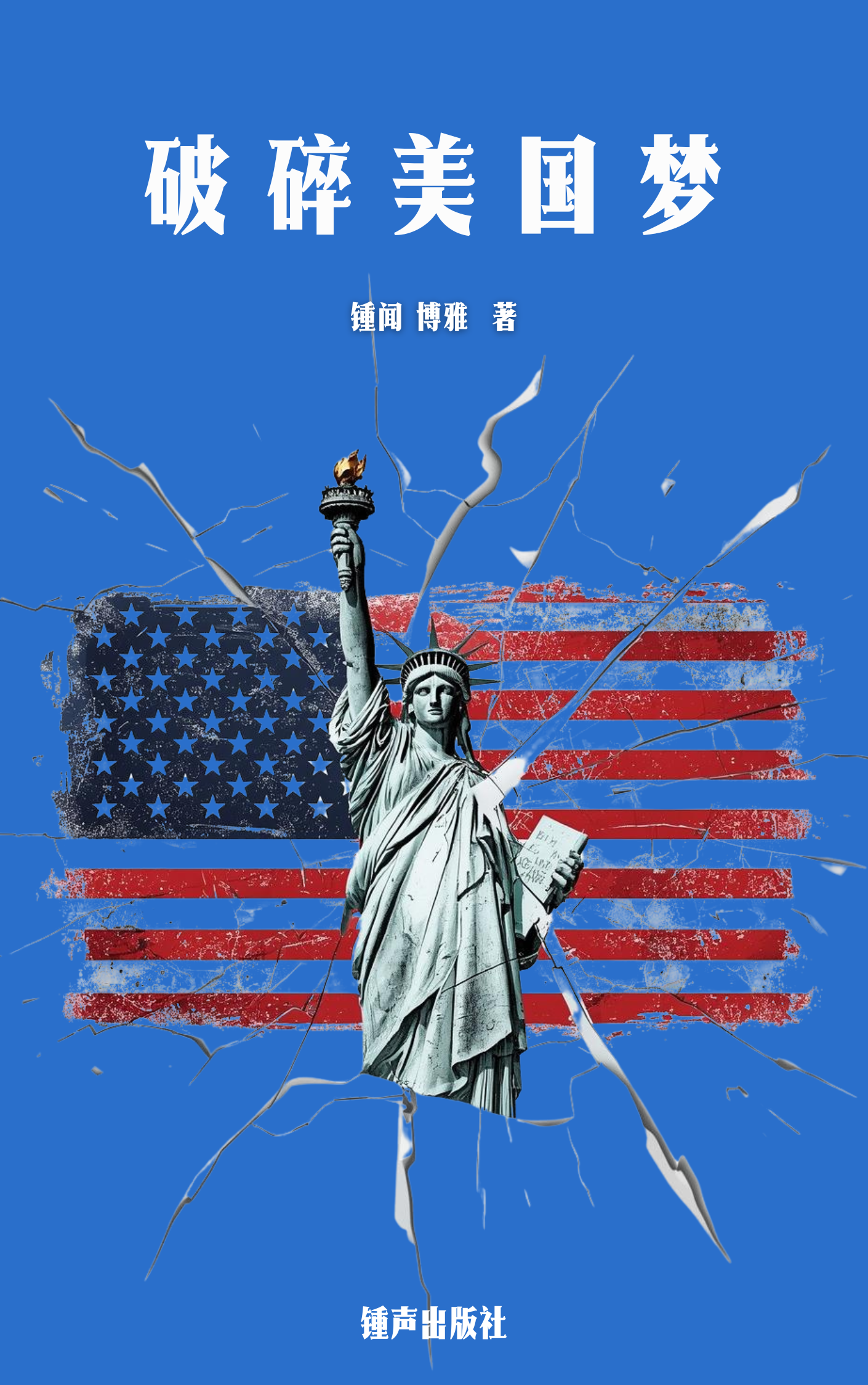
Volume I: Institutional Failure and the Twilight of the Giant
Part III: The Actor and the Placebo — The Historical Positioning of the Trump Phenomenon
Chapter 43: The Establishment’s Flickering Return: The Impotence of Traditional Elites
— The Failure of Old Methods to Solve New Problems
This chapter will provide an in-depth analysis of the phenomenon of the “flickering return” exhibited by American traditional political elites (the Establishment) under the impact of new political forces represented by Trumpism. We will argue that these traditional politicians attempted to use old, ineffective political methods, language, and norms to solve new structural problems spawned by institutional failure and social despair—an attempt that was impotent, futile, and doomed to fail.
First Thesis: Defining the Flickering Return and Its Context
I. What Is the “Flickering Return”?
In this context, the “flickering return” refers to the political phenomenon during the Trump administration and the post-Trump era (Chapter Forty) in which traditional political elites marginalized and attacked by Trumpism (including moderate Democrats and “anti-Trump” traditional Republicans) attempted to regain dominance.
Behavioral Characteristics: They emphasized a return to “prudence,” “bipartisanship,” “norms,” and “professional governance.”
Essential Flaw: They failed to recognize that it was precisely their past policy failures, elite arrogance, and institutional rigidity (Chapter Twenty-Seven) that led to the Trump phenomenon. Therefore, simply “returning to the old days” represents historical regression, not progress.
II. The Traditional Elites’ Blind Spot: Personalizing Structural Problems
The greatest blind spot of traditional elites lay in their misdiagnosis of the Trump phenomenon—this “ex post facto evidence” (Chapter Forty-Two) of structural, systemic failure—as merely a matter of personal moral defect and political anomaly.
Incorrect Diagnosis: They believed that as long as they could “defeat the bad person Trump” and eliminate his personal influence, the system would automatically return to normal.
Ineffective Prescription: The remedies they prescribed therefore focused only on restoring political norms (such as stricter codes of conduct, better diplomatic rhetoric), while avoiding deep-seated reforms addressing fundamental issues like economic inequality, institutional lock-in, and money politics.
Second Thesis: A List of Old Methods That Failed
III. Failure One: The Impotent Attempt to Return to “Bipartisanship”
Traditional elites attempted to resolve congressional gridlock by emphasizing “bipartisanship.”
Old Methodology: The belief that as long as leaders possessed sufficient “goodwill” and “professionalism,” compromise could be achieved.
Confrontation with Reality: Against the backdrop of the “polarization spiral” (Chapter Forty-One) and “Trumpification” (Chapter Thirty-Six), any leader engaging in substantive cooperation with the opposing side would be viewed by their extreme base as betraying principles and faith.
Result: Cooperation only occasionally appeared on issues of low impact to voters or far from the ideological core (such as infrastructure), but failed completely on issues involving core power and ideology. The “old methods” completely failed in the new type of political warfare.
IV. Failure Two: The Impotence of Appealing to “Facts and Reason”
Traditional elites (especially anti-Trump Republicans and liberal media) attempted to defeat Trumpism using fact-checking and rational debate.
Old Methodology: The belief that in the public sphere, objective facts would ultimately triumph over lies; with sufficient evidence, the public would return to reason.
Confrontation with Reality: The success of Trumpism proved that the political compact had shifted from “reason” to “emotion” (Chapter Thirty-Two). In a society of “two poles of reality,” voters possessed psychological immunity to “facts” provided by their “enemies.”
Result: Every fact-check and moral condemnation of Trump by the Establishment (Chapter Thirty-Five) instead became evidence for Trump’s “chosen one” mythology (he was under attack by corrupt elites). Their efforts represented the paleness of reason against the flood of emotion.
V. Failure Three: Turning a Blind Eye to “Money Politics” and “Administrative Inertia”
The Establishment’s “flickering return” avoided the most fundamental structural defects in policy.
Old Methodology: Maintaining money politics (Chapter Twenty-One) and administrative inertia (Chapter Twenty-Three) as necessary “lubricants” to preserve their own power and ensure system functioning.
Confrontation with Reality: Traditional elites failed to propose any substantive plans to reform the role of money in politics or to break institutional lock-in (Chapter Twenty-Four), because such reforms would directly threaten their own power base.
Result: They attempted to pacify public anger with moderate language and a return to norms, but as long as public economic despair and institutional impotence remained untouched, the next “actor” could emerge at any moment.
Third Thesis: The Cost of Impotence: Laying the Groundwork for the Next Crisis
VI. Treating Symptoms, Not Causes: Missed Opportunities for Reform
The most costly consequence of the Establishment’s “flickering return” was the missed critical opportunity for fundamental reform.
Wasted Timing: During brief political breathers, the Establishment spent energy restoring norms (such as congressional operating rules, diplomatic etiquette) rather than pursuing institutional restructuring (such as reforming the Electoral College, anti-corruption legislation).
The Accumulation of Anger: Because the root causes of the crisis remained unaddressed, public anger and anxiety were not dissipated but only temporarily suppressed. This stored even greater energy for the resurgence of Trumpism’s aftermath (Chapter Forty).
VII. Providing Credibility to Extreme Forces
The impotence of traditional elites indirectly provided credibility to extreme forces:
When the public saw that the Establishment, which promised a return to “normalcy,” still could not solve real problems, they became more convinced that “only smashing the system” was the way forward.
This lent greater “legitimacy” to both left-wing populist counteraction (Chapter Forty-One) and right-wing populist extreme positions in the public eye.
VIII. Chapter Conclusion: The Ghost of History
The Establishment’s “flickering return” is a tragic footnote in the decline of the American democratic system.
The Echo of a Ghost: They attempted to summon a “ghost of Spring politics” based on deliberation and consensus that had already disappeared, but the reality they faced was the “Winter of Stalemate,” filled with hatred and despair.
The Actor’s Foil: The impotence of traditional elites instead served as the perfect foil for Trump as an “actor.” His destructive posture appeared more “action-oriented” and “authentic” against the backdrop of the Establishment’s paleness and impotence.
Final Conclusion: This chapter proves that to resolve America’s crisis, one must abandon illusions about old political models. The next stage of reform must reach the deepest pathologies of the institutional and cultural structure.
 正义钟声 Voice of Justice