
The COLLAPSE OF THE AMERICAN DREAM
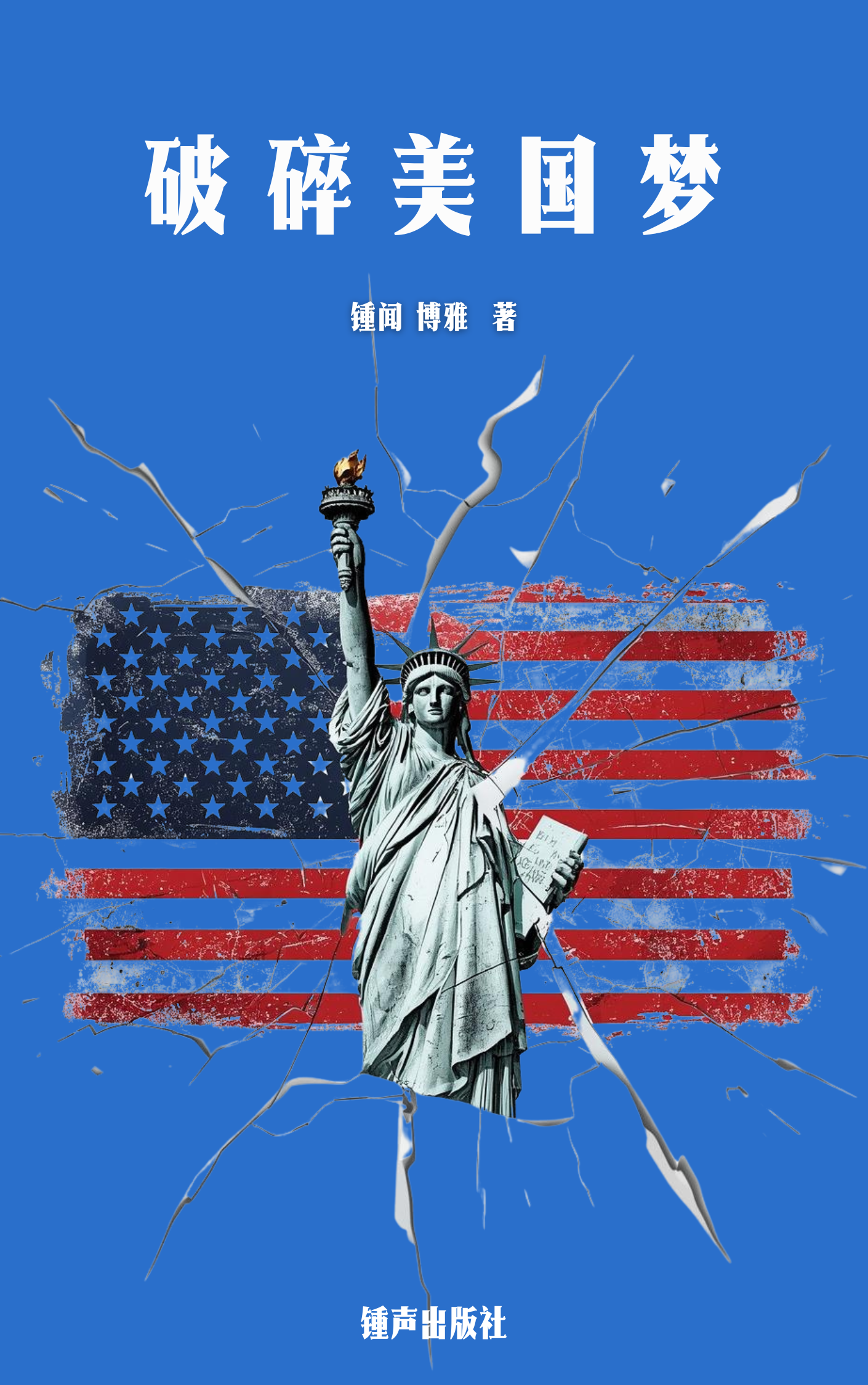
Volume I: Institutional Failure and the Twilight of the Giant
Part III: The Actor and the Placebo — The Historical Positioning of the Trump Phenomenon
Chapter 40: The Post-Trump Era: Aftermath and the Normalization of Division
— The Movement Endures After the “Actor” Departs
This chapter will provide an in-depth analysis of how, after Trump left office, although the individual briefly departed from the center of power, the “Trumpist Movement” he ignited as an “actor” continued to exist with powerful inertia. We will argue that American politics in the post-Trump era will be defined by the aftermath of Trumpism and the normalization of social division, proving that the core of the Trump phenomenon is structural and collective, not merely temporary and personal.
First Thesis: Trumpism: From Individual to Ideology
I. The Essence of the Trump Phenomenon: From “Actor” to “Doctrine”
Part Three of this book positioned Trump as an “actor” and a “placebo” (Chapter Twenty-Six), but his historical significance lies not in his four years in office, but in the “Trumpism” he spawned and solidified—a new political ideology.
From Personal Charisma to Group Identity: Trumpism has transformed from a political phenomenon based on Trump’s personal charisma into a political movement with a clear group identity, ideological creed, and social foundation.
The Core Tenets of the Doctrine:
Election Denialism: The collapse of institutional credit (Chapter Thirty-Eight), the belief that democratic electoral processes are manipulated by the “Deep State.”
Anti-Establishment Warfare: Permanent hostility toward Washington elites, mainstream media, expertise, and globalization.
The Primacy of Culture Wars: Placing political struggle above the defense of cultural values and identity (Chapter Eight).
II. The Roots of the Aftermath: The Soil Unchanged, the Actor Replaced
The reason Trumpism can persist in the post-Trump era lies fundamentally in the fact that the soil that nurtured it remains unchanged:
Institutional Lock-In: The structural defects of the Constitution (Part Two) and the difficulty of constitutional amendment (Chapter Twenty-Four) persist.
Social Despair: Economic inequality, the decline of the Rust Belt (Chapter Twenty-Eight), and cultural fragmentation (Chapter Eight) remain severe.
Because these structural problems remain unresolved, Trumpism, as a “stress response” to social despair (Chapter Twenty-Six), will naturally continue.
Second Thesis: The Normalization of Political Realignment and Deep Division
III. The Irreversibility of the Republican Party’s “Trumpification”
As analyzed in Chapter Thirty-Six, the “Trumpification” of the Republican Party has become an irreversible norm. The Republican Party in the post-Trump era exhibits the following characteristics:
The Continuation of Loyalty Tests: Loyalty to Trump personally (even when he is out of office) remains the sole “loyalty test” for gaining political capital within the Republican Party. Any political figure attempting to return to traditional Republican paths faces the risk of being purged from the party.
The Internalization of Populism: Republican candidates at the local, state, and congressional levels have internalized the populist, anti-Establishment, and culture war elements of Trumpism as their core political language.
The Rise of New Leaders: Even without Trump, new Republican leaders must play the role of “Trump’s successor” or “a milder version of Trump” to secure his voter base. This proves that power has shifted from the individual “actor” to the “movement” itself.
IV. The Normalization of Partisan Opposition and the “Two Poles of Reality”
In the post-Trump era, the depth of political opposition has evolved from contentious policy disagreements into the “two poles of reality,” causing long-term damage to the democratic system.
The Institutionalization of Election Denialism: Millions of Republican voters still believe that the 2020 election results were fraudulent. The institutionalization of this belief means that any future election results may be challenged, leaving the compact for peaceful transfer of power in long-term suspension.
The Shadow of Political Violence: The aftermath of the Capitol riot (Chapter Thirty-Nine) has made political violence no longer unimaginable. Both sides believe the other poses an existential threat to the nation, making political escalation possible at any moment.
Third Thesis: The Sustained Frenzy of Media and Culture
V. The Continued Symbiosis of Media and the Normalization of “Anti-Trump” Sentiment
After Trump left the center of power, the symbiotic relationship between media (Chapter Thirty-Five) and him continued in a new form:
Conservative Media: Continue to portray him as an “exiled hero” persecuted by Washington elites (Chapter Twenty-Nine), constantly providing their supporters with a “placebo” and sustained anger (Chapter Thirty-Two).
Liberal Media: Continue to view Trump as the “number one threat to democracy.” Sustained focus on the Trump phenomenon keeps media attention locked on personal drama, preventing an effective return to in-depth oversight of structural governance issues (such as those in Part Two).
“Anti-Trump” Identity Politics: Opposition to Trump has become a core identity for Democrats and their supporter base. This keeps political focus still fixed on the “actor,” rather than on resolving the social causes that led to his emergence.
VI. The Escalation of Culture Wars and the Opening of New Battlefields
The culture wars in the post-Trump era have not ceased but have shifted to more grassroots and localized battlefields:
The Polarization of Local Politics: Political radicalization has spread from Washington to the state, county, and municipal levels. Disputes over school boards, libraries, and public health policy have all become culture war battlefields for Trumpism.
The Redefinition of Identity and Power: The Trumpist movement has merged with deeper currents of white nationalism, attempting to culturally redefine who is a “real American” and who holds the “sovereignty and power” of the nation.
VII. Chapter Conclusion: A Nation Without a Middle Ground
The “aftermath and normalization of division” in the post-Trump era serves as a powerful summary of this book’s core thesis: the Trump phenomenon is “ex post facto evidence” of institutional decay, not its root cause.
Movement Greater Than the Individual: His political legacy has transcended his person, becoming an enduring, destructive force in American politics.
The Disappearance of the Middle Ground: Institutional lock-in and the normalization of Trumpism have caused the rational middle ground, space for compromise, and shared reality in American politics to almost completely disappear. The nation is locked in a state of high conflict, high attrition, and low efficiency.
A Warning to History: Once a mature democratic system is ignited by the flames of populism, even after the “actor” exits the stage, the flames continue to burn. This lays the tragic foundation for Part Three’s final pursuit of “Reflection and the Path Forward” (subsequent chapters).
 正义钟声 Voice of Justice