
The COLLAPSE OF THE AMERICAN DREAM
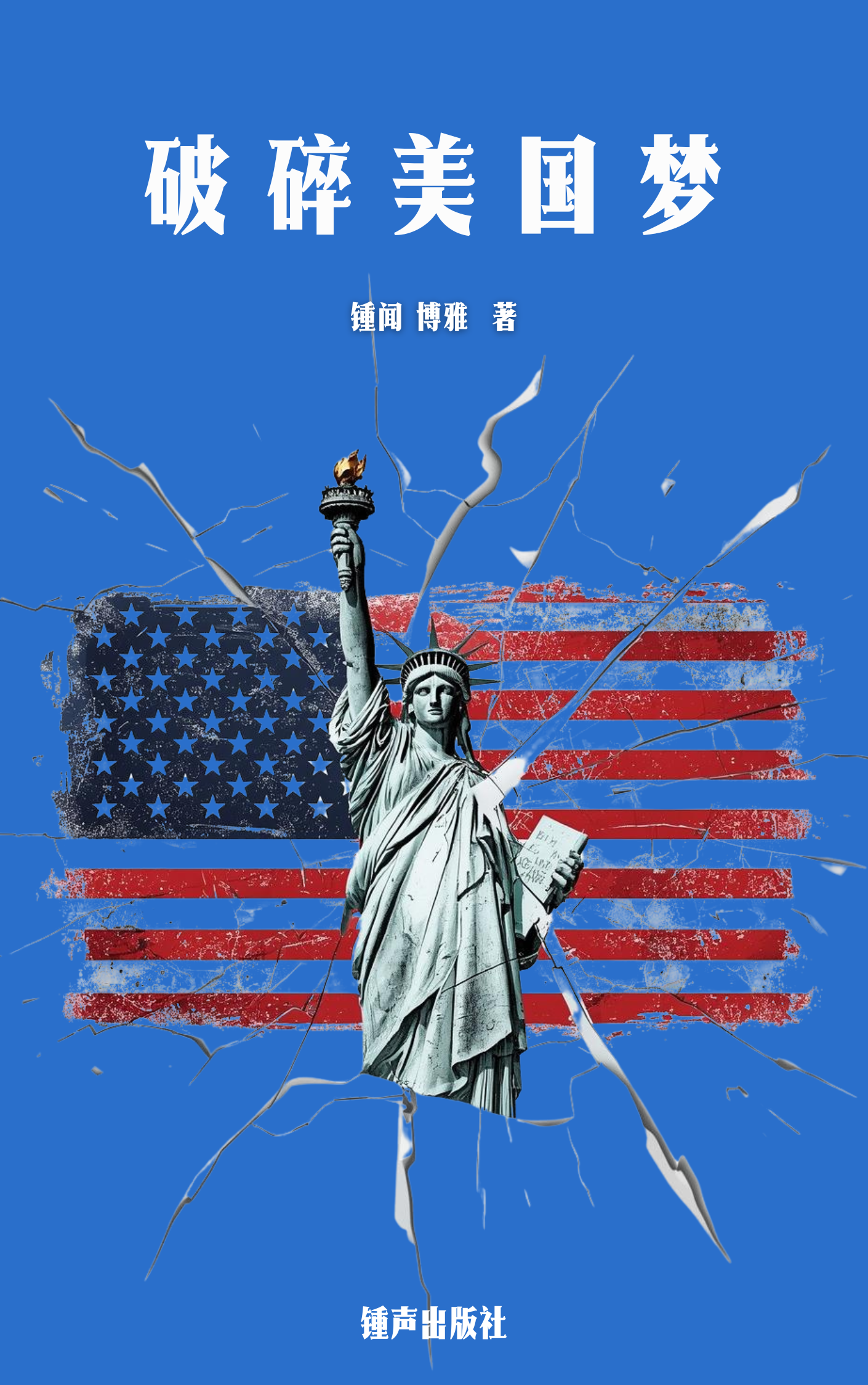
Volume I: Institutional Failure and the Twilight of the Giant
Part III: The Actor and the Placebo — The Historical Positioning of the Trump Phenomenon
Chapter 26: Chu Ci and the Muddy Waves: Born of Turbulence —
The Historical Necessity of Trump’s Emergence
This chapter will establish, from the height of historical philosophy and through the imagery of “since all the world is muddy, why not stir the mud and raise the waves,” the historical necessity of the Trump phenomenon.
First Thesis: The Underlying Color of History: The Accumulation of Turbidity and Despair
I. The Imagery of Chu Ci: Since All the World Is Muddy, Why Not Stir the Mud and Raise the Waves?
In classical Chinese literature, the dialogue between Qu Yuan and the Fisherman in “The Fisherman” from Chu Ci is recorded. In response to Qu Yuan’s lament (“All the world is muddy and I alone am clear”), the Fisherman asks: “Since all the world is muddy, why not stir the mud and raise the waves?”
This imagery precisely depicts American society in the “Winter of Stalemate.” The first two parts of this book have demonstrated:
All the World Is Muddy (Institutional Decay): The constitutional system suffers from excessive checks and balances and deadlocked governance (Part Two); money politics corrodes, and social consensus disintegrates (Part One). The system has been contaminated by “private interests” (interest groups) and “inertia” (the civil service system); it is no longer clear.
Qu Yuan’s Aloofness (The Impotence of the Establishment): Traditional political elites (the Establishment) still attempt to govern using the “aloof” language and rules of a bygone era, but they are powerless against structural turbidity. Their aloofness appears impotent and hypocritical.
II. Historical Necessity: The Actor of the Crisis
The emergence of the Trump phenomenon was not an accidental political event, but a historical necessity born from the culmination of this “turbidity.” When internal turbidity within the system reaches a critical point and the people become utterly绝望 toward the Establishment, they will call forth an actor daring to “stir the mud and raise the waves.”
The Role of the Actor: Trump is not a politician; he is a consummate “actor,” a symbol deeply attuned to public psychology and media operations. His purpose was not to “repair” the system, but to provide an outlet for public rage against the turbid system.
Born of the Era: He is the embodiment of structural social contradictions, economic inequality, cultural fragmentation, and institutional impotence. He is a product of the zeitgeist, not its creator.
Second Thesis: Trump’s Historical Positioning: Ex Post Facto Evidence and Stress Response
III. “Ex Post Facto Evidence”: Proof of Institutional Decay
The historical positioning of the Trump phenomenon is first and foremost as “ex post facto evidence” that American democracy had already decayed.
Proof That the System Has Failed: His success demonstrated that the many institutional flaws discussed in Part Two have completely failed:
The Electoral College (Chapter Sixteen): Proved that he could be propelled into the presidency by the system even without majority popular support.
Media Alienation (Chapter Twenty-Two): His success is the ultimate manifestation of media’s transformation from “objective reporting” to the “outrage industry.”
Anti-Elite Sentiment: His willingness to attack the Washington “Iron Triangle” (Chapters Twenty-Three and Twenty-One) proved that public trust in the Establishment had completely collapsed.
Proof That Consensus Has Disintegrated: His governing style proved the conclusion of Chapter Eight: Americans no longer share a “common story.” He pushed political struggle into an existential battle between opposing groups, treating all political rules and moral constraints as expendable.
IV. “Stress Response”: An Outlet for Social Despair
The Trump phenomenon is a “stress response” to the structural injuries and institutional impotence accumulated over the past several decades.
A Response to Economic Inequality: He captured the despair of blue-collar workers abandoned by globalization and financialization since “Roosevelt’s Autumn” (Chapter Six); their anger needed an outlet.
A Response to Cultural Elites: He precisely exploited society’s contempt and disgust toward “political correctness” and cultural elites (such as media and academia), positioning himself as the spokesman for “common sense” and “anti-Establishment” sentiment.
The Desire for Destruction: For many supporters, they voted for him not because they believed he could “build” anything, but because they believed he could “destroy” the “Washington Establishment” they viewed as corrupt, hypocritical, and unjust. This was political action born of despair—the inevitable consequence of the system’s prolonged failure to address its own responsibilities.
Third Thesis: The Actor’s Craft: Dancing with the Zeitgeist
V. The Deprofessionalization of Politics and the Triumph of Populism
Trump’s success as an “actor” lies precisely in his complete deconstruction of the “professionalism” of traditional politics (such as the degradation of congressional expertise discussed in Chapter Thirteen).
The Appeal of the “Non-Politician”: As a businessman and entertainment celebrity, he transformed political language from esoteric policy debate into simple, crude, direct slogans and personality cult. This freed voters from needing to understand complex fiscal or foreign policy; they only needed to choose “us” or “them.”
A Symbiont of Media: He fully mastered the operational logic of modern media (especially social media), using continuous creation of controversy, chaos, and drama to attract unlimited free attention. The alienation of media (Chapter Twenty-Two) provided him with the perfect stage.
VI. Chapter Conclusion: A Mirror to History
The Trump phenomenon is the ultimate mirror of American history. In an extreme, glaring manner, it reflects the rotted, turbid essence within American democracy.
He is not the cause of the disease, but the extreme symptom of the disease. His existence is the embodiment of institutional lock-in, social fragmentation, and public despair.
 正义钟声 Voice of Justice