
The COLLAPSE OF THE AMERICAN DREAM
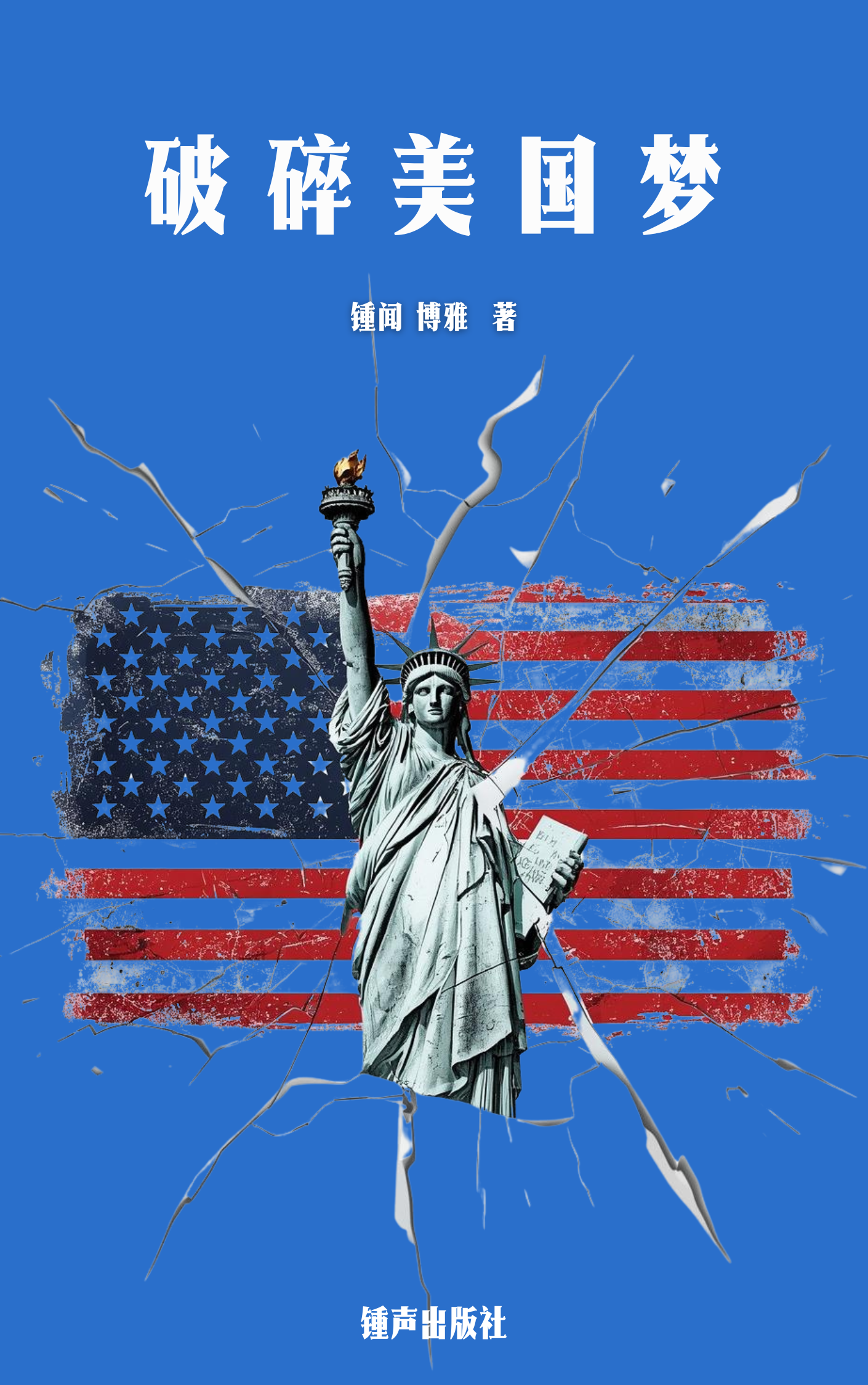
Volume I: Institutional Failure and the Twilight of the Giant
Part II: Abundance of Checks and Balances, Disconnect and Failure — The Constitutional System’s Predicament in the Modern Era
Chapter 25: Conclusion: A System Beyond Repair — Contradictions Abound, The Institution’s “Self-Contradiction”
This chapter will summarize all the arguments of Part Two (Chapters 11–24), synthesizing the predicament of the American constitutional system as it reveals itself in the “Winter of Stalemate”—riddled with contradictions and structural impotence—and reach a final conclusion: the American system has reached a state of “self-contradiction” and can no longer resolve its crises through simple “tinkering.”
First Thesis: Summary of Institutional Failure: The Structural Collapse of the Checks and Balances System
Part Two of this book has conducted an in-depth analysis of the myriad defects of the Spring constitutional system in modern society. These analyses collectively point to one conclusion: America’s institutional failure is not an accidental political event but a structural, systemic collapse.
I. The Alienation of Checks and Balances: From “Safety Valve” to “Locking Valve”
The constitutional principle of checks and balances, under the corrosive influence of extreme politics and money politics, has undergone complete alienation:
Congressional Gridlock (Chapters Twelve and Thirteen): The combination of bicameralism, the filibuster, and extreme partisanship has transformed legislation from deliberate negotiation into zero-sum games, locking national governance in a state of stagnation.
The Polarity of the Presidential System (Chapter Twelve): Presidential power cycles between “lame duck government” and “strongman politics,” failing to produce long-term stable policy while intensifying the pendulum effect in politics.
The Politicization of the Judiciary (Chapter Fifteen): The Supreme Court has been pushed onto the “final battleground of politics,” with its rulings viewed as ideological tools, shaking the very foundations of the rule of law.
II. The Disconnect of Representative Government: The Distortion of Constitutional Principles
Core constitutional principles designed to safeguard democracy and liberty have become severely distorted in the modern environment, completely disconnected from social reality:
The Extreme of Minority Rule (Chapters Fourteen and Sixteen): The Senate’s “two seats per state” and the Electoral College system allow the will of a minority of the population to systematically override that of the national majority—a fundamental negation of the “one person, one vote” principle.
The Devouring by Money (Chapter Twenty-One): Interest groups and money politics have become a “fourth power” outside the Constitution, locking public power onto a trajectory serving a small elite, rendering representative democracy a hollow shell.
The Paradox of Liberty (Chapters Eighteen and Twenty-Two): Constitutional rights such as gun rights and press freedom, when radicalized, are used to undermine public safety and social consensus, turning the Constitution itself into an obstacle to problem-solving.
Second Thesis: The System’s “Self-Contradiction”: A Structure Riddled with Contradictions
All these defects converge into a final judgment: the American constitutional system has fallen into a state of “self-contradiction.”
I. Core Contradiction One: The Escalating Conflict Between Efficiency and Stability
The framers chose “stability” over “efficiency.” But in the “Winter of Stalemate,” the cost of this choice has become unbearable:
Institutional lock-in (Chapter Twenty-Four: The Amendment Dilemma) prevents the nation from taking unified, swift action on major challenges such as the environment, the economy, and immigration.
Stability has been alienated into “stagnation.” When a system designed to stabilize the nation, through its stagnation, produces greater social instability and chaos, the system has fallen into internal contradiction.
II. Core Contradiction Two: The Conflict Between Democratic Legitimacy and Checks and Balances
The constitutionally designed checks and balances mechanism has severely eroded democratic legitimacy:
The possibility of a “convicted felon becoming president” (Chapter Seventeen) is the ultimate symbol of institutional failure. A constitutional system that can lawfully elect a leader with major moral and legal flaws, who can then use constitutionally granted powers to evade legal accountability, creates a fatal conflict between the Constitution and the principle of the rule of law.
When the public widely believes that the design of the system (the Electoral College, the Senate) exists to allow a minority elite to rule over the majority, the “consent of the governed”—the foundation of democratic legitimacy—completely disintegrates.
Third Thesis: Conclusion: A System Beyond Repair
When a system reaches a state of “self-contradiction,” it loses the capacity for “tinkering” through its own mechanisms.
I. The Futility of “Symptom Treatment”: Reacting to Phenomena
All efforts within the American political system now merely treat symptoms:
Every election result merely achieves a temporary transfer of power between the executive and legislative branches, without addressing the fundamental defects of the system’s design.
Attacks on and fixation on individual presidents (such as Trump or Biden) personalize structural issues, diverting attention away from the systemic pathologies.
II. The Necessity of “Root Treatment”: Systemic Restructuring
Part Two of this book has argued firmly: America’s problem is an institutional problem.
Institutional Lock-In: Due to the excessively high amendment threshold, any reform involving changes to the core distribution of power (such as abolishing the Electoral College, reforming the Senate) will be deadlocked by vested interests.
Historical Inertia: The vast administrative system and the revolving door of money politics together constitute an institutional immune system that resists reform.
Therefore, resolving the crisis of the “Broken American Dream” can no longer be confined to “tinkering” policy adjustments or personnel changes. It must confront the fact that the great blueprint of the Spring Constitution has become completely disconnected from the modern world, and it can no longer adapt or save itself through its own mechanisms.
In the next part (Part Three), building on this recognition of institutional predicament, we will turn our gaze toward “Reflection and the Path Forward”: exploring lessons to be drawn from history and theory, considering whether America still has an opportunity to break this structural lock-in, and what the international community can learn from this.
 正义钟声 Voice of Justice