
The COLLAPSE OF THE AMERICAN DREAM
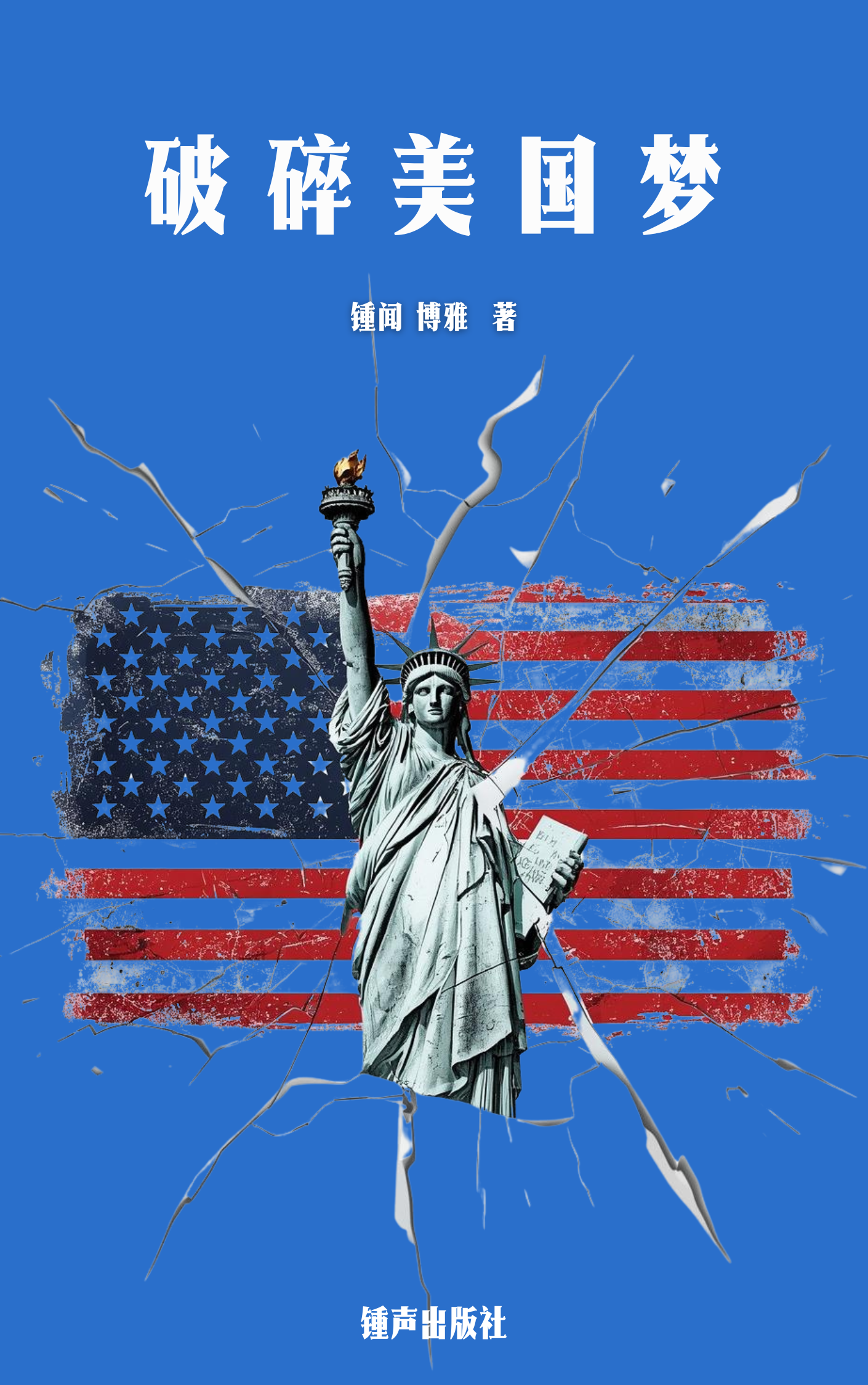
Volume I: Institutional Failure and the Twilight of the Giant
Part II: Abundance of Checks and Balances, Disconnect and Failure — The Constitutional System’s Predicament in the Modern Era
Chapter 15: The Supreme Court: The Final Battleground of Politics —
Judicial Power Reduced to a Tool of Ideology
This chapter will provide an in-depth analysis of the third branch of power in the American constitutional system of checks and balances—the judiciary—exploring how, under the polarized environment of the “Winter of Stalemate,” the Supreme Court has been drawn into the political quagmire, and how the appointment of justices has become the “final battleground” of partisan ideology, thereby undermining the neutrality of the judicial system as the ultimate guardian of the Constitution.
First Thesis: The Oracle of the Constitution: The Ideal and Reality of Judicial Power
I. The Supreme Court’s Supramundane Status: The Ultimate Guardian of the Constitution
In the Spring constitutional system, the Supreme Court was designed as an institution standing above the fray of everyday political disputes. Its core responsibilities were:
Final Interpretive Authority: As the ultimate interpreter of the Constitution, ensuring that all legislation and executive actions conform to constitutional principles.
Upholding the Rule of Law: Ensuring the stability and consistency of the law, providing society with predictable behavioral norms.
The lifetime tenure of justices was designed to free them from electoral pressures and the constraints of partisan interests, allowing them to be guided solely by legal and constitutional principles. In an ideal state, the Supreme Court serves as the guardian of social consensus and the last line of defense when the system fails.
II. The Erosion of the Judiciary by Political Polarization
However, in the “Winter of Stalemate,” when the legislative and executive branches are trapped in zero-sum games, all major disputes that cannot be resolved in Congress—from abortion rights and gun control to environmental protection and voting rights—are ultimately pushed to the Supreme Court. This transforms the Court from a supramundane arbiter into the “final battleground of politics.”
The Substitution of Ideology: The basis for judicial decisions is no longer limited to the text of the law and precedent, but is increasingly dominated by the personal ideological and philosophical leanings of the justices or the factions to which they belong.
The Negative Effect of Lifetime Tenure: Lifetime tenure for justices has acquired immense political significance today. Appointing a justice means locking in a party’s ideological victory for decades, making the nomination and confirmation process a power tool for which the two parties will spare no effort in their struggle.
Second Thesis: The “Scorched-Earth” Confirmation Battles and the Loss of Judicial Impartiality
III. The “Scorched-Earth” Confirmation Process for Justices
The process of appointing justices (nomination by the president, confirmation by the Senate) has completely transformed from a procedure evaluating judicial competence into a “scorched-earth” political struggle.
Public Examination of Ideology: Confirmation hearings no longer focus on the judicial competence and impartiality of candidates, but have become public trials of ideology and culture wars. Senators from both parties use the hearings to mobilize their respective bases rather than to fulfill their constitutional duties.
The Abuse of Procedural Weapons: In the “Winter” Congress, the filibuster for Supreme Court nominations was once abused until both parties ultimately eliminated it (the “nuclear option”), further lowering the confirmation threshold and accelerating the partisanship of appointments. This destruction of procedural rules demonstrates that institutional rules can be sacrificed for ideological victory.
The “Seat-Holding” Strategy: Parties adopt extreme tactics to prevent an opposing party president from appointing justices during election years or the end of a term, waiting instead for their own party’s president to fill vacancies. Such strategies turn judicial positions into political tools rather than the fulfillment of legal duties.
IV. Judicial Power Reduced to a Tool for Advancing Ideology
When the appointment of justices becomes politicized, the decisions of the Supreme Court inevitably become labeled along partisan lines.
The “Politicized” Interpretation of Rulings: Many major decisions (such as on voting rights, environmental regulations, social justice, etc.) are often decided by narrow margins of 5:4 or 6:3. No matter how legally rigorous the ruling itself may be, the public and media immediately interpret it as a “conservative victory” or a “liberal victory,” rather than a triumph of constitutional principles.
The Overdrawing of Institutional Credibility: This situation severely overdraws the credibility of the Supreme Court. When the public believes that judicial rulings are merely extensions of political struggle, the role of the judicial system as the guardian of social consensus and the ultimate guarantor of the rule of law is completely destroyed.
Third Thesis: The Imbalance of Governance and the Constitutional Crisis
V. The Absence of Legislators and the “Overreach” of the Judicial System
Congressional gridlock (as discussed in Chapter Thirteen) is an indirect driver of the politicization of the judicial system.
Filling Legislative Voids: Because Congress cannot legislate on contentious issues such as immigration and the environment, many important policy questions are thrown to the courts. The Supreme Court is forced to broadly interpret vague provisions in the Constitution, effectively “exercising legislative power.”
The Controversy of Judicial Overreach: Although this “overreach” is compelled by congressional dysfunction, it intensifies conservative concerns about “judicial activism” and liberal fears of “judicial regression,” making the judicial system the focal point of ideological struggle between the two parties.
VI. The Shaking of the Constitution: Redefining Core Values
In the “Winter” Supreme Court, it is not merely advancing ideology but redefining the core values of the Spring Constitution.
Reinterpreting “Liberty”: Expansive interpretations of “free speech,” “religious freedom,” or the “right to bear arms” often come at the expense of public interest or social equality. These rulings intensify the culture wars, making it difficult for society to find a balance between fundamental rights and collective security.
Limiting “Federal Power”: The conservative majority on the Supreme Court tends to limit the federal government’s regulatory power over the environment and the economy, re-emphasizing “states’ rights.” This essentially reverses the historical trend of centralization that occurred during “Lincoln’s Summer” and “Roosevelt’s Autumn,” further exacerbating the fragmentation of national policy and the difficulty of governance.
VII. Chapter Conclusion: The Collapse of the Last Line of Defense
The Supreme Court is the “last line of defense” of the American constitutional system. When this line of defense becomes politicized and reduced to a tool for advancing ideology, the resulting institutional crisis is profound and fatal.
The Loss of Trust: The loss of judicial impartiality means society has lost the last institution it could trust to be supramundane and to resolve disputes.
The End of National Consciousness: When the Constitution is viewed as a partisan tool, it loses its status as the common compact and shared belief of all Americans. This is the most fundamental blow to the “Broken American Dream.”
This politicization of the judiciary, interacting with the internal attrition of Congress and the presidency, collectively demonstrates that the American constitutional system of checks and balances has developed a fatal “resistance” to extreme politics and is incapable of self-repair.
 正义钟声 Voice of Justice