
The COLLAPSE OF THE AMERICAN DREAM
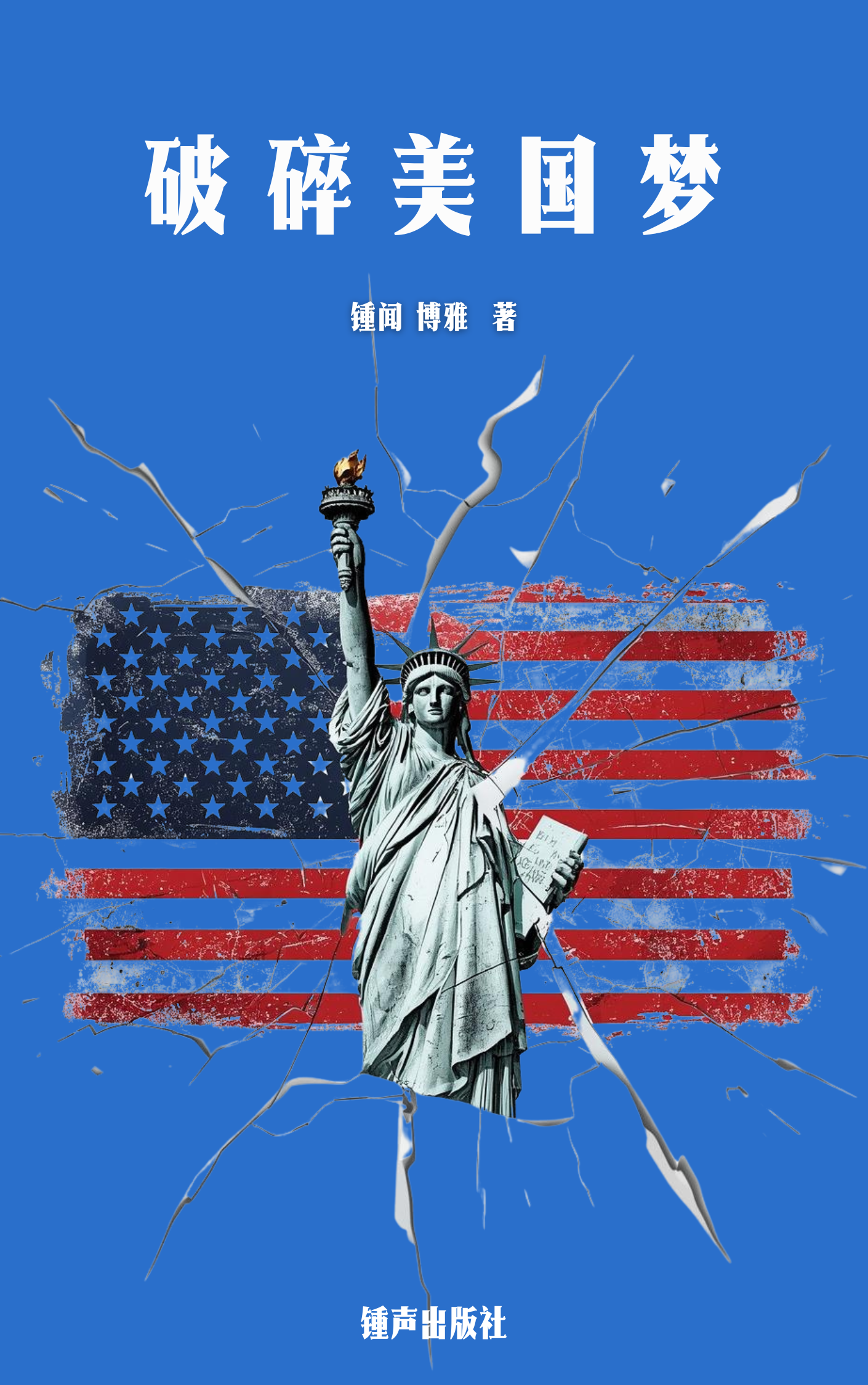
Volume I: Institutional Failure and the Twilight of the Giant
Part II: Abundance of Checks and Balances, Disconnect and Failure — The Constitutional System’s Predicament in the Modern Era
Chapter 11: The Paradox of Checks and Balances: A Blueprint Designed for the
Wilderness — From Preventing Tyranny to Deadlocking Governance
This chapter serves as the opening of Part Two, “The Constitutional System’s Predicament in the Modern Era,” delving into how the core value of the Spring Constitution—the principle of checks and balances—has become alienated in modern society, transforming from a shield against tyranny into a shackle that deadlocks governance.
First Thesis: The Wisdom of the Framers: The Absolute Priority of Preventing Tyranny
I. The Fear of the Enlightenment Era: Power as an Eternal Threat
To understand the extremity of the “checks and balances” design in the American Constitution, one must return to the political context of the 18th century. For the framers, their primary and overriding task was not to pursue governance efficiency, but to prevent tyranny and safeguard individual liberty. This stemmed from their profound pessimism about European history and human nature: history had proven that once power was concentrated, it inevitably led to corruption and the violation of citizens’ rights.
Montesquieu’s Legacy: The Constitution’s design was based on Montesquieu’s principle of the separation of powers, but infused with an American philosophy of “mutual suspicion.” Power was deliberately dispersed and overlapped. The three branches of government—legislative, executive, and judicial—were not simply assigned distinct functions but were endowed with the capacity to intervene in and veto one another.
The Sacrifice of “Speed”: The framers consciously chose to sacrifice the speed and efficiency of governance in exchange for institutional stability and citizens’ liberty. They believed that a slow-moving but stable government was far superior to an efficient government with the potential for tyranny.
II. Federalism Designed for “Taming the Wilderness”
The “Spring Constitution” was a blueprint designed for a loose union in an era of “taming the wilderness”—a vast territory with extremely slow communication.
The Need for Decentralized Governance: In an age lacking modern communication and transportation, the central government was in fact incapable of effectively governing all regions. Federalism left most public affairs to state governments, greatly encouraging local vitality, innovation, and the spirit of expansion.
States as Bastions of Liberty: States’ rights were viewed as the last line of defense against centralized power. This was necessary at the time: it ensured that states could serve as “laboratories” for policy experimentation without threatening the entire Union.
This system, designed for a “slow era” and a “decentralized society,” had security as its core value. At the time, it was unquestionably one of the greatest institutional innovations in political history.
Second Thesis: The Paradox of Checks and Balances: The Disconnect Between Efficiency and the Era
III. The Backlash of Checks and Balances in the “Fast Era”
As time entered the 21st century, the “fast era” of globalization, information technology, and large-scale social crises transformed the slow mechanisms designed by the Spring Constitution into fatal structural flaws.
The Efficiency Demands of Global Competition: In international competition, modern nations require rapid, unified decision-making on economic, diplomatic, and technological issues. Yet America’s checks and balances mechanisms—such as the Senate filibuster and the mutual obstruction between the two houses of Congress (as discussed in Chapter Seven)—cause decision-making processes to be delayed, diluted, or even deadlocked.
Fragmentation of Decision-Making: Federalism proves inadequate when facing challenges that require unified national action, such as climate change, cross-state pandemics, and cybersecurity. States’ rights become a structural obstacle to the formulation of effective national policy, leading to inconsistent implementation standards and the fragmentation of national power.
“Big Problems” Reduced to “Small Problems”: Because Congress cannot reach consensus on long-term, complex issues, the government tends to focus on short-term, easily agreeable problems or those that can be addressed through executive orders. National energy is consumed by zero-sum games and political posturing, leaving the nation unable to concentrate its strength on resolving genuine systemic crises.
IV. The Radicalization of Checks and Balances: From “Constraint” to “Veto”
Under the polarized environment of “Winter,” the application of the checks and balances principle has undergone a qualitative change: it has been alienated from a “constructive tool for negotiation” into a “destructive weapon of veto.”
The Logic of Veto: Competition between the two parties has evolved into an ideological “existential battle.” Checks and balances mechanisms are used as tools to prevent the other side from succeeding, rather than as means to safeguard liberty. The goal of exercising power is no longer “how to make the nation better,” but “how to make the other side worse.”
The Extremity of “Negative Liberty”: The Constitution’s protection of individual liberty has, in the current environment, been radically expanded into an evasion of social responsibility and an unlimited veto over collective action. For example, the absolute insistence on gun rights and property rights makes it difficult for society to achieve necessary public safety and environmental protection measures.
Third Thesis: Institutional Disconnect and Evidence of Self-Contradiction
V. Population Distribution and the Collapse of Representative Foundations
The Spring Constitution’s design for power distribution has become completely disconnected from modern population distribution and social structure.
“Minority Rule” in the Senate: The constitutional provision granting each state two senators was a necessary compromise at the nation’s founding. Today, however, small, sparsely populated states (such as Wyoming) possess the same power as large, populous states (such as California), allowing a minuscule percentage of the national population to wield disproportionate veto power in the Senate. This completely violates the fundamental “one person, one vote” principle of representative democracy and stands as one of the most powerful pieces of evidence of the Constitution’s “self-contradiction.”
The Paradox of the Electoral College: The Electoral College system creates the possibility of a “convicted felon” becoming president (i.e., winning the election despite receiving fewer popular votes than the opponent). The original intent of this system was to balance large and small states and protect the nation from being ruled by the “passions” of the masses. In the modern era, however, it has instead become a catalyst for social division and the perception that “the system is rigged.” It focuses political competition on a handful of swing states while ignoring the national popular will.
VI. The “Unconstitutional” Expansion of Executive Power and the Constitution’s Silence
As Congress has fallen into paralysis, executive power has continuously expanded, constituting a long-term “unconstitutional” erosion of the constitutional principle of separation of powers.
The Rise of the Regulatory State: Vast administrative agencies (the “fourth branch”) wield de facto legislative power through the formulation of detailed regulations. Presidents implement policies through executive orders, bypassing congressional debate and deliberation, causing the lawmaking process to lose the deliberateness, representativeness, and transparency required by the Spring Constitution.
The Constitution’s Silence: The Constitution is static and unable to provide clear guidance for addressing modern challenges (such as cyber warfare, AI ethics, and global supply chains). In these emerging fields, the executive branch often becomes the only entity capable of acting, causing the imbalance of power to continuously intensify.
VII. Chapter Summary and Guide to the Next Section: From “Abundance of Checks and Balances” to “Structural Incompetence”
The paradox of checks and balances is this: it successfully achieved its original goal of preventing tyranny, but 250 years later, the cost of its sacrificed efficiency has come to outweigh its value in safeguarding liberty. In a globalized era demanding rapid, unified action, the blueprint provided by the American Constitution has transformed from a “shield against tyranny” into a “shackle of structural incompetence.”
The Tragedy of Institutions: America’s constitutional system is a great blueprint designed for “taming the wilderness,” but its characteristic of having an “abundance of checks and balances” has led to the normalization of “mutual obstruction,” rendering the nation incapable of leading globally or resolving its most urgent domestic crises.
This represents the ultimate challenge to institutional design and lays the foundation for an in-depth analysis of “Presidential System: The Cycle of Strongman Politics and Lame Duck Government.”
 正义钟声 Voice of Justice