
The COLLAPSE OF THE AMERICAN DREAM
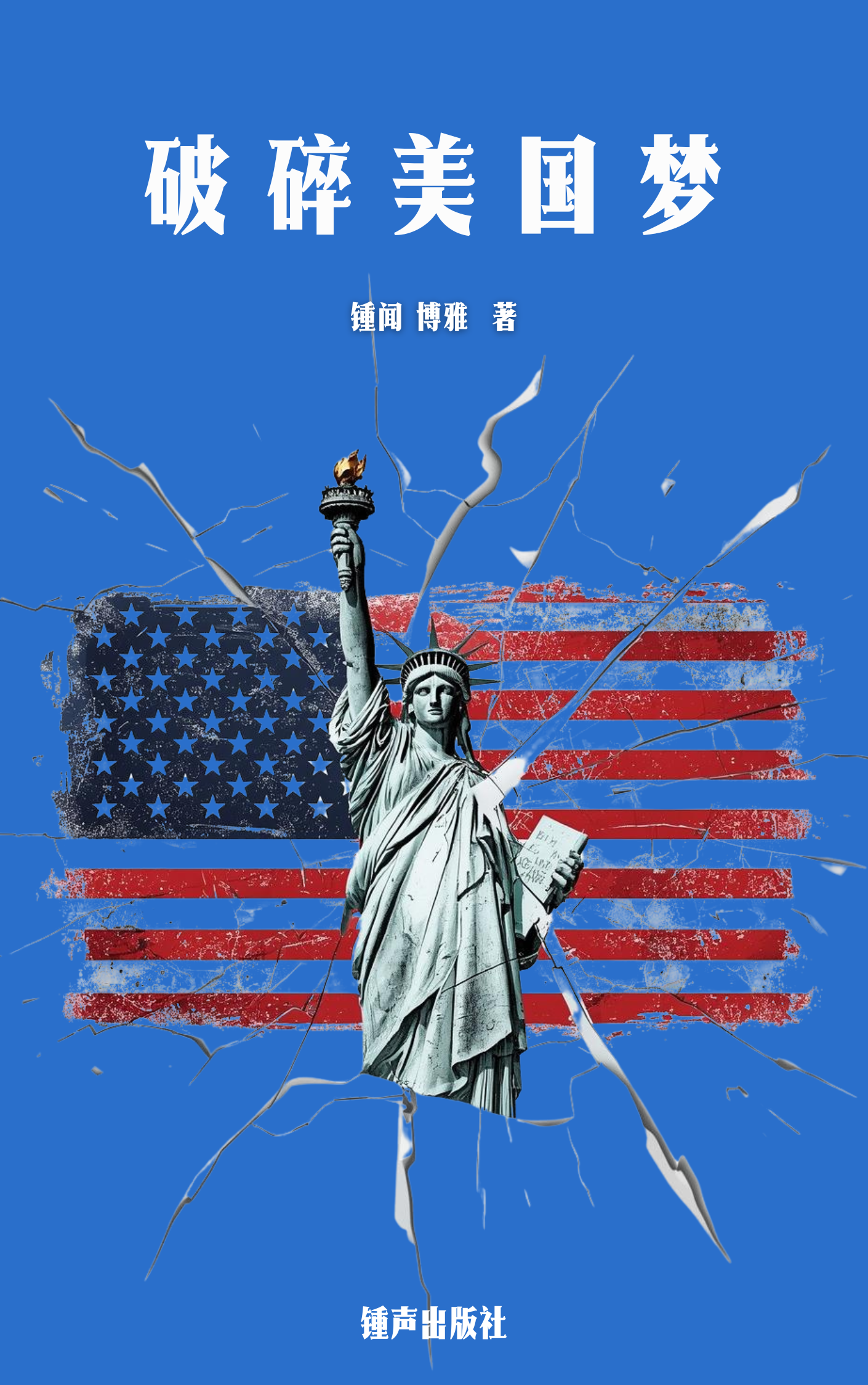
Volume I: Institutional Failure and the Twilight of the Giant
Part I: The “Theory of Four Seasons” of History – From Expansion to Stalemate
Chapter 10: The Inertia of History: The System’s Inability to Self-Correct —
An Ultimate Challenge to Constitutional Adaptability
This chapter serves as the final chapter of Part One (analyzing history and phenomena), raising a core question: After enduring the impacts of Spring, Summer, and Autumn, does the American Constitution still possess the capacity to adapt to modern global challenges and engage in self-repair during Winter? This will provide logical groundwork for the subsequent diagnosis of “institutional failure” in Part Two.
First Thesis: Institutional Inertia and the Failure of Repair Mechanisms
I. The Inertia of History and the Lock-In Effect of Institutions
The course of history is not always the result of rational choice; more often, it is the product of inertia. Once institutions are formed, they possess powerful self-perpetuating capabilities. Even after proving to be inefficient or even harmful, they become difficult to change due to complex networks of interests and legal precedents. This is known as “institutional lock-in.”
The Shackles of Spring Design: As a written constitution, the fixed nature of the American Constitution was a source of stability in Spring, but in “Winter” it has become a rigid shackle. Structural defects of the system—such as the Senate’s two-seats-per-state rule, the Electoral College system, and the abuse of the filibuster—have been exploited by vested interest groups, becoming solid barriers protecting their power.
The Maintenance of the “Autumn Establishment”: The vast bureaucracy and interest complex formed during “Roosevelt’s Autumn” exists for the purpose of maintaining the status quo. Any proposal attempting to reduce executive power, restrict financial capital, or reform the electoral system faces forceful obstruction from this vast “Establishment” system—from lobbying and media to legal challenges.
II. The Amendment Threshold: The Vast Gulf Between Ideal and Reality
The Constitution itself provides a mechanism for addressing institutional flaws—amendment. However, the Spring framers’ extreme wariness of “hasty change” led them to design an exceptionally high amendment threshold, which has become nearly insurmountable in the polarized environment of “Winter.”
The Supermajority Requirement: Amendment requires a two-thirds majority in both houses of Congress, followed by ratification by three-quarters of state legislatures.
The Absence of Consensus: In the current “nation without consensus,” where the two parties struggle even to pass ordinary legislation, achieving a supermajority for a constitutional amendment involving fundamental power distribution is nothing short of fantasy. The effective freezing of the amendment mechanism means the system has lost its highest-level capacity for self-renewal and self-purification.
This is a tragic irony: the “safety mechanism” designed into the system has, at history’s endpoint, become a “gridlock mechanism.”
Second Thesis: The Constitution’s Disconnect from Modern Global Challenges
III. How Can a System Designed for a “Slow Era” Confront the Challenges of a “Fast Era”?
The American Constitution was designed in an era of extremely slow communication and transportation, creating a “slow government.” In a “fast era” defined by globalization, information technology, and climate crisis, this slow government has become completely out of step.
The Efficiency Demands of Global Governance: In global competition, nations need to formulate and implement policy quickly, uniformly, and decisively (whether in responding to pandemics, addressing climate crises, or participating in technological competition). Yet the American government, constrained by congressional gridlock, state-level obstruction, and inefficient executive branches, reacts far more slowly than unitary states or other major powers.
Incapacity to Address “Endless Wars”: The “perpetual war” and the War on Terror resulting from Autumn’s power expansion demonstrate the Constitution’s continued failure to constrain presidential war powers. The executive branch continually exploits vague authorizations to circumvent Congress, making war a normalized administrative act that persistently drains national fiscal and moral capital.
IV. The Alienation of Democracy and Liberty, and the Incompetence of the Constitutional Framework
The Spring Constitution’s conception of the economy was primarily based on small-scale agriculture and early commerce. It could not foresee the immense power of 21st-century multinational corporations, financial oligarchies, and technological monopolies.
Economic Power Superseding Political Power: The power of contemporary large corporations and Wall Street has surpassed the effective regulatory capacity of individual states or the federal government. Campaign contributions and lobbying activities (the “system’s resistance”) mean that the political power designed by the Constitution has effectively become subservient to economic power not envisioned by the Constitution.
The Fourth Power: Dominance Over Data and Information: The Constitution era had no internet, let alone technology giants capable of influencing the cognition of billions of people. These technology companies’ monopoly over data and information flow has formed a “fourth power” beyond governmental regulation. The Constitution’s protection of “free speech” has, in the current environment, instead become a shield for these giants to use algorithms to exacerbate social fragmentation and lock in information bubbles.
Third Thesis: The Ultimate Question of History and a Guide to the Next Stage
V. The Tragic Outcome of Institutional Inertia: Exhaustion
The inertia of history has rendered America incapable of self-repair, with the tragic result being that the nation expends all its energy on “internal attrition.”
Lock-In of Resources: National resources are locked into endless partisan struggles, electoral politics, and inefficient bureaucracy, unable to concentrate strength on investing in the future.
Loss of Opportunity: In an era of intensifying global competition, this internal attrition means the United States will inevitably miss historic opportunities in technology, the environment, and the reshaping of the international order.
Like a machine that has been neglected for years, it still runs, but the noise it produces far exceeds its efficiency, and it could grind to a complete halt at any moment due to the failure of a single small part.
VI. Summary of Part One: From Phenomena to Essence
At this point, Part One of this book (Chapters 1–10) has completed the historical exposition and phenomenological description of the “Broken American Dream”:
The Four Seasons Theory (Chapters 1–5): Established that America has moved from the expansion of Spring, the unification of Summer, and the maturity of Autumn into a structural Winter.
Description of Winter’s Climate (Chapters 6–8): Detailed the specific manifestations of political gridlock, economic stagnation, and social fragmentation.
Summary of Phenomena (Chapters 9–10): Summarized historical legacies, confirmed Trump as ex post facto evidence of institutional failure, and raised the core question: the system has lost its capacity for self-repair.
All of these phenomena point to a common essential issue: institutional failure.
VII. Chapter Conclusion: A Bridge to Part Two’s Diagnosis
America’s Constitution and political system, due to the inertia of their design, the high threshold for amendment, and the lock-in effect of the “Establishment,” no longer possess the capacity to adapt to modern global challenges. It has ceased to be a tool for promoting the public good and has instead become a protective shield skillfully exploited by private interests.
Therefore, the next part of this book will no longer remain at the level of phenomenological description, but will begin at the theoretical level to conduct the deepest diagnosis of America’s “democratic disease”: all systems are designed to control individual private interests and promote the public good; however, when the private interests of members of society have developed “resistance” to the system, becoming adept at exploiting its loopholes… the system is doomed to fail.
 正义钟声 Voice of Justice