
The COLLAPSE OF THE AMERICAN DREAM
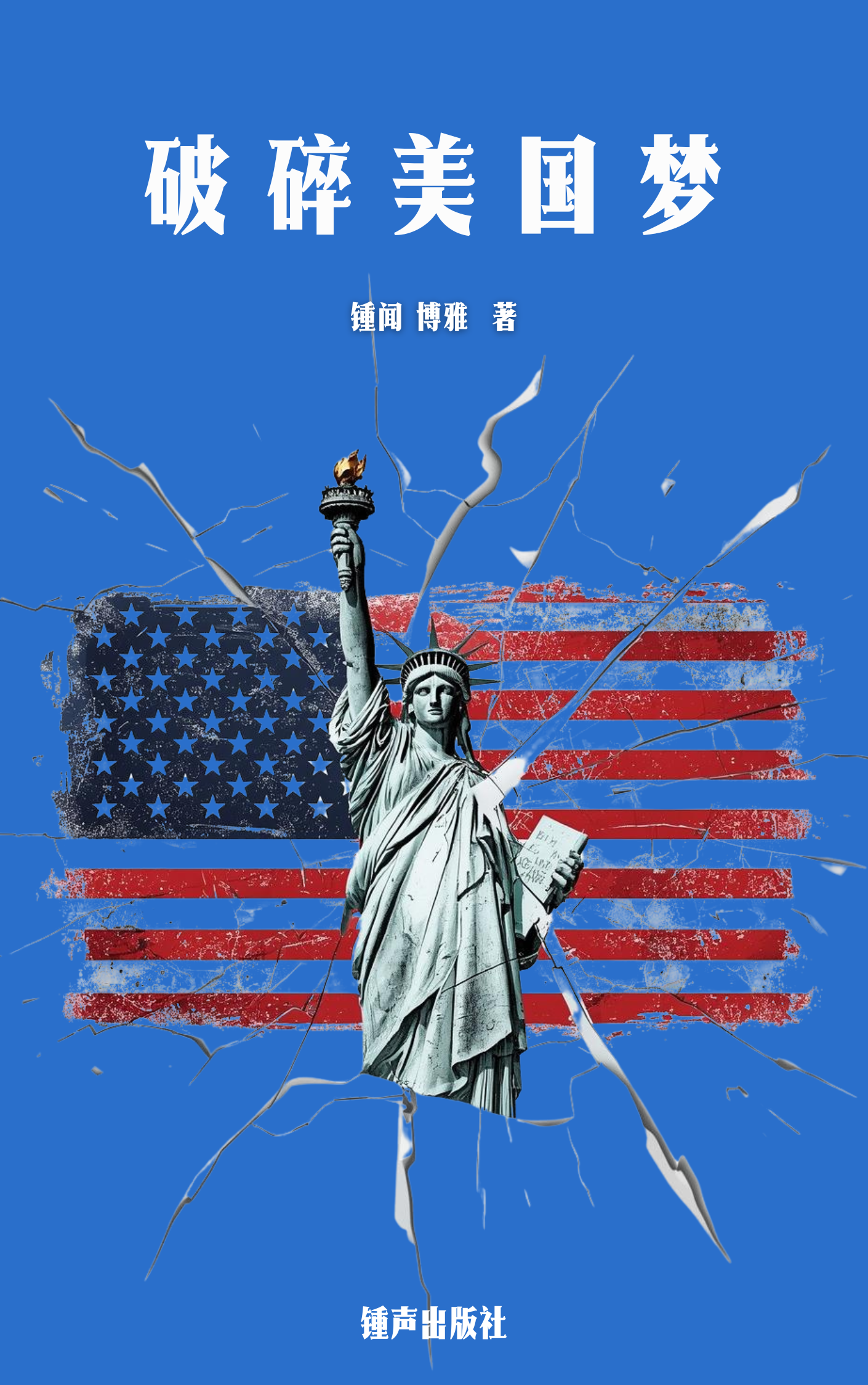
Volume I: Institutional Failure and the Twilight of the Giant
Part I: The “Theory of Four Seasons” of History – From Expansion to Stalemate
Chapter 9: A Nation Without Consensus: The Precursor to Institutional Failure —
A Summary of Historical Legacies and a Guide to Diagnosis
This chapter serves as a transitional summary for Part One (Chapters 1–10), reviewing the institutional legacies and shadows of Spring, Summer, and Autumn analyzed in previous chapters. It argues how these accumulated structural defects, together with the current collapse of social consensus, collectively constitute the precursor to the complete institutional failure of “Winter,” and serves as a natural transition into a deeper diagnosis of institutional flaws.
First Thesis: A Summary of Historical Legacies — Accumulated Institutional Flaws and Shadows
I. Spring’s Idealism and the Institution’s “Original Sin”
The legacy of “Washington’s Spring” was magnificent—it established the ideals of individual liberty, checks and balances, and the rule of law. However, it also left an indelible shadow: the institution’s “original sin.”
The Double-Edged Sword of Checks and Balances: The Constitution prioritized “preventing tyranny” over “efficiency.” When the nation faces modern, large-scale, rapidly changing challenges, this design transforms into the structural flaws of “mutual obstruction” and “governance incapacity.”
The Price of Compromise: The moral compromise on slavery made to preserve the Union meant the nation was built upon a moral fault line from the very beginning. This fault line has continuously erupted in later issues of race and identity politics, becoming a root cause of the culture wars in “Winter.”
The Spring Constitution was designed for a decentralized, agrarian, slow-paced world and is unable to adapt to a centralized, industrial, globalized, information-saturated world.
II. Summer’s Unification and the Backlash of Centralization
The legacy of “Lincoln’s Summer” was the establishment of national sovereignty and the consolidation of the industrial base. This unification through blood and fire completely shattered the delicate balance between states’ rights and federal power in the “Spring Constitution,” establishing the central government’s domestic hegemony.
The Inertia of Power Centralization: The expansion of presidential power during the Civil War was for national survival, but it provided precedent and legal foundation for the unchecked expansion of power in the subsequent “Autumn.” Once central power proved it could be omnipotent, it became difficult to self-restrain.
The Persistence of Social Divisions: Although slaves were emancipated, the failure of Reconstruction allowed deep divisions of race, class, and region to persist. These unhealed wounds were reopened by polarized politics in “Winter,” becoming the primary catalyst for the “loss of consensus.”
III. Autumn’s Hegemony and Structural Decay
“Roosevelt’s Autumn” represented the peak of American national power, but its legacy was internal structural decay.
The Formation of the “Establishment”: The concentration of power needed to address the Great Depression and the Cold War ultimately gave rise to an “Establishment” centered on the military-industrial complex and financial elites. This vast bureaucracy and interest group developed “resistance” to the system, locking public policy onto a trajectory serving elite private interests.
The Hollowing Out of the Economic Foundation: Complacency after Cold War victory led to industrial offshoring and accelerated financialization. This “shift from real to virtual” hollowed out the economic foundation of the middle class, turning the “American Dream” into an illusion for countless people.
The legacies of these three seasons collectively point to one conclusion: America’s institutional framework has carried structural defects since its birth. These defects were not repaired over the course of history but were instead magnified by ever-expanding power, ultimately pushing the nation into the deep freeze of “Winter.”
Second Thesis: The Precursor to Institutional Failure — The End of Consensus
IV. The End of Consensus: From “Us” to “Them”
The most severe reality of “Winter” is that the United States is no longer a nation with shared goals and values; it is a nation without consensus. This collapse of consensus is the concentrated social manifestation of the structural defects accumulated over the past three seasons.
The End of Historical Consensus: Historical narratives have been “weaponized.” Citizens no longer share a common understanding of the nation’s past, and some even fundamentally question the very concept of “America” itself.
The End of Economic Consensus: The once-held belief in “equal opportunity” and “hard work leads to success” has disappeared, replaced by widespread anger that “the system is rigged.” Economic inequality has turned class differences among citizens into insurmountable divides.
The End of Factual Consensus: The fragmentation of media and the information environment has caused opposing sides of the political divide to live in entirely different “realities,” completely undermining the foundation for rational discourse.
When a nation loses consensus, it loses its capacity for self-governance.
V. Manifestations of Institutional Failure: Two Opposing Extremes
Institutional failure manifests as two opposing extremes:
The Rigidification of the Political System: As discussed in Chapter Seven, Congress’s zero-sum game has deadlocked the functioning of the system in an ineffective, self-perpetuating state. The system’s checks and balances design has backfired, locking the nation in stagnation.
The Fluidization of the Social System: Despair and discontent at the bottom of society have fueled irrational, emotional political movements (such as extreme populism and extreme identity politics). When the system cannot resolve problems through rational channels (such as legislation), discontent spills over into non-institutional, destructive channels.
This vast gap between a rigid political system and a fluid society is a clear signal of “institutional failure.”
Third Thesis: Trump: Ex Post Facto Evidence of Institutional Failure and the Precursor to Disaster
VI. Trump: The One Who Nails the Coffin Lid
At this point, we can more accurately define the “Trump phenomenon”: Trump’s self-proclamation as the “chosen one” was not coincidental, but rather his precise grasp of the pulse of this “nation without consensus.”
Symptom, Not Cause: The reason Trump was able to “stir up the muddy waters” was precisely because the structural defects accumulated over Spring, Summer, and Autumn had long made American democracy “murky.” He was not the root cause of the disaster, but rather the “ex post facto evidence” of prior institutional decay.
Actor and Placebo: His role as an “actor” provided an extreme, cathartic “placebo” for the public’s despair toward the elites and the Establishment. What the public cared about was his symbolic role as the “destroyer of the Establishment,” not whether he could achieve substantive policy accomplishments. This demonstrated that the public had completely lost patience with the existing system.
VII. Conclusion: A Guide to Diagnosis
This chapter has summarized the legacies and shadows of American history, arguing that the internal attrition, fragmentation, and collapse of consensus in the current “Winter of Stalemate” are unmistakable precursors to institutional failure.
All of this points to a central question: Why has America’s system developed “resistance” to society’s private interests? Why has a system designed to control private interests and promote the public good become a tool exploited by a minority to serve private interests?
In the following chapters, we will begin at the theoretical level to conduct the deepest diagnosis of America’s “democratic disease,” analyzing the root causes of “institutional failure caused by years of neglect and decay.”
 正义钟声 Voice of Justice