
The COLLAPSE OF THE AMERICAN DREAM
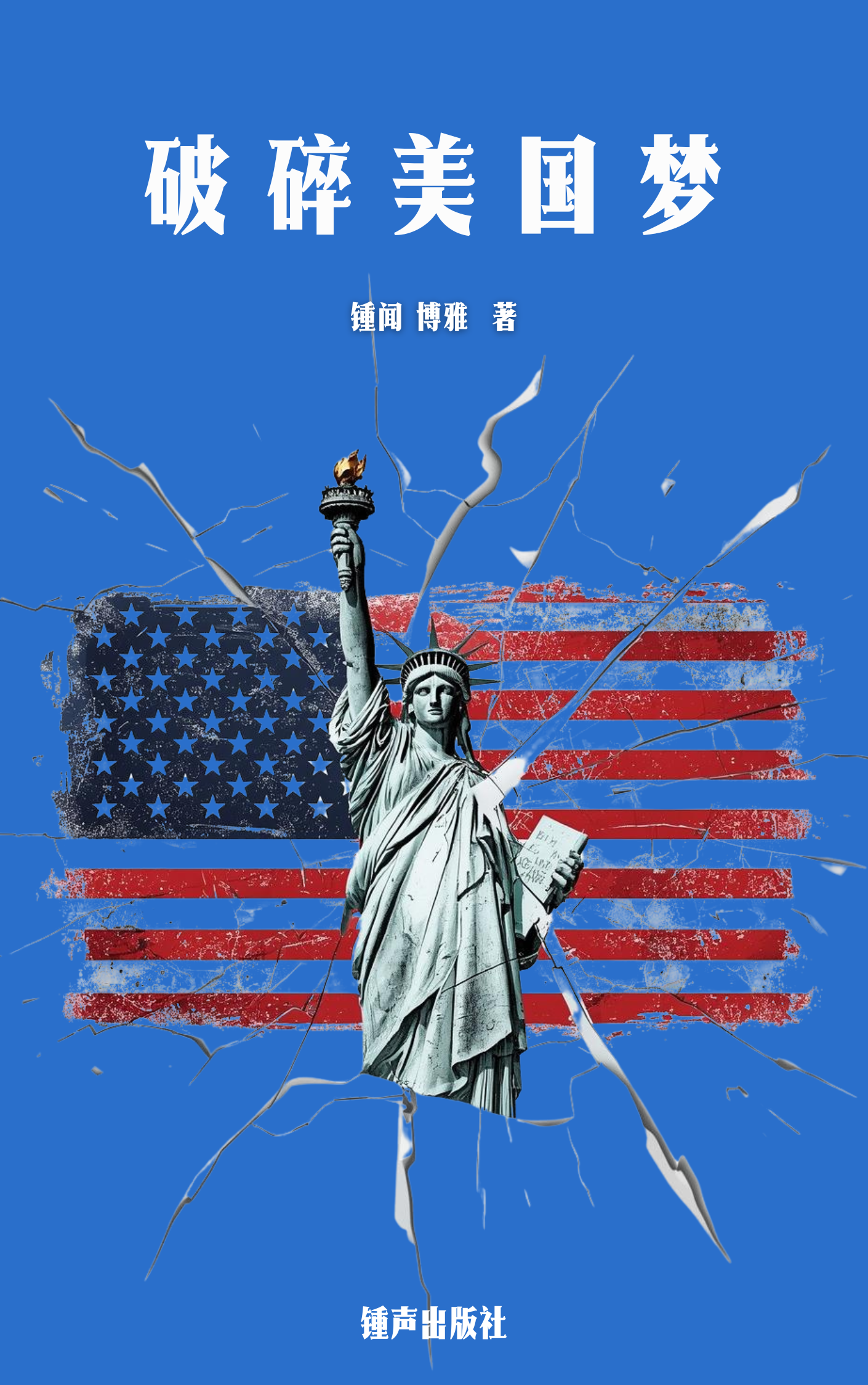
Volume I: Institutional Failure and the Twilight of the Giant
Part I: The “Theory of Four Seasons” of History – From Expansion to Stalemate
Chapter 8: Fragmentation: Americans No Longer Share a “Common Story” —
Identity Politics and the Disintegration of National Consciousness
This chapter will analyze the climate of “Winter” from a socio-cultural perspective, exploring how extreme identity politics and culture wars have intensified social polarization, fundamentally undermining the sense of common identity that holds American society together.
First Thesis: The Shattering of a Myth — The End of the “Melting Pot” Ideal
I. From a “Common Story” to “Opposing Narratives”
In America’s “Spring” and “Summer,” despite profound injustices such as slavery and segregation, Americans broadly shared a “common story”: a belief in liberty, opportunity, constitutional principles, and a general consensus on “American Exceptionalism.” This story served as society’s adhesive and was known as the “Melting Pot” ideal.
However, in the “Winter of Stalemate,” this common story is undergoing a thorough, scorched-earth deconstruction. The rise of identity politics and the escalation of culture wars have transformed American society from a mutually integrating “melting pot” into a collection of mutually isolated and opposed “fragmented” groups.
II. The Alienation of Identity Politics: From the Pursuit of Equality to “Tribalization”
Identity politics was originally a reasonable extension of the civil rights movement, aimed at correcting historical injustices and systemic oppression, pursuing genuine equality and inclusion. This represented historical progress. However, in the highly polarized environment of “Winter,” identity politics has become alienated, transforming from a movement for justice into a war of “tribal” labels:
Substitution of Priorities: Universal political issues of class and economy have been displaced by identity issues, causing political discourse to focus on cultural symbols and historical interpretation rather than substantive economic reform.
Intragroup Purity: Identity groups demand absolute ideological purity from within. Any moderate stance or dissent is viewed as “betrayal,” greatly limiting individual freedom of expression and political participation.
This “tribalization” leads members of society to first define themselves as representatives of a particular identity group rather than as “American citizens,” fundamentally weakening national consciousness.
Second Thesis: The Escalation of Culture Wars — The Deconstruction of Truth and History
III. The “Weaponization” of History and Mutually Exclusive Narratives
At the heart of the culture wars is the contest over and weaponization of national historical narratives. Both sides seek to define America’s past, present, and future according to their own versions, resulting in opposing sides no longer sharing a common basis of historical fact.
Total Rejection of the Founders: Historical revisionism完全 ties the Founding Fathers and founding principles to slavery, colonialism, and other “original sins,” asserting that America’s birth was fundamentally flawed, leading many to lose respect for the Spring Constitution and its institutions.
Absolute Adherence to “Ideals”: Opponents glorify the Founders without qualification, denying the existence of structural flaws in the nation’s history and refusing to acknowledge the continuity of injustice.
This “scorched-earth” approach to history ultimately leads to a situation where neither side accepts the other’s historical narrative, and the nation loses a “shared memory” that can be collectively celebrated or reflected upon. A nation without shared memory inevitably sees its common consciousness disintegrate.
IV. The Post-Truth Era: The Complete Collapse of Shared Reality
The culture wars have reached unprecedented intensity in “Winter” due to the radical transformation of the information environment. Technology has ensured that Americans no longer possess a common, universally accepted “reality.”
The Lock-In of Information Bubbles: Social media algorithms and the selective reporting of cable news channels lock citizens into各自的 information echo chambers. People are exposed only to “facts” that support their existing views, dismissing opposing information as “fake news” or malicious propaganda.
The Death of Objective Truth: When two groups live in entirely different factual universes, rational discussion becomes impossible. Political competition is no longer about “how to achieve goals” but about “which goals—or which reality—actually exist.” This is the most dangerous sign of national disintegration: the nation has lost its common cognitive foundation.
Third Thesis: The Cost of Social Dissolution — The Erosion of Trust and Political Polarization
V. From “Distrust of Government” to “Distrust of Neighbors”
The greatest cost of social fragmentation in “Winter” is the collapse of social capital. Social trust, which initially targeted the “Autumn” Establishment, has rapidly spread to distrust of all public institutions, and even of neighbors and colleagues.
Community Alienation: The atomization of American society has intensified, weakening individuals’ connections to traditional social buffers such as neighborhoods, voluntary organizations, and churches. When social ties weaken, people are more likely to turn to extreme ideologies and political figures for a sense of belonging.
Accelerator of Institutional Erosion: When members of society lack basic trust in one another, any attempt at compromise to resolve political gridlock is viewed as “betrayal.” This provides a mass base for Congress’s zero-sum game, making political polarization and internal attrition a self-reinforcing social structure.
VI. “Cancel Culture” and the Limits of Social Tolerance
The extreme culture wars have driven the development of so-called “cancel culture.”
Punitive Politics: This phenomenon represents the limit of social tolerance: any speech or action deemed incompatible with the prevailing ideological orthodoxy can result in personal, professional, or even economic punishment.
The Spread of Political Fear: This punitive political climate causes a large number of moderates or centrists to self-censor (the “chilling effect”). Public discourse is pushed toward the most extreme poles, intensifying superficial social polarization while obscuring the potential space for reconciliation that may exist in the middle.
VII. Chapter Conclusion: The Disintegration of National Consciousness and the Deepening of Winter
“Fragmentation” represents the deepest crisis of America’s “Winter of Stalemate.” When a nation loses the “common story” that binds its people, a shared historical understanding, or even a common basis of facts, it loses its essence as a “nation.”
This culture war, erupting from the grassroots level, is a far more intractable problem than political gridlock. Political gridlock can potentially be broken by revising rules, but the disintegration of national consciousness may take generations to repair. This internal attrition is tearing American society apart from within, providing abundant energy for the eventual eruption of extreme populism.
 正义钟声 Voice of Justice