
The COLLAPSE OF THE AMERICAN DREAM
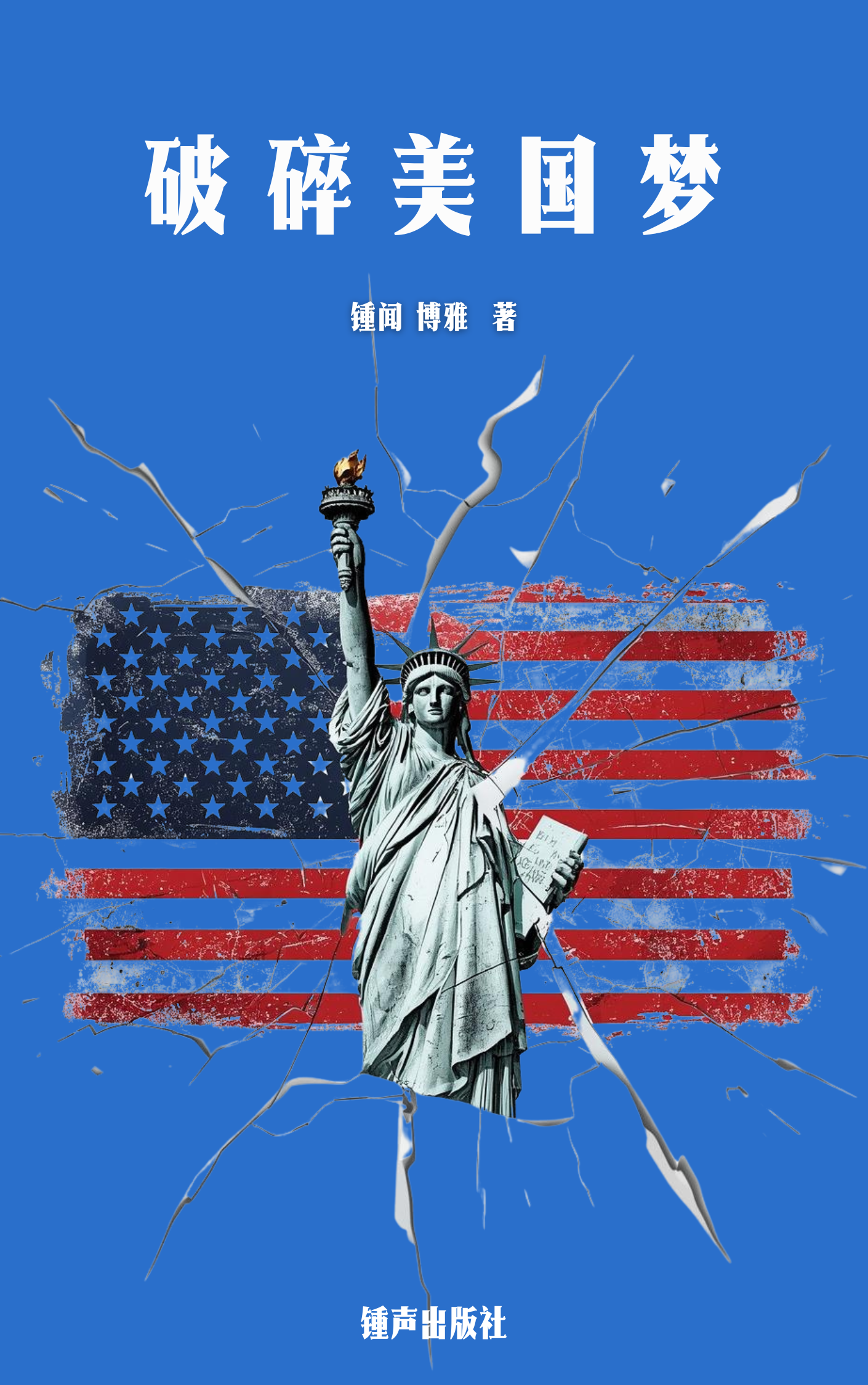
Volume I: Institutional Failure and the Twilight of the Giant
Part I: The “Theory of Four Seasons” of History – From Expansion to Stalemate
Chapter 6: The Onset of the Freezing Period: A Description of Winter’s Climate — Structural Stalemate in Politics, Economy, and Society
This chapter will focus on the current United States (from 2000 to the present), detailing the structural characteristics of “stalemate” and “internal attrition” manifested across its political, economic, and social dimensions.
First Thesis: Political Freezing — “Checks and Balances” Becoming “Gridlock”
I. Congressional Paralysis: The Normalization of Zero-Sum Games
The most significant political climate of America’s “Winter” is structural gridlock. The original intent of the “checks and balances” designed in the Spring Constitution was to prevent tyranny, but in the modern era, due to the combined forces of political polarization, media fragmentation, and institutional inertia, it has completely transformed into “mutual obstruction,” plunging Congress into normalized paralysis.
Polarization-Driven “Vetoism”: Competition between the two parties is no longer rational debate over policy but an “existential battle” over ideology. Each side views the other’s success as its own complete failure, thus employing every means—including the filibuster, debt ceiling crises, and more—to block the opposing side’s agenda. This “vetoism” makes legislation a zero-sum game, rendering the nation almost incapable of reaching any meaningful bipartisan legislation when facing urgent, long-term challenges such as climate change, immigration, and infrastructure.
Executive Dominance and the Delegation of Legislative Power: As Congress becomes unable to function, power naturally flows to the executive branch. Presidents increasingly rely on executive orders to bypass Congress and achieve their policy goals. This further weakens Congress’s legislative authority while also depriving policies of long-term stability, making them vulnerable to reversal by the next president. This is a vicious cycle: the more gridlocked Congress becomes, the more the executive expands; the more the executive expands, the less willing Congress is to cooperate.
II. The Politicization of the Judicial System and the Crisis of Trust
When the legislative branch is mired in gridlock, the Supreme Court becomes a de facto legislature, with its rulings having profound social impacts. However, the Court’s functions cannot escape the erosion of the “Winter” climate.
The Life-and-Death Struggle Over Justice Appointments: The process of nominating and confirming justices has transformed from a past review of constitutional qualifications into a life-and-death ideological and partisan struggle. Justices are viewed as “political operatives,” and their rulings are often interpreted by the public as reflections of partisan bias rather than impartial interpretations of the Constitution.
The Overdrawing of Institutional Credibility: This politicization severely undermines the impartiality of the judicial branch. When Supreme Court rulings are no longer seen as the ultimate authority on the Constitution but as political tools of the “victors,” the foundation of the Constitution as the nation’s common compact begins to shake.
Second Thesis: Economic Stagnation — Structural Attrition and the Freezing of Class Mobility
III. The Disappearance of the Middle Class and the “Broken American Dream”
The economic climate of “Winter” is characterized by structural inequality and the freezing of class mobility. This is the inevitable result of Autumn’s financialization and industrial offshoring, and it is the most direct manifestation of the broken “American Dream.”
Income Polarization: Although overall national GDP continues to grow, the vast majority of gains are concentrated in the hands of the top 1% of the population. The real wages of ordinary workers have stagnated for a long time, unable to keep pace with soaring living costs, especially in healthcare, education, and housing. This inequality has led to an extremely imbalanced distribution of social wealth, destroying the stabilizing force at the center of society—the middle class.
Locked-In Debt and Opportunity: Soaring education costs have burdened younger generations with heavy student loan debt, leaving many in a state of “debt slavery” at the very start of their careers. Meanwhile, skyrocketing housing prices and rents have made “living and working in peace and contentment” an unattainable dream. This means opportunity is no longer equal for all but is locked in by wealth and existing assets; the elevator of class mobility has stopped operating.
IV. Capital’s “Resistance” to the Public Interest and Its Escape
On the economic front, “institutional resistance” manifests as capital’s effective evasion of social responsibility and legal regulations.
Legal Tax Avoidance and the Hollowing of National Finances: Multinational corporations and wealthy individuals exploit the global financial system and domestic tax code loopholes for large-scale legal tax avoidance, hollowing out national fiscal revenue. This leaves the government lacking the funds to repair the aging and decaying infrastructure inherited from Autumn or to invest in the future (such as green energy or universal healthcare).
Zombie Companies and Lack of Innovation: Under conditions of low interest rates and implicit government protection of vested interests, a large number of inefficient “zombie companies” are able to survive. This stifles natural market elimination and the impetus for innovation, leaving the American economy seemingly massive yet lacking the vibrant “creative destruction” characteristic of Spring and Summer.
Third Thesis: Social Fragmentation — The Collapse of Trust and Culture Wars
V. The Freezing Point of Social Trust: The Loss of Shared Reality
The coldest climate of “Winter” is the collapse of social trust—a sharp decline in trust both among members of society and between society and its institutions.
Information Bubbles and the “Post-Truth” Era: Social media and algorithms lock citizens into their respective “information echo chambers,” causing supporters of the two parties to live in entirely different systems of facts and logic. The loss of shared reality is the breeding ground for political polarization, turning any policy discussion into an argument over basic facts.
Distrust of All Institutions: Public trust in all traditional authoritative institutions—including government, media, the judiciary, the scientific community, and even universities and churches—has plummeted to historic lows. When institutions cannot be trusted, members of society resort to tribal group identities, seeking protection in extreme positions.
VI. The Scorched-Earth Politics of Identity and the Normalization of Attrition
Social attrition in “Winter” primarily manifests as the “scorched-earth” approach to identity politics—a form of civil war that elevates cultural differences into ideological hostility.
The Escalation of Culture Wars: Debates surrounding race, gender, historical narratives, immigration, and other issues are no longer multicultural discussions seeking reconciliation but rather treat opponents as morally corrupt enemies. This attrition consumes enormous national energy, diverting public discourse away from major issues like the economy and foreign policy.
From “Melting Pot” to “Fragments”: The former ideal of the “Melting Pot” has been completely shattered. American society is undergoing a process of fragmentation from “one nation” into “multiple hostile tribes.” This internal division severely weakens America’s image and influence on the international stage.
VII. Chapter Conclusion: The Lock-In of Stalemate and the Brink of Fragmentation
America’s “Winter” is a structural “three-layer freeze”: political gridlock has paralyzed legislative function; economic stagnation has frozen class mobility; social fragmentation has destroyed national consensus.
These three layers of freezing reinforce each other, trapping the nation in a self-perpetuating cycle of internal attrition. Unlike the vitality of Spring and Summer, the defining characteristic of Winter is “stalemate”—the inability to move forward or backward. This persistent structural stagnation is hollowing out America’s national strength from within and pushing it toward the ultimate edge of the “Broken American Dream.”
 正义钟声 Voice of Justice