
The COLLAPSE OF THE AMERICAN DREAM
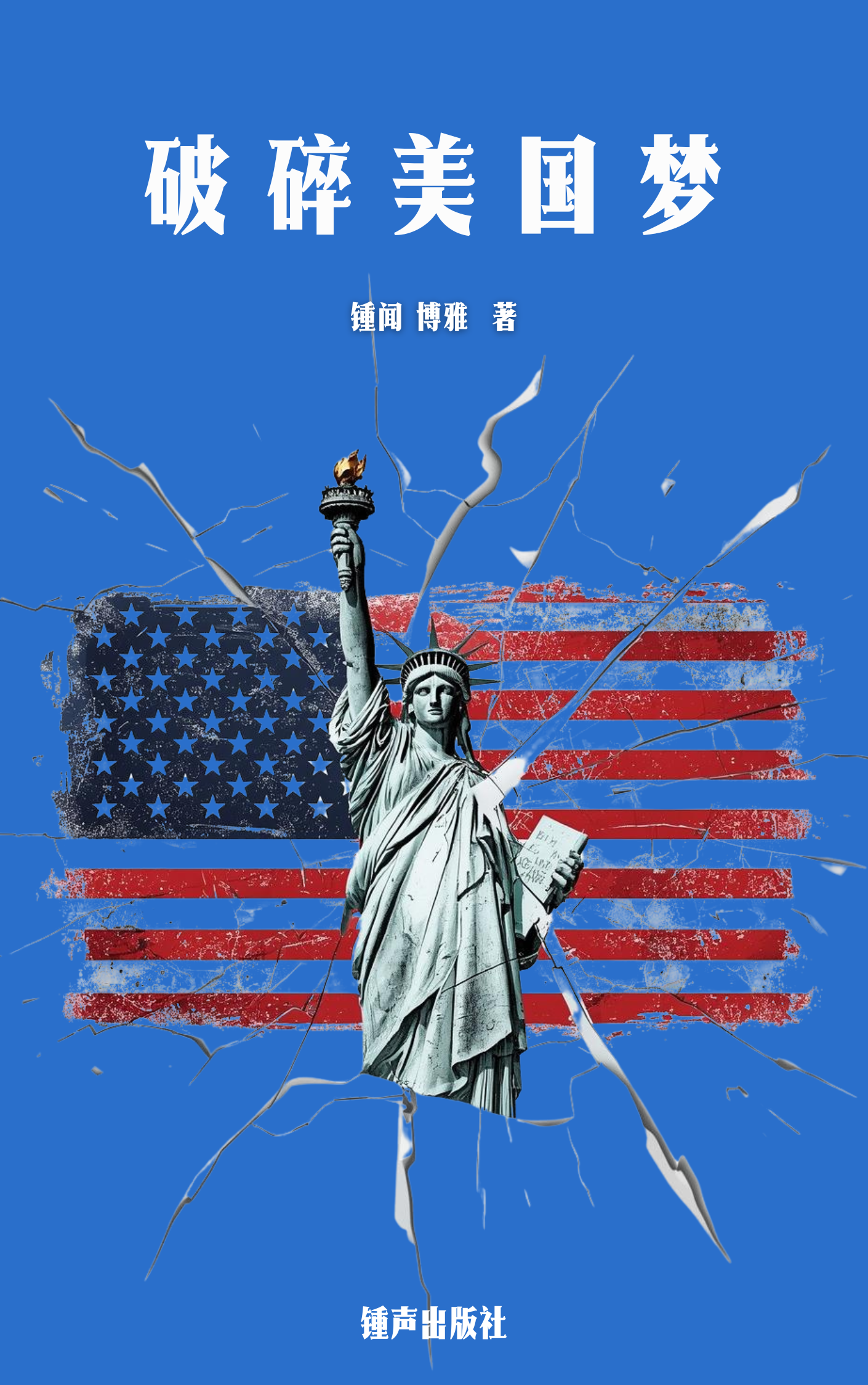
Volume I: Institutional Failure and the Twilight of the Giant
Part I: The “Theory of Four Seasons” of History – From Expansion to Stalemate
Chapter 4: Roosevelt’s Autumn: Power Centralization and Decay —
The Birth and Decline of the Establishment
This chapter will argue that, facing the existential crisis of the Great Depression, the American government abandoned the checks and balances principles of the “Spring Constitution” and pursued further power centralization. This centralization reached its peak during the Cold War, ultimately leading to internal corruption and structural decay centered around the “Establishment.”
First Thesis: Crisis and the Birth of the Leviathan — The Unlimited Centralization of Power in Washington
I. The Historical Catalyst: The Impact of the Great Depression on Constitutionalism
If “Lincoln’s Summer” used blood and fire to establish federal unity, then “Roosevelt’s Autumn” used crisis to establish the central government’s unlimited responsibility for the economy and society. The Great Depression of 1929 was an existential crisis for both American capitalism and the design of the “Spring Constitution.” In the desperate moment of economic collapse and social upheaval, the traditional principles of laissez-faire and the model of limited government established by the Constitution proved completely incapable of addressing the modern large-scale industrial crisis.
Franklin D. Roosevelt’s “New Deal” was the historic response to this crisis. It was not a simple policy adjustment, but a quiet constitutional revolution that fundamentally altered the contractual relationship between American citizens and their government.
II. The Transformation from “Limited Government” to “Leviathan”
Roosevelt’s New Deal abandoned the Spring Constitution’s instinctual distrust of power and instead embraced the pragmatism of government intervention. This centralization of power manifested on two critical levels:
1. The Birth of the Welfare State and the Expansion of Executive Power
The New Deal created the Social Security system, unemployment relief, and various agencies aimed at stabilizing finance and labor markets. The establishment of these institutions marked the transformation of the American government from a “night watchman state” to a “welfare state.” To manage this vast system, the executive branch in Washington expanded dramatically. Dozens of new federal agencies emerged (from the TVA to the SEC), and hundreds of thousands of bureaucrats were recruited, forming a massive federal bureaucracy.
2. The Establishment of the Regulatory State and the Delegation of Legislative Power
Congress delegated significant authority to these newly created administrative agencies (such as the SEC and FTC). These agencies were granted broad powers to formulate specific rules, becoming what is known as the “fourth branch” of government. This transformation bypassed the separation of powers and checks and balances that the Spring Constitution so heavily emphasized, granting the executive branch de facto legislative and quasi-judicial powers.
Core Issue: Although this high degree of power centralization temporarily saved the nation, it completely subverted the original intent of the framers. The Spring Constitution aimed to trade efficiency for liberty and security; Roosevelt’s Autumn, however, traded checks and balances for efficiency and economic security. Once power is granted, even after the crisis ends, it rarely recedes on its own.
Second Thesis: The Spoils of Global Hegemony and the Formation of the “Establishment”
III. The Cold War: The Historical Catalyst for the Permanence of Power
The trend of power centralization initiated by Roosevelt’s New Deal was made permanent and globalized by World War II and the subsequent Cold War. The threat of war and geopolitical competition provided continuous, unquestionable legitimacy for a vast, permanent central government.
1. The Formation of the Military-Industrial Complex and Political Lock-in
As the United States became the leader of the free world, it required a permanently large military and sustained defense investment. This gave rise to the “Military-Industrial Complex” (MIC). President Eisenhower famously warned of its “unwarranted influence” in his 1961 farewell address. The MIC was the most直观 (tangible) manifestation of Autumn’s corruption:
Interest Collusion: Defense department bureaucrats, congressional appropriations committees, and weapons manufacturers formed an iron triangle, mutually dependent on one another.
Policy Lock-in: National security needs were continually exaggerated to maintain massive military spending, ensuring the vested interests of all parties. This locked national resources into the arms race rather than addressing domestic issues like education, healthcare, or infrastructure.
2. The Solidification of the Washington “Establishment”
The “Establishment” was the product of the combination of power centralization and corruption, and it formally took shape during Autumn. It was not a conspiracy group, but a self-perpetuating ecosystem composed of Washington career politicians, a vast bureaucracy, Wall Street financial elites, lobbying groups, and think tank scholars.
Shared Interests: They shared a belief in “big government,” because only a large government could provide large budgets, contracts, and positions.
Elite Circulation: Officials leaving government positions would move into lobbying firms or large corporations, only to later return to high-level government posts. This “revolving door” mechanism ensured that public policy consistently served the private interests of a privileged few.
IV. The Breeding Ground for Corruption: The System’s “Resistance” to Private Interests
Corruption in Autumn was no longer the bribery of Spring or the individual embezzlement of Summer; it was structural corruption—meaning the system itself was designed to serve vested interests and had developed “resistance” to external criticism and reform.
Watergate and the Collapse of Credibility: The abuses of the Nixon administration and the subsequent Watergate scandal revealed how the expansion of executive power in Autumn eroded constitutionalism. Presidential power was used to surveil and harass political opponents, demonstrating a tendency toward the absolutization of power.
Regulatory Capture: The most insidious form of corruption was “regulatory capture.” For example, agencies meant to regulate Wall Street financial institutions were often headed by former Wall Street executives. Regulators and the regulated formed communities of interest, turning all the “firewalls” designed into the system into “revolving doors.” This directly laid the groundwork for the collapse of 2000–2008.
Third Thesis: The Fruits of Autumn: Financialization and Structural Decay
V. The Frenzy of Financialization: The Highest Form of Corruption
In the latter part of Roosevelt’s Autumn, the center of gravity of the American economy shifted entirely from physical manufacturing to the financial services sector—a process known as financialization. This was the highest form of structural corruption: it redirected capital from tangible production to intangible financial speculation.
1. The Collusion Between the System and Finance
Driven by the Establishment, the government continuously deregulated the financial industry, for example: repealing the Glass-Steagall Act, which allowed commercial and investment banks to reunite; and failing to regulate derivatives. These policy changes did not occur because they were beneficial to the national economy, but because they served Wall Street elites’ pursuit of limitless profits. The system was no longer a tool to restrain private interests; instead, it was cleverly exploited by private interests, becoming a shield for legalized wealth extraction.
2. The Formation of a Ponzi Structure
Excessive speculation and leveraging in the financial industry made the American economy extremely fragile. When the financial and real estate bubble burst in the 2000s, it彻底 exposed (fully exposed) the ultimate fruit of Autumn’s power centralization and corruption: a Ponzi structure that could not repair itself and was destined to have its consequences borne by taxpayers.
VI. The Closing Signal of the 2000s: The Dual Failure of System and Elite
The crisis of the 2000s was the closing signal for Roosevelt’s Autumn. It provided two decisive revelations:
Systemic Failure: The vast regulatory system failed to prevent the crisis, proving it had been “captured” and had become completely ineffective.
Elite Impunity: The subsequent government bailout actions did not punish the Wall Street executives responsible for the corruption; instead, they used public funds to rescue them. This彻底 proved (completely proved) the Establishment’s grip on the country: they enjoyed the benefits while the people bore the risks.
This crisis destroyed the last remnants of American trust in the elites, in the government, and even in the liberal democratic system itself, paving the way for the social despair and populist backlash of the next stage—the “Winter of Stalemate.”
VII. Chapter Conclusion: A Giant That Has Lost Its Soul
Roosevelt’s Autumn was an inevitable process in America’s journey from localized checks and balances to global hegemony. It reaped the victories of World War II and the Cold War, but at the cost of losing the soul of its institutions. The centralization of power inevitably led to structural corruption. By the end of Autumn, the United States was no longer the young republic full of Spring idealism, but a globally dominant giant, locked in place by a vast and rigid Establishment, with power excessively concentrated at its core. This giant’s pace was slowing, and its internal decay had rendered it unable to effectively confront the impending “Winter of Stalemate.”
 正义钟声 Voice of Justice