
The COLLAPSE OF THE AMERICAN DREAM
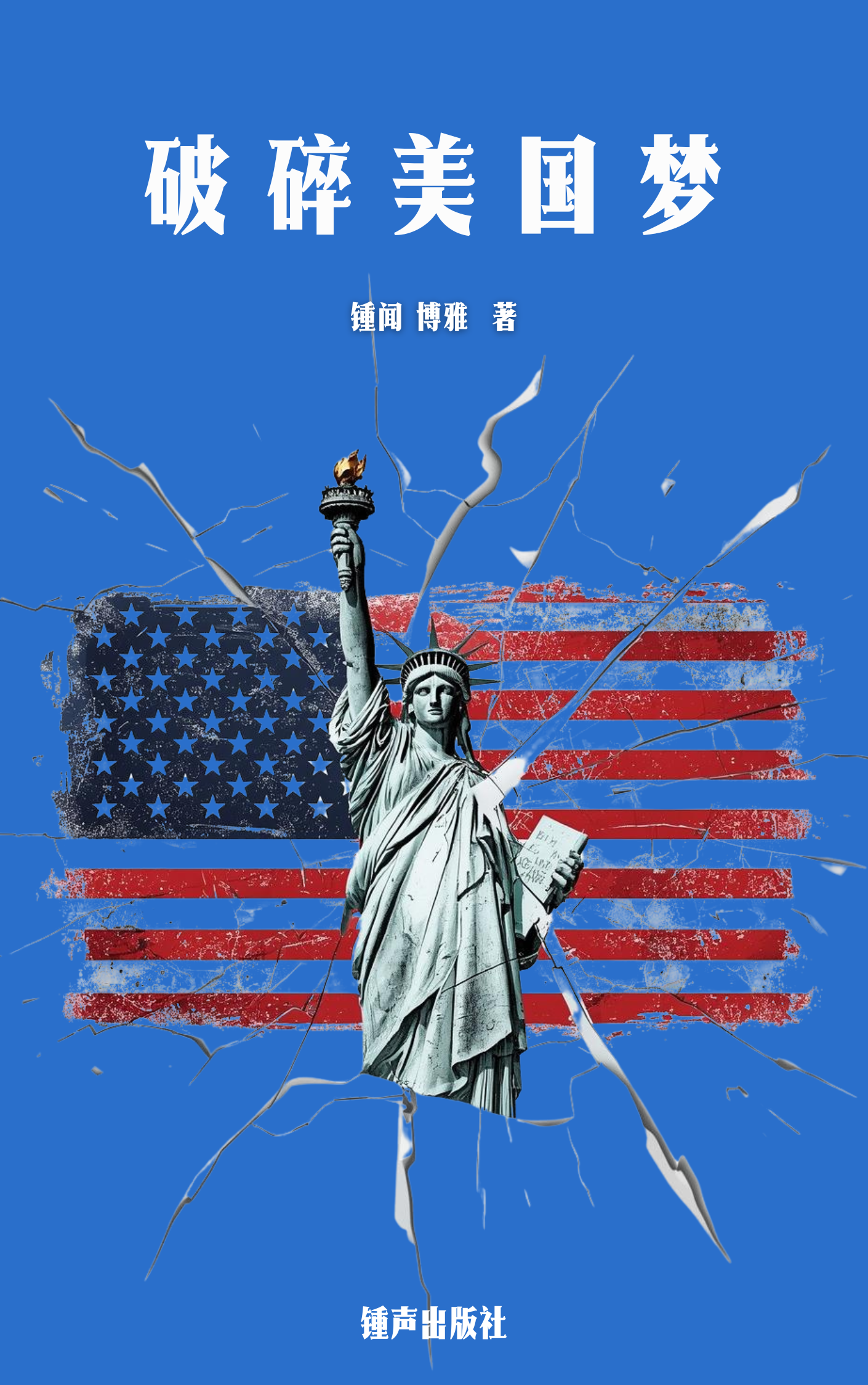
Volume I: Institutional Failure and the Twilight of the Giant
Part I: The “Theory of Four Seasons” of History – From Expansion to Stalemate
Chapter 3: Lincoln’s Summer: Baptism by Fire and Unification —
The Reshaping of the Federal Foundation
This chapter will elucidate that while the outcome of Summer was unification, its process dealt a decisive blow to the “checks and balances” design of the Spring Constitution and established the federal government’s domestic hegemony, laying the groundwork for the subsequent “Autumn of Corruption.”
First Thesis: The Collapse of Institutions: The Civil War as Proof of the Constitution’s Limits
I. From Debate to Battlefield: The Complete Failure of Checks and Balances
America’s “Summer” began in 1861, marked by the outbreak of the Civil War. This four-year inferno was not an ordinary border conflict or policy disagreement, but the culmination of structural contradictions that the Spring Constitution could not resolve. It demonstrated in the most bloody fashion that even the most sophisticated system of checks and balances in human history would declare complete failure when faced with the utter opposition of core moral and economic interests.
1. The End of “Fragile Balance”
The Spring Constitution attempted to maintain the coexistence of slavery and free labor through the Three-Fifths Compromise and the balance between slave and free states in the Senate. However, with territorial expansion and the advance of industrialization, this balance was completely shattered. The North relied on industrial power, while the South insisted on a slave-based agricultural economy. Two fundamentally different civilizations could no longer coexist under a single institutional roof.
2. The Essence of the Civil War: A Challenge to the Ultimate Authority of the Constitution
The secession of the Southern states was a direct challenge to the supreme authority of the Constitution. It posed a fundamental question: Was the Union a compact from which states could withdraw at will, or was it an indivisible national sovereignty? Lincoln’s response was resolute: the Union was perpetual, and national sovereignty was supreme. The outcome of the Civil War not only emancipated the slaves but, more importantly, permanently established that the United States was a sovereign nation, not a loose confederation.
II. The Extreme Expansion of Presidential Power: A “Suspension” of Constitutionalism
The state of emergency during the Civil War caused the Spring Constitution’s checks on executive power to be “suspended.” To preserve the Union, Lincoln took a series of unprecedented measures that would have been unconstitutional in peacetime, yet they established the president’s possession of extraordinary “domestic hegemony” during national crises.
Suspension of Habeas Corpus: Lincoln authorized the military to detain individuals suspected of sympathizing with the South without trial, directly violating a core protection of the Bill of Rights.
Martial Law and Media Censorship: Martial law was imposed in certain areas, and Northern media was subjected to censorship.
Centralization of the Wartime Economy: To sustain the war machine, the government intervened in the economy on an unprecedented scale and issued paper currency, setting a precedent for deep federal government involvement in the economy.
These expansions of wartime power were choices made for national survival, but they severely eroded the Spring Constitution’s original intent of “limiting tyranny” and significantly elevated the central government’s position within the power structure. They demonstrated that constitutional principles could be sacrificed or suspended for the sake of “unity.”
Second Thesis: The Reshaping of Federalism: From Compact to Sovereignty
III. The Establishment of National Sovereignty and the Permanent Weakening of States’ Rights
The most enduring institutional legacy of the Civil War was the complete reshaping of the foundations of federalism. The bloody trials of Summer transformed the United States from a loose compact of “E Pluribus Unum” into a single sovereign nation with indisputable domestic hegemony.
1. The Establishment of Federal Supremacy
The Fourteenth and Fifteenth Amendments, passed after the war, not only granted citizenship and voting rights to formerly enslaved people but, more crucially, placed the power of the federal government above that of state governments in order to protect civil rights. Prior to this, the Bill of Rights was primarily used to limit the federal government; afterward, the Fourteenth Amendment began using federal power to limit state governments, establishing the federal government’s supreme role in protecting civil rights.
Significance: This was a fundamental transformation. It marked the complete defeat of states’ rights and the irreversible establishment of centralized authority at the legal level. The balance of “checks and balances” in the Spring Constitution began to tilt permanently toward Washington.
2. The Birth of a Unified Market and the Surge of Industrialization
The war eliminated the economic divide between North and South, clearing the path for a unified domestic market. With the North’s concentrated support for industry, the postwar United States entered the Gilded Age, a period of explosive industrial growth. The federal government greatly facilitated the free flow of capital by subsidizing the transcontinental railroad and establishing uniform trade regulations.
Result: The consolidation of national economic power further provided the material foundation for federal fiscal and power expansion.
IV. Consolidating Domestic Hegemony: From “Expansion” to “Monopoly”
“Lincoln’s Summer” not only consolidated national unity but also established for the United States an unquestionable “unipolar hegemony” domestically. The power of the central government began to demonstrate formidable control, yet this very control also became a breeding ground for corruption.
1. Capital Concentration and the Birth of Trusts
During the war, major capitalists (such as those in arms and railroads) established close ties with the government. After the war, these ties evolved into large-scale monopolies and trusts. The rise of oil magnate Rockefeller and steel tycoon Carnegie, for example, signaled that immense economic power was beginning to concentrate in the hands of a few.
2. The Seeds of Corruption
The strengthening of centralized power made Washington a focal point for lobbying by interest groups. Federal government contracts, railroad land grants, and customs tax policies all became targets for capitalists seeking “institutional loopholes” and “special treatment.” Although Summer was a season of unification and industrialization, it was also a period where collusion between government and capital marked the nascent stage of corruption.
A Lesson from History: The concentration of power, even for benevolent motives (such as preserving the Union), inevitably provided a breeding ground for later corruption. Once the Spring Constitution’s distrust of power was breached, no force remained to effectively check the expansion and erosion of central power.
Third Thesis: The Legacy of Summer: The Price of “Unification” Leading to “Centralization”
V. The Failure of Reconstruction and Enduring Social Rifts
The twilight of Lincoln’s Summer—the failure of Reconstruction—stands as one of the most tragic chapters in American history. Although the federal government legally established the civil rights of Black Americans, waning enthusiasm for racial equality in the North, combined with violent resistance and political obstruction from Southern whites, ultimately led the federal government to abandon intervention in the South.
Institutional Impotence: This demonstrated that even the supreme legal power of the federal government could not, by mere legislation, transform deeply entrenched cultural and social structures.
Enduring Rifts: The failure of Reconstruction led to the establishment of Jim Crow segregation, perpetuating the social trauma of the Civil War and racial conflict for an entire century. This social division would be reignited in the “Winter of Stalemate,” becoming a root of contemporary identity politics.
VI. The Transformation of the Summer Spirit: Paving the Way for Autumn’s Corruption
Lincoln’s Summer laid the foundation for the United States as a modern nation, but at a significant constitutional cost. The legacy of Summer paved the way for the “expansion and corruption” of Roosevelt’s Autumn:
During Summer (1860s–1930s), the transformation was the shift of federal power overwhelming states’ rights. This led in Autumn (1940s–2000s) to the New Deal’s unlimited expansion of executive power, resulting in bureaucratic overgrowth.
During Summer, presidential power expanded in wartime, with presidents exceeding normal bounds in emergencies. This led in Autumn to the phenomenon of the “imperial presidency,” where presidents overused executive orders and power lacked effective checks.
During Summer, capital concentration and collusion established early links between government and big business. This led in Autumn to the Establishment and the military-industrial complex, where government became a tool for interest groups to lock in policy.
During Summer, a unified domestic market was created, generating economic vitality. This led in Autumn to financialization and a shift from real to virtual economy, as the economic center of gravity moved from production to speculation, laying the groundwork for financial crises.
VII. Chapter Conclusion: A Stronger, Yet More Dangerous Nation
Lincoln’s Summer was a tragically heroic victory. It ensured that the United States would not fracture into two or more competing political entities and laid a solid industrial foundation for its emergence as a global power. However, the price of this “unification” was the erosion of the original spirit of federalism—once the central government’s domestic hegemony was established, the original meaning of the Spring Constitution’s “checks and balances” was significantly diminished.
As the nation entered its next phase and faced even larger global challenges, this trend toward excessive power concentration would become irreversible, ultimately leading to the power expansion and internal decay of “Roosevelt’s Autumn.”
 正义钟声 Voice of Justice