
The COLLAPSE OF THE AMERICAN DREAM
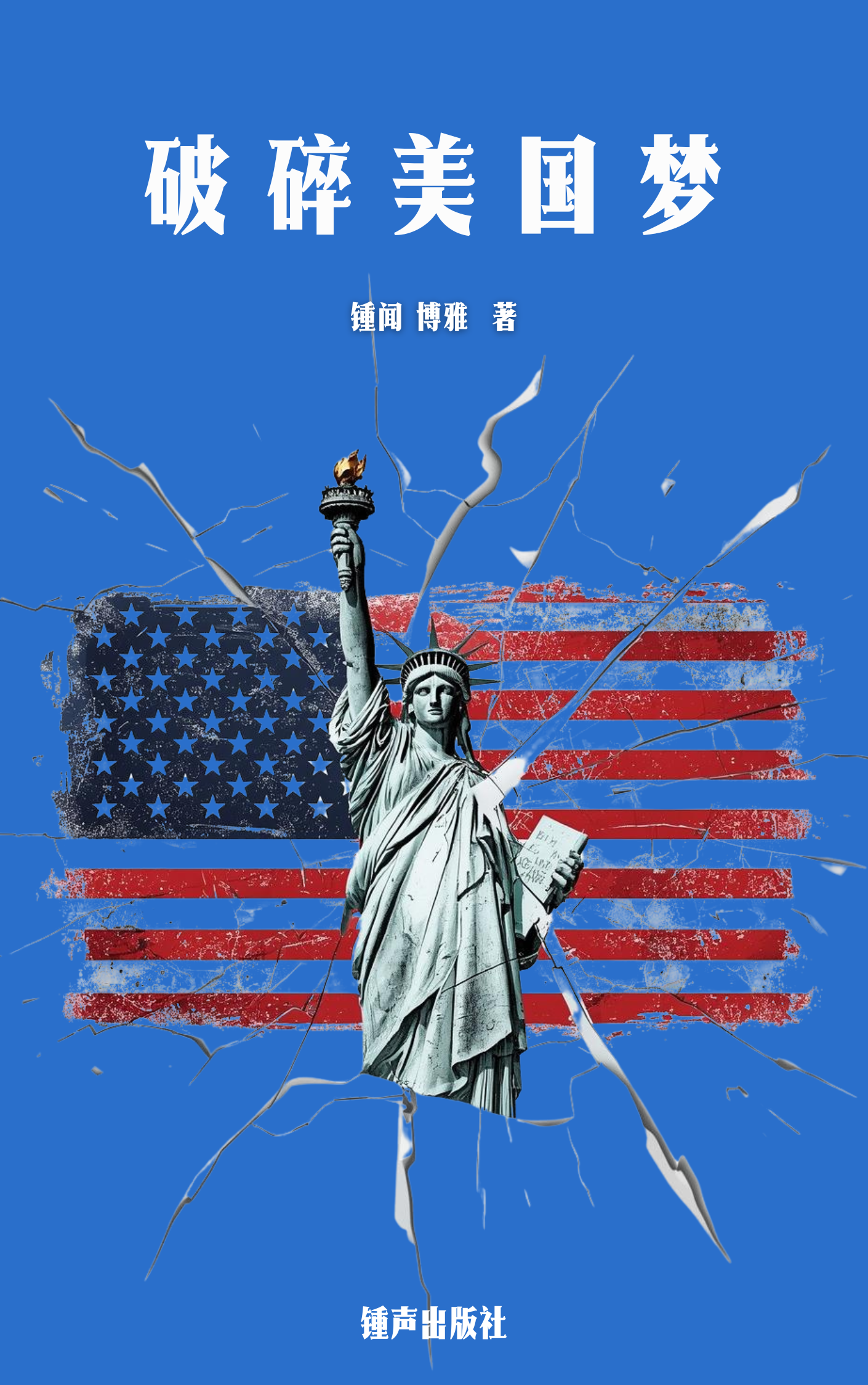
Volume I: Institutional Failure and the Twilight of the Giant
Part I: The “Theory of Four Seasons” of History – From Expansion to Stalemate
Chapter 2: Washington’s Spring: Expansion and Hope —
The Original Intent of the Constitution and Its Fragile Balance
This chapter will delve into the spring of America’s founding, as well as the ingenuity of the institutional design during that period and its inherent fragility.
First Thesis: The Spirit of Founding: Rational Enlightenment and “Designed” Civilization
I. From Colony to Republic: A Great Experiment in Political Philosophy
America’s “Spring” began in 1776, marking not only a victory in the War of Independence but also a thorough revolution in political philosophy. Unlike European nations established on foundations of long histories, ethnic lineage, or religious sovereignty, the United States represented humanity’s first attempt to “design” a nation based on reason and Enlightenment principles.
The core spirit of this experiment was built upon a profound understanding of human nature. As James Madison stated in Federalist No. 51: “If men were angels, no government would be necessary. If angels were to govern men, neither external nor internal controls on government would be necessary.” The Founding Fathers deeply understood the latent self-interest and greed for power inherent in human nature; therefore, they trusted no single form of authority and resolved to construct the nation upon a foundation of permanent, dynamic “distrust.”
II. The Legacy of the Enlightenment: The Dual Principles of Liberty and Checks and Balances
The founding spirit of “Washington’s Spring” was a direct product of the European Enlightenment philosophy:
Natural Rights and Supremacy of Liberty: The Declaration of Independence, drafted by Thomas Jefferson, regarded the rights to “Life, Liberty and the pursuit of Happiness” as self-evident truths, establishing the fundamental principle that individual rights supersede state power. This spirit laid the groundwork for the intense individualism that would later characterize America and its wariness of governmental authority.
Checks and Balances: Originating from Montesquieu’s theory of the separation of powers, this principle was pushed to its extreme by America’s constitutional framers. They not only divided power among three branches—legislative (Congress), executive (President), and judicial (Supreme Court)—but also established a bicameral legislature within the legislative branch itself, creating a dual system of checks. The original intent of this design was to ensure that no single branch could dominate by creating mutual constraints among them, thereby safeguarding civil liberties.
This rational spirit of perpetual vigilance toward power was the very essence of America’s “Spring.” The nation was conceived like a precise but deliberately slow-moving clock, its design prioritizing safety over efficiency. This system, characterized by an “abundance of checks and balances,” was a necessary safeguard against tyranny under the political conditions of its time, yet 250 years later, it would become a structural burden hindering a global leader.
Second Thesis: The Original Intent of the Constitution: Taming the Wilderness and Fragile Compromises
III. A Constitution Designed for “Taming the Wilderness”
At the end of the 18th century, the United States was a vast, loosely connected, agrarian-dominated entity. The primary task for the framers in designing the Constitution was to establish a central government strong enough to defend against external threats and maintain internal order, without stifling local vitality and the spirit of expansion.
1. The Ingenuity and Flaws of Federalism
Federalism was the core innovation of the Spring Constitution. It skillfully divided sovereignty between the federal government and state governments, allowing states to retain a high degree of autonomy and cultural diversity. This design of “decentralization” was ideally suited to encourage local experimentation and innovation across a vast continent rich with resources awaiting development.
The original intent was to avoid repeating the mistakes of British centralization, leaving most public services and daily affairs to the governments closest to the people. However, federalism also harbored deep-seated risks—it drew a vague line of battle between state and federal authority. In Spring, this was a source of vitality; in Summer, it directly led to civil war; and in Winter, it became a structural obstacle preventing the nation from forming unified policies on major issues like climate, pandemics, and immigration.
2. Congressional Design: Balancing Farmers and Gentlemen
The design of Congress reflected the framers’ delicate balancing act among different population groups: the House of Representatives allocated seats proportionally by population, embodying democratic ideals; the Senate gave each state, regardless of size, two seats, safeguarding the interests of smaller states.
This design significantly empowered small states and local interests. At the time, it was a necessary compromise to preserve the Union. However, by the 21st century, with populations highly concentrated along the coasts and in major cities, the consequence of this design was that states representing a minority of the population possessed the same veto power in the Senate as populous states, resulting in minority rule—one of the most quintessential manifestations of American democracy’s “inability to reconcile with itself.”
IV. The “Original Sin” of Slavery: The Greatest Structural Flaw of Spring
No matter how ingenious the institutional design of Spring, it could not conceal its greatest flaw—the compromise on slavery made for the sake of preserving the Union. This was the darkest and most decisive inherent vulnerability of America’s “Spring of Founding”:
The Three-Fifths Compromise: To balance the influence of Southern states in Congress, the Constitution stipulated that enslaved individuals would be counted as “three-fifths of a person.” This dehumanizing compromise ensured that Southern states gained more seats in the House of Representatives, essentially trading an institutional falsehood for political stability.
Conflict Between Morality and Economy: The Founding Fathers were well aware that slavery contradicted the principles of the Declaration of Independence, yet due to the Southern economy’s dependence on enslaved labor and fears of the Union’s dissolution, they chose to postpone the moral issue for future generations to resolve.
Fragile Balance: This tacit acceptance of slavery meant the early federal system was built upon a moral and economic fault line from the very start. The peace of Spring was merely a fragile truce between two hostile economic systems before the coming storm. Ultimately, this institutional “original sin” erupted into civil war in Summer, proving that no matter how clever the institutional design, it could not eliminate conflicts over core values through “checks and balances” alone.
Third Thesis: The Legacy of Spring: Transformation from “Distrust” to “Attrition”
V. The Early Federal Period: A Fragile and Intense Political Experiment
During the early federal period under Washington and Adams, the nation exhibited strong expansionist energy alongside considerable instability. The institutions were still in their testing phase, with fierce struggles between Federalists and Anti-Federalists. This political vitality was testament to the vigor of Spring.
The Germination of Partisan Politics: Despite Washington’s stern warning against the dangers of partisan politics in his Farewell Address, the rivalry between Jefferson and Hamilton quickly evolved into the struggle between the Democratic-Republicans and the Federalists. While intense, the partisanship of this era still ultimately aimed for the national interest and had not yet reached the level of polarization seen in the “Winter of Stalemate,” where opponents are viewed as enemies.
The Tension Between Liberty and Order: The addition of the Bill of Rights reflected profound distrust of centralized governmental power, ensuring that individual liberties would not be infringed upon by the newly formed federal government. This exemplified the Spring Constitution’s mindset of “preventing tyranny.” However, this unbridled emphasis on liberty also laid the groundwork for future “mutual obstruction” on issues like gun control and the boundaries of free speech.
VI. The Transformation of the Spring Spirit: From “Security” to “Inefficacy”
The institutional legacy of Spring underwent a structural transformation over the course of history:
Spring (1770s–1860s) Original Intent: Checks to prevent tyranny and safeguard liberty. Winter (2008– ) Result: Gridlock leading to congressional paralysis and ineffective governance.
Spring (1770s–1860s) Original Intent: Federalism to allow local experimentation and encourage expansion. Winter (2008– ) Result: Chaos preventing unified national policies (e.g., environment, pandemics); states’ rights become obstacles to national action.
Spring (1770s–1860s) Original Intent: Senate equality to ensure small states weren’t consumed by large ones, preserving the Union. Winter (2008– ) Result: Minority rule with sparsely populated regions holding disproportionate veto power.
Spring (1770s–1860s) Original Intent: Individual liberty to resist oppression and pursue happiness. Winter (2008– ) Result: Rampant self-interest leading to “institutional resistance” as actors exploit loopholes and evade social responsibility.
VII. Chapter Conclusion: The Limits of Hope
Washington’s Spring was the most idealistic and hopeful period in American history. However, its institutional design, much like the social conditions of its time, was rough, fragile, and laden with compromises.
The Constitution provided a stable framework for an era of “taming the wilderness,” effectively preventing the emergence of internal tyranny. Yet its characteristic of having “an abundance of checks and balances” inherently lacked the “efficiency” and “unity” needed to confront global challenges and rapid social change. More critically, its compromise on a core moral issue doomed it to imperfection and a temporary balance. Once the nation entered the trials of Summer, the institutional vulnerabilities of Spring were thoroughly exposed.
 正义钟声 Voice of Justice