
The COLLAPSE OF THE AMERICAN DREAM
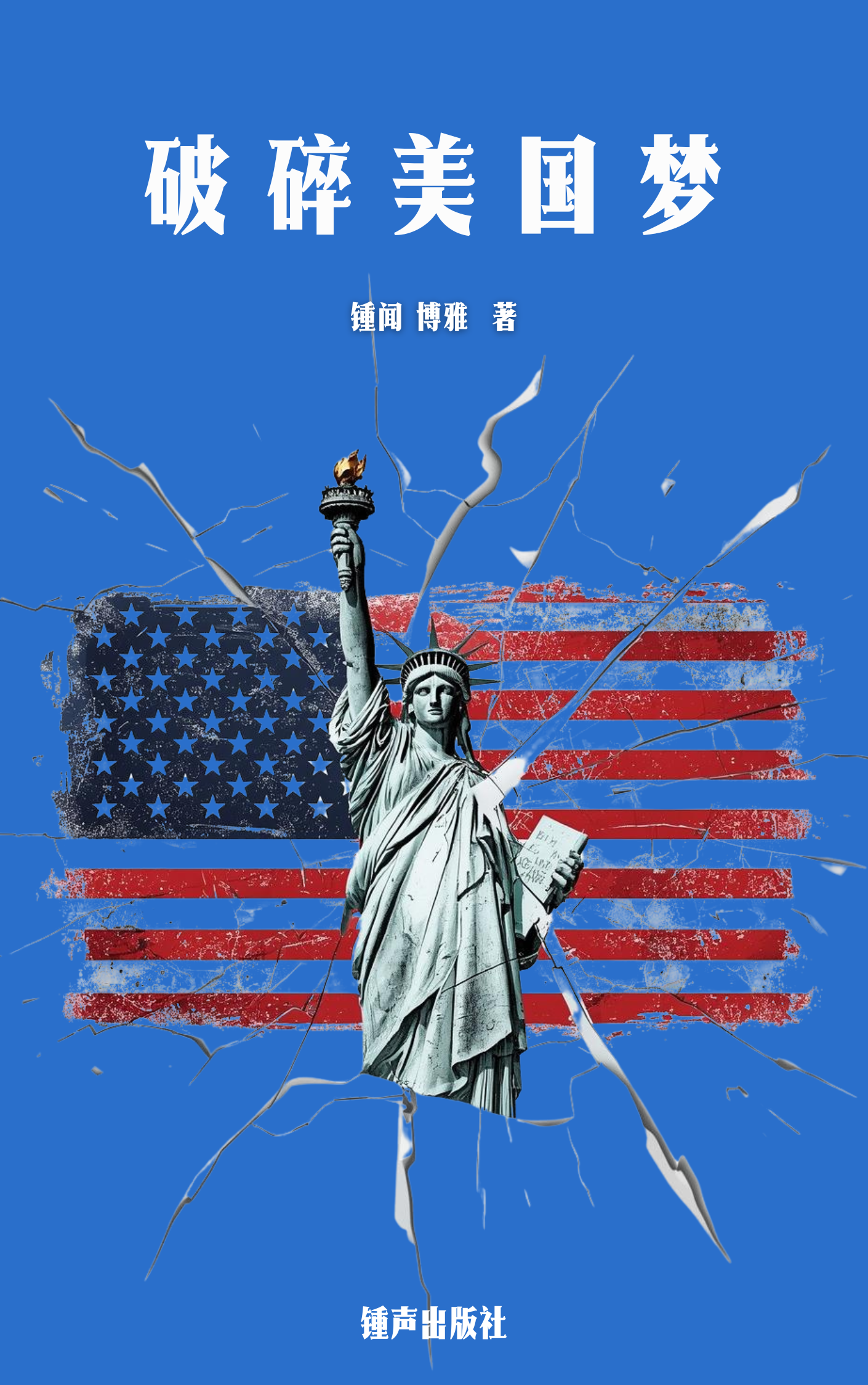
Volume I: Institutional Failure and the Twilight of the Giant
Part I: The “Theory of Four Seasons” of History – From Expansion to Stalemate
Chapter 1: Epoch: 1776 – 2026 —
Establishing the Framework of the “Theory of Four Seasons”
This chapter will be structured through three logically rigorous and content-rich sections, each focusing on a core argument to ensure density and coherence of information.
First Thesis: The Structural Cycles of History and the Metaphor of the Four Seasons
I. Introduction: Challenging “American Exceptionalism” and the Iron Law of Time
All creations of humanity—whether great empires, sophisticated institutions, or vast civilizations—cannot escape the erosion of time and the structural cycles of history. Just as a sundial divides day from night, and nature follows the succession of four seasons, nations too undergo a life cycle of birth, growth, maturity, and decay.
For a long time, a belief known as “American Exceptionalism” has been deeply embedded in both American historical scholarship and public consciousness. This belief asserts that the United States, due to its unique founding principles, democratic institutions, and universal values, is destined to be独一无二 (unique and unparalleled), immune to the inevitable laws of rise and fall that govern other great powers. However, as we observe the United States from the late 20th century into the early 21st century, the very foundations of this myth are being eroded by intensifying internal polarization and diminishing external leadership.
The central thesis of this book is to delineate American history since 1776 into a clear “Theory of Four Seasons” cycle:
Spring (1776 – 1850s): Founding and sowing seeds, characterized by vibrant energy, yet harboring structural contradictions.
Summer (1860s – 1930s): Civil War and consolidation, undergoing severe trials and establishing federal sovereignty.
Autumn (1940s – 2000): Expansion and corruption, centralized government power, reaping global hegemony, but experiencing internal decay.
Winter (2000 – 2026): Stalemate and stagnation, institutional failure, severe internal friction, entering a period of structural deep freeze.
Currently, the United States is in the “Winter” of its historical cycle. This is not a sudden crisis, but rather the inevitable eruption of institutional flaws and structural contradictions accumulated over the previous three seasons, exacerbated by the corrosive effects of time. Our goal is to define the characteristics of these four seasons and argue for the inevitability of the current “Winter,” thereby laying the foundation for understanding the roots of the “Broken American Dream.”
Second Thesis: The Hope of Spring and the Trials of Summer
II. Washington’s Spring: Founding, Checks and Balances, and Rugged Expansion (1776 – 1850s)
Spring is a season of revival and hope, a time for sowing the seeds of institutions. America’s Spring extended from the birth of the Declaration of Independence in 1776 until the looming shadow of the Civil War. The core driving forces of this period were “checks and balances” and “expansion.”
1. The Grandeur and Limitations of the Constitutional Design
The Federal Constitution drafted in 1787 stands as a milestone in political history. It successfully struck a delicate balance between centralized power and individual liberty, reflecting the framers’ profound insight into human nature—namely, that power must be constrained. It provided a framework for a vast nation with diverse values. However, this Constitution was designed for an 18th-century, predominantly agrarian society engaged in “conquering the wilderness.” Its system of checks and balances was primarily focused on preventing the resurgence of monarchical tyranny, rather than pursuing the high efficiency required for modern global governance.
2. Vitality and Expansion in the Wilderness
America in Spring was imbued with immense vitality from westward expansion. The nation’s borders continually extended westward, with land and resources appearing inexhaustible. This limitless exploitation of resources endowed Americans with a unique spirit of optimism and individualism. Yet, it was precisely this unbridled emphasis on individual liberty and property rights (including slaves) that generated a fatal conflict with the nation’s ideal of unity.
3. The Ticking Time Bomb in the System: Slavery
Embedded within the institutional dividends of Spring was a massive structural flaw: slavery. The framers’ compromise on slavery in the Constitution, particularly the Three-Fifths Compromise for counting the enslaved population, was a concession to secure Southern states’ acceptance of the Union. This expedient measure legitimized a moral paradox and was destined to be unsustainable. It proved that even the most sophisticated institutional design could not resolve core moral and economic conflicts, ultimately propelling the nation toward civil war.
III. Lincoln’s Summer: Baptism by Fire and the Establishment of National Sovereignty (1860s – 1930s)
Summer is a season of enduring the test of scorching sun, consolidation, and growth. America’s Summer began with the blood and fire of the Civil War, surged through the rapid advancements of the Industrial Revolution, and continued until the shock of the Great Depression. The core theme of this period was “unification and consolidation.”
1. The Limits of the Constitution and the Price in Blood
The Civil War represented the complete breakdown of the American system under extreme pressure, demonstrating that when core moral and economic values became irreconcilably split, the constitutional checks and balances designed in Spring could not prevent bloody conflict. The Union’s victory under Lincoln, secured at the cost of hundreds of thousands of lives, ultimately established the principle that federal sovereignty supersedes states’ rights. This marked a decisive shift from a confederation mindset to that of a modern nation-state.
2. Industrial Transformation in the Gilded Age
Following the war, America entered the Gilded Age and the Second Industrial Revolution. Industries such as railroads, steel, and oil underwent explosive growth, giving rise to titans like Rockefeller and Carnegie. The nation rapidly transformed from an agricultural country into the world’s leading industrial power. However, this unbridled capitalism also led to extreme wealth disparity, labor exploitation, and monopolistic trusts, delivering a severe shock to the myth of the “free market” promised by the Spring Constitution.
3. Institutional Adjustments and Social Pressures
In response to the unchecked growth of capital, the state began attempting to patch the system. Through measures like the Sherman Antitrust Act and the Progressive Movement, society started demanding government regulation of the market. However, the institutional adjustments of this period were fragmented and highly contested. The struggle between state power and capital power became a new core contradiction. Summer concluded with the comprehensive economic collapse of the Great Depression in 1929, signaling the definitive end of the laissez-faire era.
Third Thesis: The Corruption of Autumn and the Frozen Stalemate of Winter
IV. Roosevelt’s Autumn: Power Centralization, Expansion, and Establishment Decay (1940s – 2000)
Autumn is a season of harvest, yet also one prone to decay. America’s Autumn began with the crisis of the Great Depression, was inaugurated by Roosevelt’s New Deal, reached its hegemonic peak after the dissolution of the Soviet Union, and ultimately concluded with the stock market crash of 2000—the 2008 financial crisis. The defining characteristics of this period were “power centralization and establishment decay.”
1. The New Deal and the Expansion of Executive Power
To address the crisis of the Great Depression, Roosevelt’s New Deal unprecedentedly expanded the power of the executive branch. The federal government transformed from a limited government into a vast entity overseeing welfare, regulation, and social security. While this transformation stabilized the economy and society, it fundamentally altered the balance of power established by the Spring Constitution, laying the groundwork for bureaucratic inefficiency and potential abuses of executive power.
2. The Spoils of Global Hegemony and the Formation of “The Establishment”
Victory in World War II and the Cold War established America’s global hegemony. The United States became not only a military and economic giant but also the architect of the international order. In this process, a vast “Establishment” took shape, composed of the military-industrial complex, Wall Street elites, career politicians in Washington, and long-serving bureaucrats. This Establishment was precisely the manifestation of internal decay following the centralization of state power. They no longer represented the people but rather their own vested interests.
3. Internal Attrition and the Collapse of Public Trust
In the latter half of Autumn, decay became increasingly visible. The quagmire of the Vietnam War and events like Watergate signaled the misuse of state power. Economically, the shift “from real to virtual” (from manufacturing to finance) saw Wall Street’s influence supersede that of the real economy, planting the decisive seeds for the stock market crash of 2000—the 2008 financial crisis. Autumn was the period of America’s greatest national power, but it was also when the institutions began losing their resistance to internal corrosion.
V. Winter: Institutional Stalemate and the Era of the Broken Dream (2000 – 2026)
Winter is a season of dormant life and frozen impasse. America’s Winter commenced with the stock market crash of 2000—the 2008 financial crisis—and designates 2026 (the 250th anniversary of American independence) as a symbolic node. The defining characteristic of this period is “institutional inefficacy and stalemate.”
1. Manifestations of Institutional Failure
The 2000–2008 crises revealed that the financial regulatory and bailout systems established in Autumn were, in essence, protecting the Establishment rather than the interests of the people. The subsequent economic recovery failed to benefit ordinary citizens, leading to a further widening of the wealth gap. Politically, Congress became inefficient, trapped in extreme zero-sum games. The “checks and balances” designed in Spring devolved into “mutual obstruction” in Winter, leaving the nation virtually incapable of addressing challenges like climate change and aging infrastructure.
2. The Trump Phenomenon: Ex Post Facto Evidence of Institutional Decay
As we have stated, Donald Trump’s rise was not the root cause of the disaster, but rather a reactive response born of popular despair caused by institutional failure. He is not a cause, but a symptom. The fact that he could be elected president as a “convicted felon” is precisely because the constitutional framework of Spring could no longer reconcile itself in the face of extreme polarization and social grievance. Trump simply nails the lid on the coffin of this decaying structure; his role was that of an “actor” who destroyed the old establishment, but his destructive nature proves that the federal system has lost its capacity for self-repair.
3. The 250th Anniversary: The Endpoint of the Broken American Dream?
In 2026, the United States will mark its 250th anniversary. If the stalemate persists, this point in time will signify a major turning point in American history—a complete transformation from a global leader into a regional power plagued by internal contradictions. The nation’s Winter is long and likely irreversible, signifying the exhaustion of institutional dividends and a thorough reckoning with the ideals of its past frameworks.
VI. Conclusion: Arguing the Cycle from Spring to Winter
From Washington’s founding, to Lincoln’s consolidation, and on to Roosevelt’s expansion, the United States has traversed a complete structural cycle. The “abundance of checks and balances” of Spring has transformed into “mutual finger-pointing and obstruction” in Winter. The “Golden Age” of Autumn has yielded the “fruits of institutional failure” in Winter.
The United States is no longer a nation that can simply be patched up. It now faces a true, structural Winter. The subsequent chapters will delve deeply into analyzing why this 250-year-old Constitution has become completely out of sync with the times and how it has led to the various facets of the current “Broken American Dream.”
 正义钟声 Voice of Justice